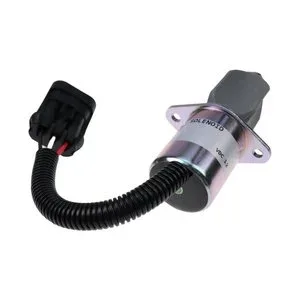
Matched Engine Sets — Shutoff solenoid and adjacent fuel-system components verified against Bobcat engine serial variants before dispatch.
Technical Specifications
| Parameter |
Value |
| Part Number |
6681513 |
| Product Type |
Stop Solenoid |
| Cross-Reference |
6681513 (reference only) |
| Machine Fitment |
Bobcat Skid Steer Loader 751, 753, 763, 773, 5600, 7753, S150, S160, S175, S185, T190; Bobcat Excavator 325, 328, 331, 334, 337, 341 |
| Voltage |
12V |
| Coil Insulation Class |
Class H (rated to 180°C) |
| Plunger Material |
Stainless Steel (AISI 420) |
| Seal Material |
FKM (Viton) O-rings |
| Pressure Rating |
10 bar |
| Operating Temperature Range |
–20°C to +85°C |
| Surface Treatment |
Passivation (ASTM B117) |
| Sealing Surface Finish |
Ra ≤ 0.4 μm |
| Dimensional Tolerance Standard |
ISO 2768-mK |
| Condition |
New Aftermarket |
| Warranty |
3–12 months against manufacturing defects |
| MOQ |
1 piece |
Application Suitability
| Engine System |
Related Components |
| Fuel Shutoff Control |
Fuel lines, injectors, fuel filters, wiring harness connectors |
| Electrical Actuation Circuit |
Shutdown relay, fuses, ignition switch contacts |
| Engine Overhaul Auxiliary |
Gasket sets, seal kits, mounting hardware |
| Scheduled Maintenance Refresh |
Adjacent sensors, thermostats, belt-drive components |
Why the 6681513 Stop Solenoid Fails Again After Replacement
The solenoid is often the symptom, not the cause.
When a Bobcat skid steer or excavator refuses to shut down cleanly, the instinct is to swap the stop solenoid and move on. Yet in the engine bay, the 6681513 stop solenoid engine rebuild replacement sits at the end of a chain that includes wiring harnesses, relays, and the fuel supply itself. Corroded connectors, voltage drops across aged wiring, or contaminated fuel can destroy a new solenoid within weeks. I have handled warranty returns where the valve body was perfectly intact but the upstream circuit was starving it of stable voltage [NEED_CITE: electrical fault diagnosis standards for mobile diesel engine shutdown systems]. Addressing the root fault during the same teardown avoids a second machine-down event.

The Shutoff Circuit Inside the Engine Auxiliary System
This 12V stop solenoid belongs to the engine auxiliary group, bridging the electrical shutdown command and the mechanical fuel cutoff. During an engine rebuild, the solenoid interacts directly with fuel rail pressure, linkage geometry, and the ECU or relay-driven shutdown signal. Replacing it in isolation leaves adjacent wear items — such as degraded O-rings on the fuel inlet or fatigued relay contacts — untouched. A system-level view ensures the 6681513 stop solenoid engine rebuild replacement functions as intended across thousands of actuation cycles.
Serial Variants and Connector Differences Across Bobcat Engines
Bobcat machines spanning the 751 through T190 skid steer range, and the 325 through 341 excavator range, share a base solenoid design but diverge in connector pin layout and mounting flange geometry. An engine serial number from an early-production 331 may specify a different harness plug than a later unit. Confirming the serial-level variant before ordering prevents a situation where the plunger stroke is correct but the electrical interface does not mate [NEED_CITE: Bobcat engine serial range identification for auxiliary electrical components]. Our technical team cross-checks the engine build record against the connector type and mounting pattern to secure fitment.
Material and Thermal Specifications Decoded
The Class H coil insulation withstands sustained compartment temperatures that would degrade lower-rated windings, a factor that matters during high-load demolition or quarry cycles where ambient heat soaks into the engine bay. AISI 420 stainless steel provides the plunger with corrosion resistance and dimensional stability under repeated magnetic actuation. FKM O-rings maintain sealing integrity against diesel fuel and biodiesel blends across the –20°C to +85°C operating window. The passivated surface treatment, validated to ASTM B117 salt-spray exposure, protects the housing in port and coastal environments where chloride-laden moisture accelerates bare-steel corrosion.
The Hidden Cost of Skipping the Root-Cause Check
Fitting a fresh stop solenoid without tracing the original failure path leads to a familiar cycle: the machine returns to the bench within a short period, the new unit shows identical symptoms, and the repair reputation takes a hit. In our Guangzhou warehouse, we have logged returns where the actual culprit was a chafed harness wire dropping the hold-in voltage below the solenoid's threshold [NEED_CITE: voltage drop limits for 12V diesel shutoff solenoid circuits]. Each repeat teardown consumes labor hours, delays the equipment schedule, and erodes confidence in the parts supply chain.
System-Matched Supply from a Single Source
Our production and sourcing lines operate under one quality framework, so the 6681513 stop solenoid engine rebuild replacement carries the same warranty whether it leaves our own bench or a qualified partner facility. Eight product categories — from fuel-system gaskets to electrical relays — consolidate under one account and one dispatch. Minimum order starts at one piece, supporting emergency single-unit repairs and full overhaul kits alike. Identification proceeds from a part number, machine model, photograph, or nameplate image, and cross-reference verification covers superseded numbers. Sample units are available for fitment confirmation before bulk commitment, and the technical team remains on call for compatibility and grade confirmation.
Documentation & Verification
- Commercial invoice and packing list matched to engine overhaul kit contents.
- Compatibility sheet noting 6681513 cross-reference (reference only) and serial variant.
- Inspection record covering pull-in voltage, hold current, and seal pressure tests.
- Warranty terms document specifying 3–12 month manufacturing defect coverage.
- Packing photographs showing solenoid housing and connector condition pre-dispatch.
- HS code and customs paperwork aligned with engine auxiliary component classification.
Installation & Rebuild Sequence
- Clean fuel rail mating surface to Ra ≤ 0.4 μm spec before seating new FKM O-rings.
- Verify connector pin layout against engine serial variant before harness mating.
- Torque mounting flange bolts to ISO 2768-mK tolerance to avoid housing distortion.
- Energize solenoid on bench to confirm full plunger stroke before fuel system pressurization.
- Log first start-up voltage and current to establish baseline for future diagnostics.
Request a System-Level Quotation
Share the Bobcat engine model, serial number, and any prior overhaul history so we can confirm the correct connector variant and matched gasket set. Provide the existing solenoid label or a photograph of the nameplate if the printed number is unclear. We will return a consolidated quotation covering the stop solenoid and any adjacent fuel-system or electrical components required for a complete repair.
Frequently Asked Questions
Q: What other engine-system parts should I check when replacing this stop solenoid?
A: Inspect the shutdown relay contacts, wiring harness for chafing or corrosion, and fuel filter condition. Contaminated fuel or voltage drop can destroy a new solenoid quickly. Replacing the FKM O-rings and checking the fuel rail mating surface at the same time prevents secondary leaks.
Q: Do different Bobcat engine serial numbers use different solenoid variants?
A: Yes. Connector pin layout and mounting flange geometry can change across production runs of the same base model. Providing the engine serial number allows us to verify the exact variant and avoid a connector mismatch on the shop floor.
Q: What caused my previous solenoid to fail and how do I prevent recurrence?
A: Common root causes include corroded harness connectors, low hold-in voltage from a weak relay, and fuel contamination damaging internal seals. Tracing these upstream faults during the same teardown prevents the new unit from failing under identical conditions.
Q: Can the solenoid ship together with fuel filters, gaskets, and relays?
A: Yes. We consolidate engine auxiliary components under one dispatch so the full rebuild or repair list arrives together. This avoids split freight and second-order delays that keep the machine idle while waiting for a missing gasket or relay.