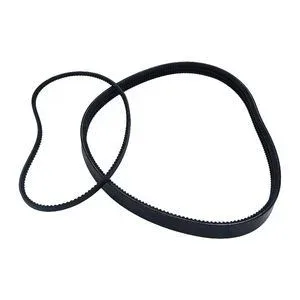
Matched Set Dispatch — Belt, tensioner, and idler pulley verified against your specific Cummins engine serial variant before packing.
Technical Specifications
| Parameter |
Value |
| Part Number |
3911584 |
| Cross-Reference |
3911584 (for identification purposes) |
| Product Type |
Belt |
| Machine Fitment |
4BT, 4B3.9, 6C8.3, 6BT, ISB CM550, 6B, 6BTA, 4B, 4BTA, 6BTAA, B3.9L, 4BTAA |
| Brand Compatibility |
Compatible with Cummins engine platforms |
| Belt Type |
Serpentine Belt |
| Rib Count |
8 |
| Belt Section |
8/K |
| Condition |
New Aftermarket |
| Warranty |
3-12 months against manufacturing defects |
| Quality Standard |
ISO 9001 |
Application Suitability
| Engine System |
Related Components |
| Front-End Accessory Drive |
Tensioner assembly, idler pulley, front crankshaft seal |
| Cooling System Loop |
Water pump pulley interface, coolant seal |
| Charging System |
Alternator drive pulley alignment |
| Engine Overhaul |
Complete belt drive kit, gasket set, front cover seal |
Diagnosing the Fault That Broke the Belt, Not Just the Belt Itself
A snapped ribbed belt engine overhaul rebuild scenario usually points to a seized tensioner bearing or misaligned accessory pulley, not normal wear.
When a machine arrives on the bench with a shredded serpentine belt, the instinct is to swap the belt and fire it up. But if the tensioner bearing has axial play or the water pump pulley is running off-axis, the replacement belt will fail again within a few hundred hours. We have seen this pattern repeat across Cummins B-series and C-series engines where the root cause was never addressed [NEED_CITE: cumulative fatigue failure patterns in multi-rib belt drive systems]. The ribbed belt engine overhaul rebuild process must include a check of every pulley the belt wraps around, because the belt is the symptom, not the disease.

The Belt Drive System Inside the Cummins Front-End Layout
This serpentine belt transmits crankshaft torque to the alternator, water pump, and air conditioning compressor simultaneously. Each of those driven accessories applies a different load profile — the alternator creates steady drag, the water pump imposes viscous resistance, and the AC compressor cycles on and off with sharp torque spikes. A ribbed belt engine overhaul rebuild must account for all three load sources when evaluating wear patterns on the removed belt, because uneven rib wear often traces back to one specific accessory pulling harder than spec.
Engine Serial Variants That Change the Belt You Need
Cummins 4BT, 6BT, 6C8.3, and ISB engines share a common architecture but do not share identical front-end geometry. Pulley groove profiles, tensioner arm lengths, and belt routing paths shift across production runs and emission-tier updates. Ordering a belt by model family alone risks receiving a section profile that rides too high or too deep in the grooves [NEED_CITE: Cummins B-series and C-series front-end accessory drive variant documentation]. Confirming the exact engine serial number before dispatch eliminates the variant mismatch that forces a second teardown.
Reading the 8/K Section Profile and Rib Geometry
The 8/K designation means this belt carries eight longitudinal ribs spaced to the K-section standard, which defines rib angle, pitch, and depth. A mismatched pulley groove — even by a fraction of a millimeter in rib pitch — causes the belt to ride on the rib tips instead of seating in the grooves, generating heat and accelerating rubber degradation. The serpentine path length must also match precisely, as a belt even one rib-length too long will slip under alternator load, while one too short overloads the tensioner spring beyond its travel range.
The Cost of Replacing Only the Belt
Fitting a new belt into a worn drive system without refreshing the tensioner and idler pulley means the new belt inherits the old misalignment and bearing runout. The result is premature rib cracking, glazing, and eventual separation — often within the first season of operation. For fleet engines running in quarry or mining duty, that repeat failure means a second unplanned teardown, a second round of coolant drainage and refill, and a second loss of machine availability [NEED_CITE: unplanned downtime cost impact for earthmoving equipment belt drive failures]. The hidden cost is never the belt itself; it is the labor and downtime of doing the job twice.
Why Source the Belt Drive as a System Here
Our own production lines and qualified sourced supply carry identical QC and warranty terms, so a belt ordered alongside its matching tensioner and idler pulley ships under one account with one warranty. The Guangzhou warehouse stocks common Cummins B-series and C-series belt drive components for fast dispatch on routine overhaul items. When the nameplate is unreadable, our technical team identifies the correct belt variant from a photograph of the old part or the engine block casting marks. Cross-reference verification covers superseded numbers across engine generations, catching mismatches before they reach the bench.
Documentation & Verification
- Commercial invoice listing each belt drive component by verified part number
- Cross-reference sheet mapping 3911584 (reference only) to applicable Cummins serial ranges
- Dimensional inspection record confirming rib count and belt section profile
- Warranty terms covering manufacturing defects for 3 to 12 months
- Packing photographs showing belt coiling and protective wrapping before crate closure
- HS code and customs documentation formatted for engine parts import clearance
Installation & Rebuild Sequence
- Inspect all pulley grooves for wear ridges before routing the new 8-rib belt
- Verify tensioner arm travel and spring pressure against Cummins B-series or C-series spec
- Check idler pulley bearing for axial play and replace if any movement is detected
- Route belt per engine diagram, confirming each rib seats fully in every pulley groove
- Torque tensioner mounting bolts to spec and release tensioner to apply belt load
- Run engine at idle for initial seating, then re-check belt tracking alignment
Request a System-Matched Quote
Provide your Cummins engine model, serial number, and any known rebuild history so we can confirm the correct belt variant and recommend matched tensioner and pulley components. If the nameplate is gone, send a photograph of the old belt, the front cover casting, or the pulley arrangement and we will identify the configuration from the image.
Frequently Asked Questions
Q: What other components should be replaced together with this belt during an engine overhaul?
A: The tensioner assembly and idler pulley should be evaluated and typically replaced at the same interval. Front crankshaft seals and any accessory bearings showing play should also be addressed, since the belt is already removed and labor overlap is minimal. Shipping them together avoids a second order and split freight.
Q: How do I confirm the correct belt variant for my specific Cummins engine serial number?
A: Provide the full engine serial number or a clear photograph of the engine nameplate or block casting marks. Production-run changes across 4BT, 6BT, 6C8.3, and ISB platforms alter pulley groove profiles and belt routing, so serial-level verification is essential before dispatch.
Q: What system-level faults cause premature belt failure beyond normal wear?
A: Seized tensioner bearings, misaligned accessory pulleys, and oil contamination from a leaking front seal all degrade belt rubber prematurely. Diagnosing the failed belt's wear pattern — glazing, rib cracking, or edge fraying — points to the specific system fault that must be corrected before the replacement belt is installed.
Q: Are matched belt drive kits available with tensioner and pulleys included?
A: Yes. The belt, tensioner, idler pulley, and front cover seal can be supplied as a coordinated set matched to your engine serial variant. Consolidating these into one consignment ensures dimensional compatibility and simplifies warranty tracking under a single account.
Q: How do I identify my Cummins engine model when the nameplate is worn or unreadable?
A: Send a photograph of the engine block casting numbers, the front cover, or the old belt with any visible markings. Our technical team cross-references these against Cummins B-series and C-series production records to confirm the exact model and serial range, then matches the correct belt variant.