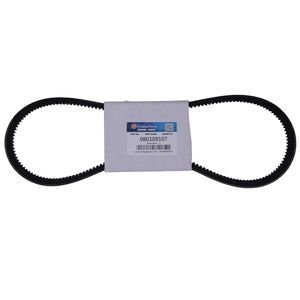
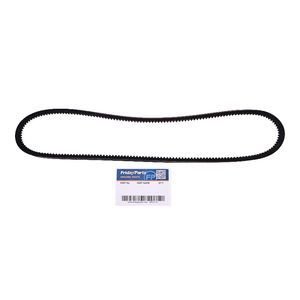
Matched Drive System Kits — Every 6660994 belt ships with verified tensioner and pulley compatibility data so the entire accessory drive goes back together without a second order.
Technical Specifications
| Parameter |
Value |
| Part Number |
6660994 |
| Cross-Reference |
6660994 (reference only) |
| Product Type |
Belt |
| Machine Fitment |
753, 763, 773, 7753 Skid Steer Loader |
| Brand Compatibility |
Replacement for Bobcat |
| Profile Type |
3VX |
| Dimensions |
3×10×1550La |
| Grooves |
3 Groove |
| Material Options |
CR+Polyester Cord; EPDM+Aramid Fiber Reinforced |
| Condition |
New Aftermarket |
| Warranty |
3–12 months against manufacturing defects |
| MOQ |
1 piece |
| Manufacturing Standard |
ISO-certified facility |
Application Suitability
| Engine System |
Related Components |
| Hydraulic pump drive |
Tensioner assembly, idler pulley, pump shaft seal |
| Auxiliary accessory drive |
Crankshaft pulley, belt guard hardware, adjacent gaskets |
| Cooling fan drive (shared belt path) |
Fan hub bearing, coolant seal, thermostat housing gasket |
| Power steering pump drive (where applicable) |
Pump mounting bolts, O-ring seal, reservoir filter |
Why a New Belt Fails Before the First Oil Change
A replacement belt inherits the fault that destroyed the original unless the entire drive path is addressed at the same time.
In rebuilding skid steer engines, I have opened accessory drives where the 3 groove pump drive belt engine rebuild replacement looked correct on paper but shredded within the first week because a seized tensioner was reinstalled alongside it. The belt was never the root cause. Worn pulley grooves, misaligned brackets, or hydraulic fluid leaking from an adjacent pump seal all attack a new belt from the moment the engine fires. [NEED_CITE: accessory drive system failure root cause analysis for skid steer loaders] Ignoring these system-level faults means the next teardown happens sooner than expected, and the customer blames the belt.

Where This Belt Sits in the Engine Accessory System
The 6660994 belt transmits crankshaft power to the hydraulic pump and auxiliary components on Bobcat 753, 763, 773, and 7753 skid steer loaders. It operates under continuous load in an environment where hydraulic fluid mist, dust ingestion, and heat cycling all degrade belt material over time. Replacing it in isolation leaves the tensioner, pulleys, and shaft seals untouched — the very components most likely to cause repeat failure. A 3 groove pump drive belt engine rebuild replacement only delivers full service life when fitted as part of a verified system-level repair.
Matching Material Grade to the Rebuild Scope
Two material paths are available for this belt. CR with polyester cord suits standard-duty rebuilds where the machine returns to typical landscaping or warehouse work. EPDM with aramid fiber reinforcement handles higher under-hood temperatures and sustained heavy-load cycles common in mining or demolition applications. Selecting the wrong grade is a frequent rebuild error — I have seen standard CR belts harden and crack when fitted to machines that routinely operate in high-ambient-heat environments. [NEED_CITE: elastomer degradation rates in high-temperature engine compartments] The engine serial number and duty cycle should drive this decision, not price alone.
Reading the 3VX Profile and Dimensional Tolerances
The 3VX profile specifies a narrow-wedge cross-section designed for higher power transmission in a compact sheave arrangement. The 3×10×1550La dimension means three ribs, 10-section width, and 1550 mm outside length — even small deviations in length tolerance cause uneven load sharing across the three grooves, accelerating wear on the shortest rib. Pulley groove condition matters equally: a worn sheave will not seat the belt ribs properly, causing slip and heat buildup regardless of belt quality. During any engine overhaul involving this drive, measuring pulley groove width with a sheave gauge should be mandatory before the new belt goes on.
What Happens When the Drive System Is Only Half-Repaired
Fitting a fresh belt over a glazed pulley or a frozen tensioner guarantees early failure. The new belt absorbs the same misalignment and contamination that destroyed its predecessor, and the machine returns to the workshop within weeks. This pattern repeats across skid steer fleets where maintenance teams treat the belt as a consumable swap rather than a system component. [NEED_CITE: repeat accessory drive failure rates in fleet maintenance records] The hidden cost is not the belt itself — it is the second teardown, the second fluid drain, and the second day the machine sits idle.
Why Rebuild Shops Source the Full Drive Kit Here
Own production on selected lines and qualified sourced supply under a single account means the belt, tensioner, and pulley all carry the same warranty terms. Eight categories across one order let a complete engine accessory drive ship in one consignment — no second freight charge waiting on a seal that was left off the list. Part identification from a number, a machine model, or a photograph of the nameplate eliminates the guesswork when the old belt markings are gone. Cross-reference verification covers superseded and alternate numbers so the correct variant ships first time. Technical support confirms material grade against your engine serial and operating conditions before you commit to bulk.
Documentation & Verification
- Commercial invoice listing 6660994 with material grade and quantity breakdown
- Compatibility sheet confirming Bobcat 753, 763, 773, 7753 fitment (reference only)
- Dimensional inspection record covering belt length, rib profile, and groove count
- Warranty certificate stating coverage period matched to selected material option
- Packing photographs showing belt condition and labeling before crate closure
- HS code and customs paperwork for cross-border engine parts shipments
Installation & Rebuild Sequence
- Inspect all pulley grooves for wear and scoring before the 3 groove pump drive belt engine rebuild replacement goes on — replace any sheave beyond tolerance
- Verify tensioner travel and spring force; a seized unit will destroy the new belt during first startup
- Check adjacent hydraulic pump and accessory shaft seals for weeping — fluid contamination is the leading cause of premature belt degradation
- Route the belt following the factory diagram and confirm rib seating in every groove by hand rotation
- Run the engine at idle for initial bedding, then recheck tension after the first warm-up cycle
Before You Send the Inquiry
Provide your engine serial number and skid steer model so we can confirm whether your specific build uses this belt variant or a superseded number. Share any rebuild history — previous overbore sizes, replaced components, and known fault codes help us recommend the correct material grade and matching system components. If the old belt is still available, a photograph of any remaining markings speeds up cross-reference verification.
Frequently Asked Questions
Q: What other components should I inspect or replace when changing the pump drive belt?
A: Check the tensioner assembly for free travel and consistent spring pressure, measure pulley groove width with a sheave gauge, and inspect all adjacent shaft seals for fluid weeping. Any seal leak contaminates the new belt. Replacing the tensioner and verifying pulley condition during the same service event prevents the most common repeat failures in skid steer accessory drives.
Q: How do I choose between CR+Polyester and EPDM+Aramid material for my application?
A: CR with polyester cord handles standard-duty cycles in moderate climates typical of landscaping and warehouse work. EPDM with aramid reinforcement is specified for machines operating in sustained high ambient temperatures or under continuous heavy hydraulic load. Provide your engine serial and typical working environment so we can recommend the grade that matches your rebuild scope and prevents premature hardening or cracking.
Q: Does the same 6660994 belt fit all Bobcat 753, 763, 773, and 7753 variants?
A: The 6660994 reference covers the primary fitment across these models, but engine serial variants and production-year changes can affect the belt path or tensioner type. We verify applicability against your specific machine serial number before shipping. Providing a photograph of your existing belt or engine nameplate helps confirm the correct variant, especially on machines that have been through previous rebuilds.
Q: My belt keeps failing early — what system-level causes should I investigate?
A: Premature belt failure in skid steer accessory drives typically traces to misaligned pulley brackets, seized or weak tensioners, or hydraulic fluid contamination from a leaking pump seal. Measure pulley alignment with a straightedge across sheave faces, verify tensioner function, and inspect all nearby seals. Addressing the root cause rather than swapping the belt alone is what delivers lasting service life from the replacement.