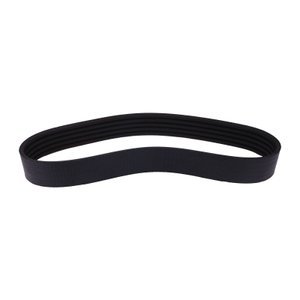
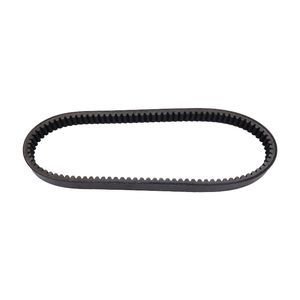
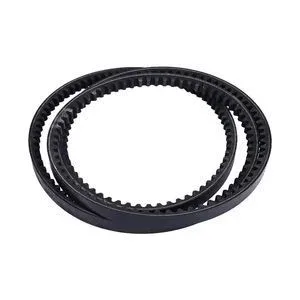
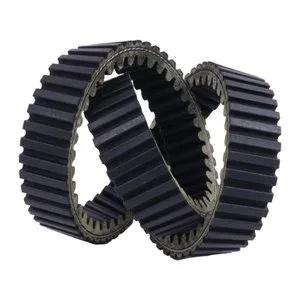
Matched Drive Sets — Belt and tensioner ship as a verified system, preventing premature re-failure from hidden bearing drag.
Technical Specifications
| Parameter |
Value |
| Part Number |
153263001 |
| Product Type |
Belt |
| Cross-Reference |
153263001 (reference only), 265-776 (reference only), 265776 (reference only) |
| Machine Fitment |
Vermeer BC1000XL |
| Material |
EPDM rubber compound with high-modulus polyester cord reinforcement |
| Dimensional Tolerance |
±0.3 mm width, ±1.5 mm length |
| Condition |
New Aftermarket |
| Warranty |
6 months against manufacturing defects |
| MOQ |
1 piece |
| Standards |
ISO 9001 |
Application Suitability
| Engine System |
Related Components |
| Belt Drive System |
Tensioner assembly, idler pulley, drive pulley, alignment brackets |
| Accessory Drive Group |
Fan clutch, alternator pulley, hydraulic pump drive sheave |
| Chipper Drum Power Transmission |
Cutting drum belt, feed roller drive, main shaft bearings |
| Cooling System Drive |
Fan belt, coolant pump pulley, radiator shroud seals |
Why a New Belt Fails Before the First Service Interval Is Reached
The root cause is almost never the belt itself — it is the tensioner bearing or pulley surface that was not replaced alongside it.
In our Guangzhou dispatch hub, we see the same pattern repeat across Vermeer BC1000XL units arriving from commercial tree care and municipal forestry operations. A Replacement Belt 153263001 engine drive belt rebuild goes out the door, and within two hundred operating hours the same customer reports a second failure. Teardown photos consistently show glazed sidewalls and snapped cords at the same tensioner contact point. The bearing had developed drag that overloaded the fresh belt from day one. [NEED_CITE: belt drive system failure root cause analysis for mobile chippers]
The System Behind the Belt
This Replacement Belt 153263001 engine drive belt rebuild sits at the front of the BC1000XL engine accessory drive, transmitting crankshaft power to the cutting drum and hydraulic cooling fan. Every pulley it wraps around shares a common wear timeline. When the EPDM rubber compound degrades from sustained ozone and heat exposure, the polyester cord reinforcement picks up cyclic shock loads that accelerate fatigue in adjacent bearings. Inspecting the tensioner travel range and pulley surface finish before installing a new belt prevents repeat teardowns.
Sequence and Grade Confirmation at Overhaul
During a chipper drum power transmission rebuild, the drive belt is one link in a chain that includes the tensioner spring, idler shaft bearing, and drive sheave keyway. Each component must be checked against the engine serial variant — the BC1000XL has been produced across multiple engine generations, and pulley groove profiles can shift between production runs. Confirming the engine serial prefix before ordering ensures the belt width and cord pitch match the installed hardware. A tensioner that sits at the limit of its travel range signals the pulley grooves have worn beyond tolerance, and both should be replaced as a matched set. [NEED_CITE: engine serial variant belt profile differences in wood chipper platforms]
Reading the Specification Sheet Against Real Operating Conditions
The EPDM compound is selected for its resistance to ozone, organic sap, and sustained underhood heat — conditions that degrade natural rubber within weeks on a working chipper. The high-modulus polyester cord reinforcement carries tensile loads during shock events when the cutting drum encounters dense hardwood or embedded debris. Dimensional tolerances of ±0.3 mm on width and ±1.5 mm on length keep the belt seated correctly in the pulley groove without riding up onto the crown, which causes edge fraying. The molded sidewall geometry maintains the designed contact angle at full operating tension, distributing load across the full cord cross-section rather than concentrating it at the edges.
The Cost of Skipping the Tensioner Check
Replacing the belt alone on a machine with a seized tensioner bearing produces a specific failure signature: the new belt develops a shiny glazed surface on the back within fifty hours, followed by longitudinal cord separation. The downtime cost of a second teardown on a storm debris cleanup contract exceeds the price of a full drive component kit. Workshop supervisors who authorize matched-set replacement — belt, tensioner, and idler together — eliminate the diagnostic loop that sends a machine back to the bay twice. [NEED_CITE: matched component replacement economics in commercial tree care fleet maintenance]
Why Source This Drive Component From XUNPO
Our production lines and qualified sourced partners operate under one warranty and one QC protocol, so a belt and its matching tensioner carry identical coverage. Eight product categories across engine parts, hydraulics, and general spares mean a complete BC1000XL overhaul list ships in a single consignment from our Guangzhou warehouse. Minimum order starts at one piece, so an emergency single-belt replacement is never blocked by quantity thresholds. Our technical team verifies cross-reference numbers and superseded variants against the machine serial before confirmation, and sample supply is available so fitment can be checked physically before bulk commitment.
Documentation & Verification
- Commercial invoice and packing list itemizing belt and matched drive components
- Cross-reference sheet listing alternate and superseded belt numbers (reference only)
- Tensile strength and dimensional validation record per batch
- Six-month warranty terms covering manufacturing defects
- Packing photographs showing individual polybag and reinforced carton condition
- HS code and customs documentation for cross-border clearance
Installation & Rebuild Sequence
- Inspect tensioner bearing for free rotation and zero axial play before belt installation
- Verify pulley groove profile matches the ±0.3 mm width tolerance of the new belt
- Route the belt following the BC1000XL factory diagram to maintain correct contact angles
- Apply specified tension and run the engine at idle for a break-in cycle
- Recheck alignment and tension after the first operating hour under load
Requesting a Matched Drive Quote
Provide your BC1000XL engine serial prefix, machine production year, and any previous rebuild history so we can confirm the correct belt variant and identify which adjacent components should ship together. Photographs of the existing tensioner assembly and pulley surfaces help us assess whether a matched set is needed. Our team will return a consolidated compatibility and cross-reference verification within one business day.
Frequently Asked Questions
Q: What other drive components should I inspect or replace when changing this belt?
A: Check the tensioner bearing for smooth rotation, the idler pulley groove surface for wear ridges, and the drive sheave keyway for play. On the BC1000XL, the hydraulic pump drive sheave also shares this belt path and should be visually inspected. Replacing worn components as a matched set prevents the new belt from absorbing misalignment damage within the first hundred hours.
Q: How do I confirm the correct belt variant for my engine serial number?
A: Share the engine serial prefix and machine model with our technical team. The BC1000XL has been fitted with different engine packages across production years, and pulley groove profiles can vary. We cross-reference the serial against our fitment database and send a compatibility sheet for your confirmation before dispatch.
Q: Can I get the tensioner and pulley in the same shipment?
A: Yes. Our Guangzhou warehouse stocks tensioner assemblies, idler pulleys, and related fasteners alongside this belt. Ordering them together under one account ensures consolidated dispatch, a single warranty reference, and matched lead times so no component arrives ahead of the others.
Q: What causes premature belt failure beyond normal wear?
A: A seized or dragging tensioner bearing is the most common cause, followed by pulley misalignment from a bent bracket or worn shaft. Organic sap buildup and debris ingress accelerate sidewall abrasion. Identifying and correcting the root cause before installing a replacement belt is essential to avoid repeat failures.
Q: Is a sample available to verify fitment before bulk ordering?
A: We supply single-piece samples so you can confirm belt profile, length, and pulley seating on your specific BC1000XL variant before committing to a fleet quantity. This eliminates trial-fitment risk across multiple machines and ensures the cross-reference matches your installed hardware.