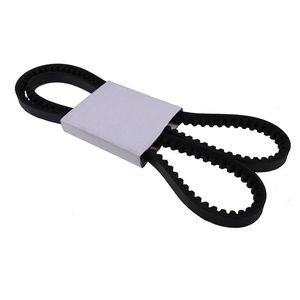
Matched Set Dispatch — Fan belt routed with tensioner and idler pulley verified against the same engine serial before packing.
Technical Specifications
| Parameter |
Value |
| Part Number |
REMF-1345 |
| Product Type |
Belt |
| Cross-Reference |
REMF-1345 (reference only), REMF1345 (reference only) |
| Machine Fitment |
Excavators, Tractors, Mowers |
| Part Name |
Aftermarket Mitsuboshi REMF-1345 Fan Belt |
| Condition |
New Aftermarket |
| Material |
Precision-molded rubber compound with reinforced fiber cords |
| Temperature Range |
-30°C to 120°C |
| Warranty |
3-12 months against manufacturing defects |
| MOQ |
1 piece |
| Standard |
ISO 9001 |
Application Suitability
| Engine System |
Related Components |
| Engine Cooling System (Fan Drive) |
Belt tensioner assembly, idler pulley, fan hub bearing |
| Front Accessory Drive |
Crankshaft pulley, water pump pulley, alternator mounting bracket |
| Scheduled Overhaul Service |
Thermostat, coolant seals, hose clamps, radiator cap |
Why the Cooling System Fails Again Weeks After a Belt Swap
Replacing the fan belt without inspecting the tensioner bearing and pulley alignment schedules the next failure before the machine leaves the bay.
A snapped REMF-1345 fan belt shuts down engine cooling in minutes, risking warped cylinder heads and blown head gaskets. Yet most early belt failures I trace back to a seized tensioner bearing or a pulley running out of true. The new belt takes the misalignment load and fails prematurely. [NEED_CITE: engine cooling system belt failure root cause analysis for off-highway equipment]
The Belt Is the Symptom, Not the Disease
This fan belt sits at the end of a load chain. The crankshaft drives it, but the tensioner maintains the tracking force and the idler guides the routing path. When a REMF-1345 fan belt glazes, cracks, or snaps early, the root cause is rarely the belt itself. Worn tensioner springs lose clamping force, allowing slip that generates heat and destroys the rubber compound from the inside out.
Matched Replacement Sets Prevent Repeat Failures
Shipping a belt alone leaves the rebuild shop to source the tensioner and pulley separately, often from different suppliers with mismatched lead times. We pair the REMF-1345 fan belt with its adjacent tensioner and idler as a cooling system service set. Every component in the set is cross-checked against the same engine serial number, so the shop receives one consignment that covers the entire drive loop. [NEED_CITE: matched component replacement practices for engine front-end drives]
Reading the Specifications That Matter in the Field
The rubber compound with reinforced fiber cords is rated across -30°C to 120°C, covering cold-start contraction and sustained high-load heat soak typical of excavator and tractor duty cycles. The fiber reinforcement resists tensile stretch that would otherwise cause the belt to ride lower in the pulley groove, reducing grip and accelerating wear. Precision molding ensures consistent cross-section profile so the belt seats fully in V-grooves without bottoming out or riding high.

The Hidden Cost of Skipping Adjacent Components
A belt-only replacement that ignores a marginal tensioner bearing typically returns within a few hundred operating hours. The second failure now carries the cost of another teardown, another coolant drain and refill, and machine downtime that compounds against project schedules. In field conditions where a broken belt can whip into the radiator fan and damage the core, the collateral repair bill dwarfs the cost of replacing the tensioner alongside the belt. [NEED_CITE: secondary damage from fan belt failure in mobile construction machinery]
What We Bring to This Specific Part
Selected production lines run in our own facility while qualified ISO-certified partners supply the remainder, all under one account and one warranty covering the REMF-1345 fan belt and its matched components. Eight product categories mean the tensioner, pulley, thermostat, and coolant seals ship in one consignment. Minimum order is one piece for emergency single-unit repairs. Our Guangzhou warehouse holds stock on fast-moving cooling system items for rapid dispatch. Part identification works from the old belt stamping, a machine model, or a photograph of the nameplate. Our technical team confirms compatibility and verifies superseded cross-reference numbers before packing.
Documentation & Verification
- Commercial invoice listing each cooling system component with individual line-item part numbers
- Cross-reference sheet mapping REMF-1345 to alternate and superseded numbers (reference only)
- Dimensional inspection record covering belt length, profile width, and cord tension test
- Warranty terms document specifying coverage period and manufacturing defect conditions
- Packing photographs showing belt and matched components before crate closure
- HS code classification and customs paperwork support for cross-border shipment
Installation & Rebuild Sequence
- Clean all pulley grooves of oil residue and old rubber deposits before routing the new REMF-1345 fan belt
- Verify tensioner spring force and idler bearing smoothness; replace if any roughness is felt by hand
- Route belt following the engine service manual diagram, confirming no twist at any span
- Set tension to the manufacturer-specified deflection value, never by feel or guesswork
- Run the engine at idle for initial seating, then recheck tension after the first heat cycle
Requesting a Cooling System Set Quote
Send us your engine model, serial number, and any previous rebuild history so we can confirm whether standard or oversize components apply. Include a photo of the old belt stamping or the machine nameplate if the number is worn. We will return a matched set covering the belt, tensioner, pulley, and related seals verified against your specific engine build.
Frequently Asked Questions
Q: What other cooling system parts should I replace alongside this belt?
A: We recommend pairing the belt with the tensioner assembly, idler pulley, and inspecting the fan hub bearing. Coolant system seals and the thermostat should also be checked during the same service window. Replacing these together prevents a secondary teardown within weeks and ensures the new belt operates under correct tension and alignment from the start.
Q: How do I confirm this belt matches my specific engine serial variant?
A: Provide the engine model and serial number so our technical team can verify routing length and profile against the factory build record. Fan belt specifications sometimes change mid-production, and a stamped number on the old belt may reflect a superseded reference. We cross-check all numbers before dispatch to confirm fitment.
Q: Why did my last belt fail early?
A: Early belt failure usually traces to a seized tensioner bearing, misaligned pulley, or coolant system overheating that degrades the rubber from sustained excess heat. Replacing only the belt without addressing these root causes means the new belt inherits the same destructive conditions. A system-level inspection prevents repeat failures.
Q: Can I order a matched set as one kit?
A: Yes. We assemble the belt, tensioner, idler pulley, and associated hardware into a single consignment matched to your engine serial number. This approach eliminates split freight from multiple suppliers and ensures every component in the drive loop is verified for compatibility before it reaches your workshop.