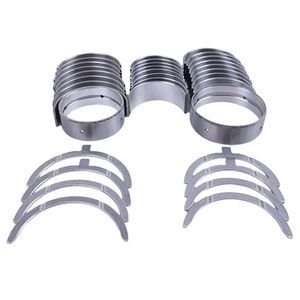
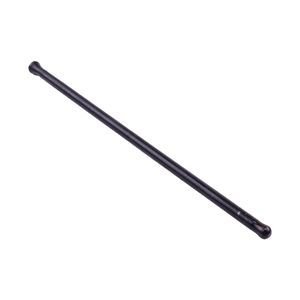
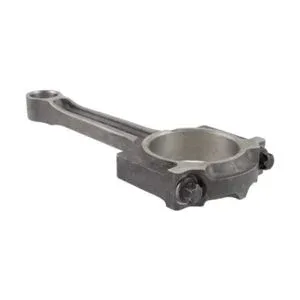
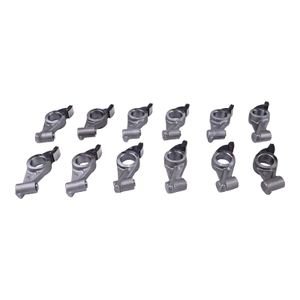
Matched Set Dispatch — Main, rod, and thrust components ship as one verified kit, eliminating grade mismatch between separate bearing orders.
Technical Specifications
| Parameter |
Value |
| Product Type |
Main Bearing / Con Rod Bearing |
| Machine Fitment |
Kubota V1903, V1903T, V2003, V2003T, V2203, V2403 |
| Kit Contents |
1 Set Main Bearings, 1 Set Connecting Rod Bearings, 1 Set Thrust Washers |
| Condition |
New Aftermarket |
| Bearing Material |
Babbitt metal (SnSb11Cu6) over hardened steel back |
| Surface Treatment |
Double-heat treatment (quenching at 850°C, tempering at 200°C), hardness HB 120–140 |
| Bearing Clearance Grade |
ISO 2768-mK dimensional tolerances |
| Thrust Washer Surface Roughness |
Ra 0.4–0.8 μm |
| Available Grades |
STD, 0.25 and 0.50 oversize |
| Warranty |
6 months against manufacturing defects |
| Standards |
ISO 9001, ISO 2768-mK, ISO/SAE J300 |
Application Suitability
| Engine System |
Related Components |
| Crankshaft main journals |
Crankshaft seals, main bearing cap bolts, oil pump assembly |
| Connecting rod journals |
Con rod bolts, piston pin bushings, piston rings |
| Crankshaft axial control |
Thrust washer seats, flywheel housing gasket, rear main seal |
| Lubrication supply circuit |
Oil pump, oil filter, oil cooler O-rings, oil pressure relief valve |
| Bottom-end overhaul scope |
Full gasket set, crankshaft polishing or regrind verification |
Why the Wrong Bearing Grade Stops a Rebuild Before It Starts
The crankshaft condition dictates bearing grade, and previous rebuild history changes everything on the parts list.
An overhaul bay opens an engine expecting standard bearings, only to find the crankshaft was reground during a prior repair — now every shell in the kit is wrong. The engine sits disassembled on the stand while the correct oversize set is sourced, adding days to what should have been a controlled teardown and build. I have watched a Kubota V1903 bottom-end job stall twice because the rebuild log was incomplete and the crankshaft journals measured undersized [NEED_CITE: crankshaft regrind grade identification practices in diesel engine overhaul]. The Kubota V1903-V2403 main and rod bearing set engine rebuild must account for this history before the order is placed.

The Bottom End as a System, Not a Parts List
The rotating assembly in the Kubota V-series diesel engine depends on matched clearances across every journal. A Kubota V1903-V2403 main and rod bearing set engine rebuild that ignores one station — say, a thrust washer with wrong surface finish — introduces axial play that loads the main bearings unevenly. Each component in this kit addresses one load path in that system, and they must arrive dimensionally consistent with each other and with the actual crankshaft in front of you.
What Previous Rebuilds Hide Inside the Crankcase
A V2203 pulled from a compact excavator may have run for thousands of hours since its last bottom-end service, or it may have been rebuilt with oversize shells that were never documented. Without measuring journal diameters or reviewing the engine serial variant, you cannot confirm whether STD, 0.25, or 0.50 oversize bearings are needed [NEED_CITE: diesel engine bearing oversize selection after crankshaft regrind]. This kit is supplied in multiple grades specifically because production runs across V1903, V2003, and V2403 variants introduced internal differences that affect shell fitment.
Material, Heat Treatment, and Clearance in Practice
The Babbitt metal overlay (SnSb11Cu6) over a hardened steel back provides the embeddability that protects journals from minor oil contamination particles. The double-heat treatment cycle — quenching at 850°C followed by tempering at 200°C — stabilizes the steel back at a hardness of HB 120–140, which controls crush height and prevents shell rotation under load. Thrust washer surface roughness between Ra 0.4–0.8 μm retains a sufficient oil film during low-RPM operation and cold starts, when hydrodynamic pressure has not yet built. ISO 2768-mK tolerances ensure that main and rod shells seat with consistent crush height across all journals, avoiding the partial-contact pattern that causes early bearing fatigue.
The Cost of Shipping the Wrong Grade to the Bench
When a standard-grade shell is pressed into a reground journal, the clearance gap exceeds specification and oil pressure drops at idle — often caught only after the engine is reassembled and running. The teardown that follows doubles the labor cost of the rebuild and risks scoring a crankshaft that was already in marginal condition. I have seen a V2003 returned to the stand three days after initial assembly because the rod bearing clearance was out of tolerance [NEED_CITE: connecting rod bearing failure modes related to incorrect grade selection]. Rebuild shops absorb these losses quietly, but the pattern repeats wherever crankshaft history is assumed rather than measured.
What Makes This Source Different for Engine Work
Selected bearing lines are produced in our own facility, while remaining components are sourced from ISO-certified manufacturing partners — both carry identical QC and warranty terms. A single account covers this bearing set alongside gasket sets, piston rings, and oil pumps from the same rebuild list. Orders ship from one piece upward, so a single emergency V2403 bottom-end job is not blocked by minimum quantities. Part identification works from engine serial number, crankshaft measurement data, or a photograph of the existing shells. Technical support confirms grade and variant before the kit leaves the Guangzhou warehouse. A sample set is available for fitment verification before bulk commitment to a fleet overhaul program.
Documentation & Verification
- Commercial invoice listing each bearing grade and engine serial cross-reference
- Compatibility sheet marking OEM interchange numbers as reference only
- Dimensional inspection record covering crush height and shell wall thickness
- Warranty terms document specifying coverage period and defect conditions
- Packing photographs showing kit contents verified against order list
- HS code and customs classification support for cross-border shipment
Installation & Rebuild Sequence
- Verify crankshaft journal diameters with micrometer before selecting bearing grade
- Clean all oil galleries and confirm no debris remains from previous failure
- Install main bearing shells with correct tang alignment and check crush height
- Fit thrust washers and measure crankshaft end-play before proceeding to rods
- Torque main and rod cap bolts to specification and rotate crankshaft by hand
- Prime lubrication system and verify oil pressure before first loaded operation
Confirm Your Engine Details Before Ordering
Provide the exact engine model, serial number, and any known crankshaft regrind history to receive a grade-confirmed Kubota V1903-V2403 main and rod bearing set engine rebuild kit. If journal measurements are available, include those readings so the correct oversize can be assigned. Photographs of existing bearing shells and the engine nameplate help when records are incomplete.
Frequently Asked Questions
Q: What grade of bearing do I need if the crankshaft has been reground before?
A: Measure each journal with a micrometer and compare against the engine factory specification sheet. If any journal has been machined undersized, the corresponding bearing shell must be ordered in the matching oversize grade. Previous rebuild records often document this, but measurement is the only reliable confirmation when records are missing or incomplete.
Q: Does this set cover everything needed for a bottom-end rebuild, or are additional components required?
A: This kit includes main bearings, connecting rod bearings, and thrust washers as a matched set. A complete bottom-end rebuild typically also requires crankshaft seals, bearing cap bolts if stretched, and an oil pump inspection. Gasket sets and piston ring kits are available separately to consolidate the full overhaul order.
Q: How do I confirm the exact engine variant when the nameplate is worn or missing?
A: The engine serial number is often stamped on the block in a secondary location. Photographs of the block casting, cylinder head configuration, and existing bearing shells allow technical cross-referencing against Kubota V-series production records to identify the correct internal variant.
Q: What system-level issues should I investigate to prevent repeat bearing failure?
A: Repeated bearing failure usually traces to oil contamination, oil pump wear reducing supply pressure, or crankshaft surface defects from prior operation. Inspect the lubrication circuit, check oil filter bypass valve function, and examine journal surfaces for scoring before installing new shells.
Q: Can I get a sample set for fitment verification before committing to bulk?
A: Sample bearing sets are available for fitment and clearance checks before placing a fleet-quantity order. This is recommended when rebuilding multiple engines of the same variant or when crankshaft condition introduces uncertainty about grade selection.