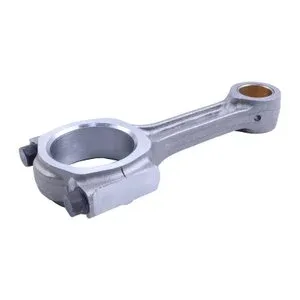
Engine Serial Variants Confirmed — Each Push Rod 733817M1 is verified against Perkins-based diesel engine build codes (4.212, 4.248, 6.354, 1006.60, T4.236) before dispatch, eliminating fitment errors caused by serial-level differences within the same machine model.
Technical Specifications
| Parameter |
Value |
| Part Number |
733817M1 |
| Product Type |
Push Rod |
| Cross-Reference (reference only) |
733817M1 |
| Machine Fitment |
Massey Ferguson 275, 290, 375, 383, 390, 690, 1014, 1130, 2620, 2640, 3050, 3065, 3090, 3630; Oliver 1850; White 5542, 7300, 8600 |
| Material |
Forged SAE 1045 Steel |
| Surface Treatment |
Quench-and-Temper Heat Treatment, Phosphate Coating |
| Surface Finish |
Ra ≤ 0.4 μm |
| Diameter Tolerance |
±0.01 mm |
| Assembly State |
New Aftermarket |
| Standard |
ISO 9001 |
| Warranty |
3–12 Months Against Manufacturing Defects |
| MOQ |
1 Piece |
Application Suitability
| Engine System |
Related Components |
| Valve Train Actuation |
Hydraulic tappets, mechanical lifters, rocker arms |
| Cylinder Head Assembly |
Intake and exhaust valves, valve springs, collets |
| Camshaft Drive |
Cam lobes, timing gears, cam bearings |
| Overhaul Kit Contents |
Gasket sets, piston rings, main and con-rod bearings |
Why the Same Engine Model Ships With Different Push Rod Lengths
Confirming the engine serial number — not just the machine model — is the only reliable way to match the correct valve train geometry.
A workshop in Zhaoqing once ordered a full set of valve train parts for a Massey Ferguson 165 based solely on the tractor model. The push rods that arrived matched the tractor listing perfectly but had the wrong end profile for that specific Perkins engine build, causing rocker arm misalignment and persistent valve clearance drift. The engine had to be torn down again [NEED_CITE: Perkins diesel engine serial number variant identification for aftermarket parts]. When the same base machine carries different engine serial ranges — such as 4.248 versus 1006.60 — the push rod specification changes even though the external machine model stays identical.

Valve Train Positioning Within a Complete Overhaul
The Push Rod 733817M1 sits at the mechanical link between camshaft lobe and rocker arm in Perkins-platform diesel engines. When a rebuild is planned, this component must be evaluated alongside hydraulic tappets, rocker arm bushes, and valve stem seals. Replacing push rods while retaining worn lifters transfers the old wear pattern onto new surfaces, cutting the service life of the entire valve train short.
Engine Serial Variants Determine Fitment
Massey Ferguson tractors and combines using this push rod span engine families from the four-cylinder 4.212 and 4.248 through the six-cylinder 6.354 and 1006.60 series. Each engine serial variant carries its own valve train geometry, and the push rod length and end profile are tied to that specific build. Our verification process cross-checks the engine plate serial against the build code before any Push Rod 733817M1 leaves the warehouse [NEED_CITE: Perkins engine build code cross-reference methodology for aftermarket suppliers]. This catches the common error where a parts catalog lists the machine model but omits the engine serial range that governs component specification.
Material and Heat Treatment Under Cyclic Loading
Forged SAE 1045 steel provides the core fatigue strength required for repeated valve-opening cycles that can exceed thousands of actuations per minute. The quench-and-temper treatment creates a hardened surface layer while preserving a ductile core, preventing brittle fracture under the shock loads that occur at higher engine speeds. Phosphate coating reduces break-in*rfaces in the tappet and rocker cup. A surface finish of Ra ≤ 0.4 μm at the contact zones minimizes localized stress concentrations that would otherwise initiate micro-cracks over extended duty cycles.
The Hidden Cost of Skipping Root-Cause Diagnosis
Premature push rod bending or end-cap wear rarely originates in the rod itself. Worn cam lobes, out-of-spec tappets, or oil gallery blockage starving the valve train of lubrication are typical underlying causes. Replacing the push rod without addressing these system faults leads to repeat failures within the first few hundred operating hours [NEED_CITE: valve train failure root cause analysis diesel engines]. The teardown cost for a second rebuild far exceeds the diagnostic time that would have caught the original fault.
Why Source This Component Here
Selected push rod lines are produced in our own facility, with the remainder sourced from qualified ISO 9001-certified partners — both carry identical quality control and warranty terms. Engine system components across eight categories ship under one account, so a full overhaul order consolidates into a single consignment rather than arriving in mismatched batches. Minimum order is one piece, supporting emergency single-engine repairs without forcing surplus purchases. Engine serial number verification is performed before dispatch, catching variant mismatches that catalog-only ordering misses. Technical staff are available to confirm grade, oversize status, and compatibility against your specific engine build plate. Sample supply is offered for fitment validation before you commit to fleet-scale quantities.
Documentation & Verification
- Commercial invoice listing each push rod by engine serial variant matched
- Cross-reference sheet confirming 733817M1 interchange numbers (reference only)
- Dimensional inspection record covering diameter tolerance and surface finish
- Warranty terms specifying coverage period and defect claim procedure
- Packing photographs taken before crate closure for shipment record
- HS code and customs classification support for agricultural engine parts
Installation & Rebuild Sequence
- Inspect each tappet bore for scoring before inserting new push rods to prevent immediate end wear
- Confirm push rod seating depth in tappet cup and verify free rotation by hand
- Check rocker arm cup profile matches the push rod end radius to avoid point loading
- Set valve clearance to engine manual specification with engine at correct temperature condition
- Run initial break-in at idle for the period specified in rebuild procedure before loading
Confirm Your Engine Build Before Ordering
Provide your engine serial number and any previous rebuild records so we can verify the correct push rod specification for your exact Perkins-platform build. If the engine plate is unreadable, send a photograph of the block casting numbers and we will cross-check the variant. Include your overhaul kit part number if one is already on order, so we can flag any duplicate components before dispatch.
Frequently Asked Questions
Q: What other valve train parts should be replaced together with the push rods?
A: Tappets, rocker arm bushes, and valve stem seals should be evaluated during every push rod replacement. Worn tappets transfer their wear profile onto new push rod ends, causing early failure. Replacing the full actuation set ensures matched wear across all contact surfaces and avoids a second teardown within the same overhaul cycle.
Q: How do I confirm the correct push rod for my engine serial variant?
A: The engine serial number on the block plate determines the exact valve train geometry, not the tractor or combine model alone. Share the full serial with our technical team and we cross-reference it against the build code to confirm length, end profile, and material specification before the order is processed.
Q: Does a standard overhaul gasket kit include push rods?
A: Most overhaul gasket kits cover seals and gaskets only. Push rods, lifters, and rocker components are typically separate line items. Confirm your kit contents against the job list to avoid duplicate orders or, worse, discovering a missing component after the engine is already partially assembled.
Q: What causes push rod failure beyond normal wear?
A: Bent or accelerated-wear push rods usually point to a system fault — worn cam lobes, blocked oil galleries, or incorrect valve clearance settings. Replacing the push rod without diagnosing the underlying cause leads to repeat failure. A root-cause check during teardown prevents costly comebacks [NEED_CITE: diesel engine valve train fault diagnosis methodology].
Q: Can push rods from different production batches be mixed in one engine?
A: Mixing batches from different suppliers risks dimensional variation outside the ±0.01 mm tolerance, leading to uneven valve timing across cylinders. For consistent valve train geometry, all push rods in a single engine should come from one verified batch with matching inspection records.