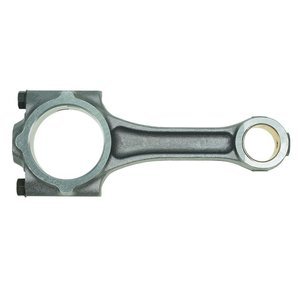
Engine serial variants confirmed — bearing clearance grades verified against crankshaft condition before dispatch to prevent secondary failures during Yanmar 3TNA72 overhaul.
Technical Specifications
| Parameter |
Value |
| Product Type |
Connecting Rod |
| Machine Fitment |
YB121, YB151, FF165, FF155, F145, 430, 455, 755, 670, F925 |
| Brand Compatibility |
Compatible with Yanmar, John Deere equipment |
| Material |
High-strength alloy steel |
| Manufacturing Process |
Forged |
| Testing |
Magnaflux tested for hidden cracks |
| Bearing Surfaces |
Precision ground |
| Condition |
New Aftermarket |
| Warranty |
3-12 months against manufacturing defects |
| MOQ |
1 piece |
| Standards |
ISO 9001 |
Application Suitability
| Engine System |
Related Components |
| Block and cylinder assembly |
Piston assemblies, wrist pins, cylinder liners |
| Crankshaft bearing interface |
Main bearings, rod bearings, thrust washers |
| Lubrication circuit |
Oil pump, oil filter, gallery plugs |
| Cooling and thermal management |
Thermostat, water pump, head gasket |
| Fuel delivery system |
Injection pump, injectors, fuel filter |
Why the Same Connecting Rod Fails Twice After Rebuild
Incorrect bearing grade selection after crankshaft regrinding causes repeated connecting rod failure.
I have stood in Shandong workshops watching a freshly rebuilt Yanmar 3TNA72 seize within hours because the rebuild kit contained standard-size bearings while the crankshaft had been ground to oversize. The mechanic trusted the kit label without measuring. When engine overhaul rebuild projects skip crankshaft measurement, the connecting rod bearing clearance runs too wide, oil pressure drops at the journal, and the rod knocks itself apart [NEED_CITE: engine bearing clearance measurement protocols for diesel rebuild]. The same connecting rod engine overhaul rebuild then gets torn down again, new parts ordered, and the machine sits idle for another week while the shop absorbs the cost of doing the job twice.

System Context: Where the Rod Lives in the 3TNA72
The connecting rod transfers combustion force from the piston to the crankshaft inside the Yanmar 3TNA72 block. It operates within a closed system where oil film thickness, bearing shell grade, piston-to-bore clearance, and crankshaft journal condition all interact. A connecting rod engine overhaul rebuild that replaces the rod but ignores a scored crankshaft journal or a blocked oil gallery simply shifts the failure point to the next weakest link. System-level diagnosis means tracing what caused the original rod to fail rather than treating the broken component as the entire problem.
Bearing Grades and Engine Serial Variants
The 3TNA72 family includes variants such as 3TNA72UJ and 3TNA72L, and internal dimensions can shift across production runs. Bearing shells come in STD, 0.25, 0.50 and 0.75 oversize grades to match crankshaft regrind history. Installing a standard connecting rod with STD bearings into a block whose crankshaft was already ground to 0.25 creates excess clearance and low oil pressure at that journal [NEED_CITE: crankshaft undersize bearing selection standards for industrial diesel engines]. Verifying engine serial number and measuring crankshaft journals before ordering eliminates the mismatch that leads to repeat teardowns.
Reading the Spec Sheet: What Forged Alloy Steel and Magnaflux Testing Mean
Forged high-strength alloy steel gives the connecting rod grain flow aligned with load direction, which resists the tensile and compressive cycling that cracked or sintered rods cannot withstand. Precision ground bearing surfaces ensure the shell seats without gaps that create hot spots and localized fatigue. Magnaflux testing reveals subsurface cracks invisible to the naked eye—hairline fractures in the big-end cap or bolt hole that would propagate under combustion load. These three specifications together define whether a replacement connecting rod survives a full rebuild cycle or fails prematurely under normal operating stress.
The Cost of Skipping Root-Cause Diagnosis
When a connecting rod fails and the rebuild addresses only the damaged part, the underlying fault remains active. A blocked oil passage starves the new rod bearing just as it starved the old one. A bent rod from hydraulic lock will destroy the new piston and score the liner within hours. Shops that skip bore measurement and crankshaft inspection accumulate comebacks, each one eroding customer trust and consuming warranty budget [NEED_CITE: diesel engine rebuild quality assurance and comeback prevention practices]. The hidden cost is not the part itself but the repeated labor, machine downtime, and reputational damage that follow an incomplete diagnosis.
Why Source This Connecting Rod Here
Our own production lines and qualified sourced supply carry identical QC and warranty terms, so you receive consistent quality regardless of which facility manufactured your connecting rod. Eight categories of engine and machine parts consolidate under one account and one shipment, meaning overhaul gaskets, piston sets, seal kits, and filters travel with the connecting rod rather than arriving days later from a separate vendor. Minimum order is one piece, so an emergency single-cylinder repair ships without forced bulk purchases. Guangzhou warehouse stock on common items enables fast dispatch. Part identification works from engine model, serial number, photograph, or nameplate image—whichever you have on hand. Cross-reference verification covers superseded and alternate numbers, and sample supply is available for fitment confirmation before bulk commitment.
Documentation & Verification
- Commercial invoice and packing list itemize each connecting rod with engine compatibility noted
- Part compatibility and cross-reference sheet marked reference only included per shipment
- Magnaflux test record and dimensional inspection report accompany every batch
- Warranty terms state coverage period and manufacturing defect scope clearly
- Packing photographs taken before crate closure for condition evidence
- HS code and customs documentation provided for smooth import clearance
Installation & Rebuild Sequence
- Inspect crankshaft journal for taper, out-of-round, and surface finish before fitting the connecting rod
- Match bearing shell oversize grade to measured journal diameter; do not rely on kit label alone
- Torque big-end cap bolts in staged increments per specification to avoid cap distortion
- Verify side clearance between rod big-end and crankshaft cheek with feeler gauge after assembly
- Prime oil system and confirm pressure at idle before placing the engine under load
- Run initial break-in at varied RPM without sustained idle to seat bearing surfaces evenly
Request the Correct Grade for Your Rebuild
Provide the Yanmar 3TNA72 engine serial number and any crankshaft regrind records so we can confirm the correct connecting rod bearing grade. If the nameplate is unreadable, send a photograph of the block casting number or the existing rod stamping. We will cross-check variant differences and return a compatibility confirmation with your quote.
Frequently Asked Questions
Q: What other components should be replaced alongside a connecting rod during overhaul?
A: Plan to replace rod bearings, piston rings, wrist pin bushings, and the head gasket at minimum. Main bearings and thrust washers should be inspected and often replaced as a matched set. Gasket and seal kits for the full engine prevent oil leaks that would otherwise force a second teardown shortly after rebuild completion.
Q: How do I determine the correct bearing grade after crankshaft regrinding?
A: Measure each crankshaft journal with a micrometer and compare readings to the engine service manual undersize chart. The connecting rod bearing grade must match the journal diameter, not the original factory specification. Always measure rather than assume the previous shop used a standard regrind increment.
Q: Do all 3TNA72 variants share identical internal dimensions?
A: No. Production revisions across the 3TNA72UJ, 3TNA72L and other designations can involve different piston crown heights, bearing widths, or rod bolt specifications. Confirm your exact engine serial number before ordering to ensure the connecting rod and matched components fit your specific variant.
Q: What typically causes connecting rod failure and how is recurrence prevented?
A: Common root causes include oil starvation from blocked galleries, overloading, incorrect bearing clearance, and hydraulic lock from coolant ingress. Prevent recurrence by tracing the original failure mechanism during teardown—measure oil pressure, inspect galleries, and check for coolant contamination before assembling the new connecting rod.