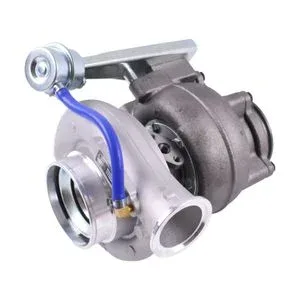
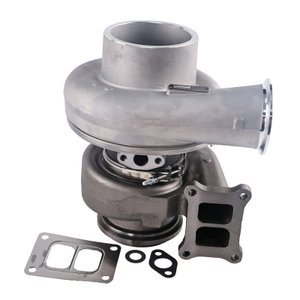
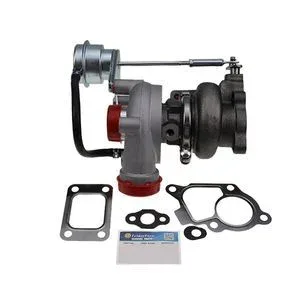
System-Matched Rebuild Supply — Every HX40W turbocharger order is verified against the specific engine serial to confirm variant, ensuring gasket sets, oil feed lines, and manifold hardware arrive matched to the same QSL / ISL / ISC8.3 build.
Technical Specifications
| Parameter |
Value |
| Part Number |
2839811 |
| Product Type |
Turbocharger |
| Cross-Reference |
2839811, 3772607, 4033241, 4037513, 4037542, 4038989, 404030, 4041762, 4041765, 4042341, 4044081, 4044082, 4046101, 4046105, 4089915, 4089917, 4955152, 4955195, 87351239 (reference only) |
| Turbo Model |
HX40W, HX40W-B85J71GL/C76L84FH18UD-W |
| Machine Fitment |
2004-2011 Cummins Truck with QSL Engine, 2004-2011 Valmet 445 FXL Fellerbuncher with QSL Engine |
| Condition |
New Aftermarket |
| Warranty |
3–12 months against manufacturing defects |
| MOQ |
1 piece |
| Quality Standard |
ISO 9001 |
Application Suitability
| Engine System |
Related Components |
| Intake and forced induction |
Air filter assembly, intake hose clamps, intercooler piping |
| Exhaust gas routing |
Exhaust manifold gasket, exhaust clamp bands, flex pipe |
| Lubrication supply to turbo |
Oil feed line, oil drain gasket, crankcase breather |
| Emission and aftertreatment |
EGR valve gasket, charge air cooler seals, wastegate actuator |
Why Rebuild Shops Replace the Turbo Without Solving the Problem
A failed turbocharger is rarely the root cause — it is the first visible symptom of an upstream system fault.
In my years sourcing parts for Cummins QSL / ISL / ISC8.3 rebuilds across Central Asian mining and forestry fleets, I have seen shops swap the HX40W turbocharger and have the replacement fail within weeks. The pattern is almost always the same: degraded oil feed lines feeding coked residue into the bearing housing, or a blocked crankcase breather forcing oil past the turbine seal [NEED_CITE: common turbocharger failure root causes in heavy-duty diesel engines]. The replacement part is blamed, but the system that killed the original unit was never addressed.
An HX40W turbocharger for Cummins engine rebuild work belongs to a network of components that share the same oil circuit and intake path. Ordering the turbo alone, without inspecting and replacing the adjacent gaskets, feed lines, and filtration elements, leaves the new unit exposed to the same conditions that destroyed its predecessor.
The Intake and Exhaust Circuit as a Single System
The HX40W turbocharger sits at the junction of the engine's intake and exhaust systems. Compressor-side components — air filter housing, intake ducting, charge air cooler — determine the volume and cleanliness of air reaching the turbine. Exhaust-side components — manifold gasket, exhaust pipe joints — determine the thermal and pressure load the turbine housing must withstand. A leak at any point in this circuit alters the boost profile and shifts the operating envelope of the rotating assembly. Rebuild shops that treat the turbocharger as an isolated line item miss these interactions.
Matching the Turbo to Adjacent Components During Overhaul
When an engine rebuild includes turbocharger replacement, the exhaust manifold gasket and oil drain gasket should be replaced as a matched set. The oil feed line should be inspected for internal coking — a condition that cannot always be detected from the outside — and replaced if there is any doubt [NEED_CITE: oil feed line coking inspection standards for turbocharged diesel engines]. Intake hose clamps that have been heat-cycled through multiple service intervals lose their tension and should be renewed. This system-level approach prevents the scenario where a new HX40W turbocharger for Cummins engine rebuild work fails prematurely because an old gasket or degraded line was reused.

Reading the Cross-Reference List Against Engine Serial Variants
The extensive cross-reference list — spanning numbers like 2839811, 4089917, 4046101, 4044082, and others — reflects part number supersessions across different Cummins engine serial ranges and build configurations. A turbocharger carrying one reference number may be dimensionally correct for an early-production QSL but incompatible with a later ISL variant that uses a different compressor wheel profile or wastegate calibration. Verification against the engine serial number, not just the model designation, is required before committing to an order. I have had buyers send me a photo of a nameplate where the original turbo number had been superseded twice; cross-referencing without the serial would have shipped the wrong variant.
Dimensional Tolerance and Rotating Assembly Balance
The HX40W-B85J71GL/C76L84FH18UD-W designation encodes specific compressor wheel diameter, turbine trim, and housing geometry that must match the engine's calibrated airflow requirement. The balanced rotating assembly reduces vibration-induced bearing wear over the service interval, which matters particularly in high-cycle applications like forestry fellerbunchers and heavy trucking where the engine operates under sustained load. High-temperature turbine housing materials resist the thermal cracking that can develop at the volute tongue after repeated heat cycles [NEED_CITE: turbine housing thermal fatigue in heavy-duty turbocharger applications].
The Cost of Skipping System-Level Diagnosis
Replacing a turbocharger without diagnosing why the original unit failed is one of the most expensive shortcuts in engine rebuild work. If the root cause was oil starvation from a blocked feed line, the new unit will experience the same bearing wear pattern and fail in a comparable timeframe. If contaminated intake air eroded the compressor wheel, the new wheel will suffer identical damage unless the filtration fault is corrected. Shops that skip this diagnosis face repeat warranty claims, dissatisfied equipment owners, and the compounding cost of a second teardown — all of which are avoided by treating the HX40W turbocharger for Cummins engine rebuild as part of a system-level repair [NEED_CITE: cost of repeat turbocharger failure in fleet maintenance operations].
What Distinguishes This Supply Source
Our own production lines and qualified sourced partners operate under one account and one warranty, so whether the turbocharger or the matched gasket set comes from our facility or a certified partner, the QC terms are identical. The eight product categories covering engine, hydraulic, electrical, undercarriage, cabin, seals, tools, and general spares mean a complete rebuild list ships as one consignment rather than staggered deliveries from multiple vendors. Orders start at one piece — a single emergency turbo for a downed fellerbuncher is treated with the same priority as a fleet overhaul kit. Our technical team confirms compatibility against engine serial numbers and variant-specific cross-references, and sample units are available for fitment trials before bulk commitment.
Documentation & Verification
- Commercial invoice and packing list itemizing turbocharger and associated gasket sets
- Cross-reference sheet mapping 2839811 to superseded numbers (reference only)
- Quality inspection record covering rotating assembly balance and housing dimensional check
- Warranty terms specifying coverage period and manufacturing defect scope
- Packing photographs confirming turbocharger condition before crate closure
- HS code and customs documentation for international engine parts shipments
Installation & Rebuild Sequence
- Clean all oil feed and drain passages before installing the HX40W turbocharger to prevent debris ingestion
- Replace exhaust manifold and oil drain gaskets as a set during turbo installation
- Verify oil feed line internal condition; replace if coking residue is present
- Pre-lubricate the turbocharger bearing housing with clean engine oil before first cranking
- Confirm wastegate actuator linkage travel matches engine specification before final assembly
- Run engine at idle for initial break-in and check for oil leaks at all new gasket joints
Requesting a Rebuild Quote
Provide the engine model designation, serial number, and any prior rebuild history so we can confirm the correct turbocharger variant and matched component list. If the failed unit is still available, a photograph of the data plate or casting numbers helps resolve any superseded cross-reference discrepancies before the order is finalized.
Frequently Asked Questions
Q: What gaskets and oil lines should be replaced together with the turbocharger?
A: The exhaust manifold gasket, oil drain gasket, and oil feed line should all be replaced during turbocharger installation. Intake hose clamps and charge air cooler seals are also recommended. Reusing aged gaskets or degraded feed lines exposes the new HX40W turbocharger to the same failure conditions that destroyed the original unit.
Q: My old turbo has a different number — is this still the correct replacement?
A: Cummins has superseded turbocharger part numbers multiple times across QSL, ISL, and ISC8.3 production runs. The cross-reference list includes numbers such as 2839811, 4089917, and 4046101, all marked for reference only. Provide your engine serial number so we can verify which variant your specific build requires.
Q: What caused the original turbo to fail, and how do I prevent it from happening again?
A: Common root causes include oil starvation from coked feed lines, contaminated intake air from failed filtration, and blocked crankcase breathers creating backpressure on the oil drain. Addressing these upstream faults during the rebuild prevents the replacement turbocharger from experiencing the same failure mode.
Q: Do different Cummins QSL / ISL serial ranges use different turbo variants?
A: Yes. Compressor wheel profiles, wastegate calibration, and housing geometry can differ between early and late serial ranges within the same engine family. Confirmation against the engine serial number, rather than the model alone, is required to ensure the HX40W variant matches your specific engine build.
Q: Can I get a sample to confirm fitment before committing to a bulk order?
A: Sample units are available for fitment trials. This allows rebuild shops to verify flange patterns, oil port positions, and overall dimensional compatibility with the engine before committing to larger quantities for fleet overhaul programs.