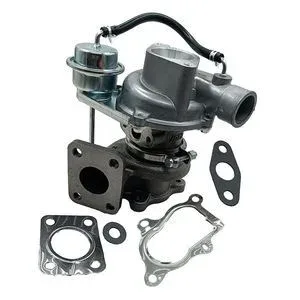
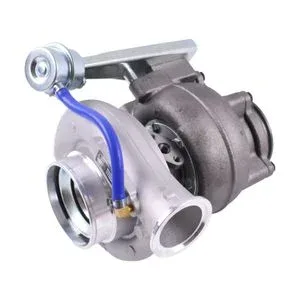
Engine Serial Variants Confirmed — Turbocharger 513-6823 fitment checked against C2.2 and 3024C serial ranges to prevent mounting orientation mismatch during rebuild.
Technical Specifications
| Parameter |
Value |
| Part Number |
513-6823 |
| Product Type |
Turbocharger |
| Cross-Reference |
513-6823, 5136823, 317-0981, 3170981, 442-9826, 4429826, 239-0230, 2390230, 2634220, 282-5179, 2825179, 308-2308, 3082308, 324-0237, 3240237, 10R-9578, 10R9578 (reference only) |
| Machine Fitment |
216B, 226B, 226B3, 232B, 242B, 247B, 247B3, 257B |
| Turbo Model |
RHF4-46001P8.5NHBRL323CAZ |
| Compatible Engine |
C2.2, 3024C |
| Condition |
New Aftermarket |
| Warranty |
3-12 months against manufacturing defects |
| Quality Standard |
ISO 9001 |
Application Suitability
| Engine System |
Related Components |
| Exhaust manifold and turbo interface |
Manifold gaskets, turbo mounting nuts, heat shields |
| Oil feed and return circuit |
Oil feed line, oil return gasket, restrictor fitting |
| Intake and charge air path |
Air filter element, intake boot, charge pipe seals |
| Crankcase ventilation |
Breather hose, crankcase pressure regulator |
Why the Turbo Fails Again Weeks After a Fresh Rebuild
Replacing a failed turbo without tracing the root cause inside the lubrication and exhaust systems guarantees a shortened life for the new unit.
Workshops across Latin America frequently report repeat turbo failure on C2.2 and 3024C engines within the first few hundred hours after replacement. In many cases the underlying cause — oil coking in the feed line, exhaust back-pressure from a restricted DPF or collapsed catalytic substrate, or air filter bypass — was never addressed. The new Turbocharger for C2.2 engine rebuild absorbs the same thermal and contamination loads that destroyed its predecessor [NEED_CITE: common root causes of turbocharger failure in small-displacement diesel engines]. A complete engine overhaul approach treats the turbocharger as one node in the emission and exhaust system rather than an isolated component.

The Emission and Exhaust System Context
The RHF4 turbocharger sits between the exhaust manifold and the intake tract, exposed to exhaust gas temperatures that demand matched manifold-to-turbo gaskets and properly torqued mounting hardware. During a Turbocharger for C2.2 engine rebuild, both the exhaust-side sealing and the oil drain return path must be refreshed simultaneously. Overlooking either surface introduces leaks that compromise boost pressure and oil drainage.
Engine Serial Variants and Mounting Orientation
Production runs of C2.2 and 3024C engines have seen changes in turbo mounting orientation and oil port configuration. A turbocharger ordered by machine model alone may arrive with oil feed or drain ports positioned for a different serial range. Verifying the engine serial number against the variant list before dispatch ensures the replacement unit aligns with existing piping without adapter fabrication [NEED_CITE: engine serial number verification procedures for turbocharger replacement].
Reading the Specifications That Matter
The RHF4-46001P8.5NHBRL323CAZ designation encodes the compressor trim, turbine housing A/R ratio, and wastegate calibration — parameters that directly influence boost curve and exhaust gas flow characteristics on C2.2 and 3024C platforms. Mismatch in any of these values shifts the operating point away from the engine map, producing either sluggish response or excessive exhaust temperature. ISO 9001 manufacturing controls ensure dimensional consistency of bearing clearances and rotor balance across production batches.
The Cost of Skipping Root-Cause Diagnosis
A turbocharger installed on an engine with degraded oil feed lines inherits contaminated lubrication from day one. Carbon deposits in the center bearing cartridge accelerate journal wear, and the new unit may require warranty replacement within the first service interval. Similarly, an unresolved exhaust restriction forces the turbine to work against elevated back-pressure, raising shaft temperature beyond design limits [NEED_CITE: effects of exhaust back-pressure on turbocharger bearing life]. These repeat failures compound labor costs and erode confidence in the rebuild.
Why Source This Turbocharger Through XUNPO
Own production lines for selected turbo components and qualified sourced supply carry identical QC and warranty terms under one account. Eight product categories allow manifold gaskets, oil feed lines, air intake seals, and the turbocharger itself to ship in a single consignment. One-piece minimum order accommodates urgent single-unit rebuilds. Guangzhou warehouse stock enables fast dispatch on common configurations. Part identification is available from engine serial number, machine model, or nameplate photograph when the original tag is illegible. Cross-reference verification covers superseded numbers including 10R-9578 and 317-0981.
Documentation & Verification
- Commercial invoice and packing list itemizing turbocharger and matched gasket sets
- Compatibility and cross-reference sheet listing 513-6823 interchange numbers (reference only)
- Dimensional and rotor balance quality inspection record included with each unit
- Warranty terms covering manufacturing defects for 3 to 12 months
- Packing photographs showing turbocharger protective wrapping before crate closure
- HS code and customs documentation support for international engine parts shipments
Installation & Rebuild Sequence
- Clean oil feed and return passages thoroughly before connecting the RHF4 turbocharger center housing
- Pre-lube the turbo bearing cartridge with clean engine oil prior to first cranking
- Install new manifold and oil drain gaskets; torque turbo mounting nuts to engine manual specification
- Verify wastegate actuator linkage travel matches C2.2 calibration after installation
- Run the engine at idle for initial minutes to confirm oil flow and absence of exhaust leaks
- Record boost pressure at rated RPM and compare against engine specification sheet
Requesting an Accurate Quotation
Provide the engine model, engine serial number, and any known rebuild history to confirm the correct turbocharger variant and matched gasket set. If the engine nameplate is damaged, send a photograph of the existing turbocharger data tag or mounting flange for identification. Including the machine model and approximate operating hours helps determine whether adjacent emission and exhaust components should be refreshed in the same overhaul.
Frequently Asked Questions
Q: What gaskets and seals should I replace when installing this turbocharger?
A: During a Turbocharger for C2.2 engine rebuild, replace the exhaust manifold-to-turbo gasket, oil drain gasket, oil feed line fitting seal, and intake boot clamp seals. These components degrade under thermal cycling and rarely survive a second installation. Ordering them alongside the turbocharger ensures the rebuild is complete before the engine is returned to service.
Q: What causes repeat turbo failure on C2.2 engines?
A: Oil coking from degraded feed lines, exhaust back-pressure from restricted aftertreatment components, and air filter bypass allowing unfiltered air into the compressor are the most common causes. Addressing these system-level issues during turbo replacement prevents the new unit from inheriting the same failure mode within the first few hundred operating hours.
Q: Are C2.2 and 3024C turbochargers interchangeable across all serial ranges?
A: While both engines share the same platform, turbo mounting orientation and oil port configuration have changed across production runs. Confirming the engine serial number against the variant list ensures the correct unit is supplied. A turbocharger fitted to the wrong serial range may require adapter plates or re-routed oil lines.
Q: Do you supply complete engine overhaul kits that include this turbocharger?
A: Yes. Overhaul kits can be configured to include the RHF4 turbocharger alongside piston sets, bearing shells, gasket sets, and oil pump components matched to the specific engine serial range. This system-level approach reduces the risk of overlooking a component that could compromise the rebuild outcome.
Q: How do I confirm my engine serial number to get the correct variant?
A: The engine serial number is stamped on the block identification plate, typically located on the valve cover or block side. If the plate is worn or painted over, send a photograph of the existing turbocharger data tag or the engine block casting area. Cross-reference against superseded part numbers is performed before dispatch.