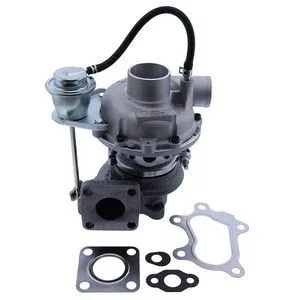
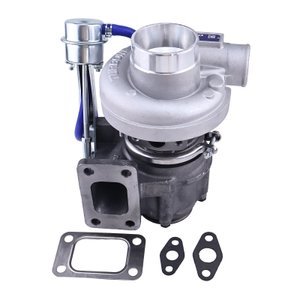
Engine Serial Variants Confirmed — Cummins N14 turbo flange and oil port orientation verified against engine build sheet before dispatch.
Technical Specifications
| Parameter |
Value |
| Part Number |
3804566 |
| Product Type |
Turbocharger |
| Cross-Reference |
3536804, 4033556, 4033556H, 3536012, 380456600, 3804566NX, 3804566RX, CU3804566 (reference only) |
| Machine Fitment |
PC600-6, PC600LC-6, PC650-6, PC650LC-6, PC600LC-6KJ, PC600-6KJ |
| Turbo Model |
HT60-N0881A/H32K1, HT60 |
| Engine Compatibility |
Cummins N14 |
| Condition |
New Aftermarket |
| Warranty |
3–12 month warranty against manufacturing defects |
| MOQ |
1 piece |
| Standards |
ISO |
Application Suitability
| Engine System |
Related Components |
| Intake & Boost |
Air intake hoses, charge air cooler seals, boost pressure sensor |
| Exhaust Flow |
Exhaust manifold gaskets, manifold studs and nuts, heat shields |
| Oil Supply & Drain |
Turbo oil feed line, oil drain gasket, oil filter |
| Emission Control |
Crankcase ventilation hoses, blow-by filter elements |
When the Turbo Fails Again Weeks After Rebuild
Replacing the turbocharger HT60 without diagnosing oil starvation or exhaust back-pressure almost guarantees a return visit to the teardown bench.
In a mining pit in West Africa, I watched a PC600-6 come back for its second engine teardown in one month. The first crew swapped the turbo and sent the machine back to work. Nobody checked the oil feed restriction or the cracked exhaust manifold gasket leaking pressure upstream. Two weeks later, the new turbocharger HT60 failed on the same bearing surface [NEED_CITE: common turbocharger failure root causes in heavy diesel engines]. The lesson was expensive: the intake and exhaust system of the Cummins N14 must be treated as a connected circuit, not a catalogue of independent parts. When a turbo fails, the fault usually lives somewhere else in that circuit.
The Cummins N14 Intake and Exhaust Circuit
This turbocharger HT60 engine rebuild component sits at the junction of three fluid paths: pressurized intake air, hot exhaust gas, and engine oil. Each path has its own seals, gaskets, and line connections that age at different rates. On the N14 platform, the oil feed line orifice can restrict flow gradually as varnish builds up, starving the turbo bearings without triggering any dashboard warning. The exhaust manifold gaskets can compress unevenly after repeated heat cycles, altering back-pressure profiles that the turbine wheel was designed to operate within. Addressing the turbocharger HT60 engine rebuild as a system-level task means inspecting all three paths before the new unit goes on.
Engine Serial Variants and Rebuild History
The Cummins N14 family spans multiple serial ranges with differences in turbo flange orientation, oil port clocking, and wastegate actuator mounting. An engine that has been through a previous overhaul may also carry oversized pistons and liners, which changes combustion pressure and the exhaust energy reaching the turbine [NEED_CITE: Cummins N14 engine serial variant differences in turbo mounting]. When sourcing the turbocharger HT60 engine rebuild unit, confirming the engine serial number and any prior rebuild work ensures the flange pattern and port positions match the block currently on the bench. A turbo that bolts on but clocks its oil drain at the wrong angle will flood the center housing and fail prematurely.
Reading the Specifications That Matter
The HT60-N0881A/H32K1 designation encodes the compressor and turbine wheel geometry that determines the boost curve across the N14 operating range. The H32K1 trim relates to the turbine wheel inducer diameter and exducer profile, which govern how much exhaust energy is extracted at low and high engine speeds. Mismatch here means either sluggish low-end response or excessive boost at rated RPM, both of which stress the engine in different ways. The new aftermarket condition means all journal bearings, thrust surfaces, and seal rings are within factory tolerance stacks, but those tolerances must be paired with clean oil supply and unobstructed drain paths to function as designed. ISO-standard manufacturing ensures dimensional consistency across production batches, which matters when you are matching the turbo to an overhaul gasket kit sourced from the same supplier.
The Cost of Skipping Root-Cause Diagnostics
Installing a new turbo on an engine where the oil feed line still carries debris from the previous failure means the new bearings ingest contaminants within the first hours of operation. Running an excavator with a cracked exhaust manifold gasket upstream of the turbine introduces unmetered air leaks that alter the pressure ratio the turbo was matched to deliver [NEED_CITE: exhaust system integrity requirements for turbocharged diesel engines]. These are not warranty failures; they are system failures that happen to show up at the turbo. Every repeat teardown costs the labor hours, the gasket sets, the fluid replacements, and the machine availability that the first repair was supposed to restore.
Why Source This Turbocharger Through XUNPO
Our own production lines and qualified sourced supply operate under one account and one warranty, so the turbocharger and its adjacent gaskets, oil lines, and seal kits all carry the same coverage terms. Eight product categories mean a complete N14 overhaul kit ships as a single consignment rather than arriving in staggered parcels. Minimum order from one piece supports the emergency single-unit replacement as well as the planned fleet overhaul. Guangzhou warehouse stock on common N14 items enables fast dispatch when the engine is already on the stand. Part identification works from a part number, a machine model, a photograph of the nameplate, or even a worn data tag — our cross-reference verification covers superseded and alternate numbers across the 3536804, 4033556, 3804566 families. Technical staff are available to confirm flange orientation, oil port clocking, and grade matching against your specific engine build sheet.
Documentation & Verification
- Commercial invoice listing turbocharger HT60 and matched gasket line items separately
- Cross-reference sheet mapping 3804566 against all superseded numbers (reference only)
- Dimensional inspection record covering flange bolt pattern and oil port position
- Warranty terms specifying coverage scope for manufacturing defects
- Packing photographs showing protective crating before crate closure
- HS code and export documentation prepared for destination customs clearance
Installation & Rebuild Sequence
- Verify oil feed line orifice is clear before connecting to turbo center housing
- Confirm exhaust manifold gasket surfaces are flat and studs are not stretched
- Torque turbo mounting nuts to N14 specification in the correct sequence
- Pre-lube center bearing with clean engine oil before first cranking
- Check boost pressure at rated RPM against Cummins N14 service manual values
- Inspect oil drain path for kinks or restrictions after initial run-in period
Request a System-Matched Quote
Provide your Cummins N14 engine serial number, any prior rebuild records, and the specific machine model. This allows us to confirm the correct turbocharger HT60 flange variant, verify the overhaul gasket kit contents match your engine build, and quote all related intake and exhaust system components in a single package.
Frequently Asked Questions
Q: What other engine components should be replaced when installing a new turbocharger?
A: On the Cummins N14, we recommend inspecting the oil feed and drain lines, exhaust manifold gaskets, intake hose connections, and air filter elements. Worn exhaust studs and degraded oil line fittings are common contributors to repeat turbo failure. Including these items in the same overhaul order prevents partial repairs that lead to early returns.
Q: How do N14 engine serial variants affect turbo fitment?
A: Different N14 serial ranges carry variations in turbo flange bolt pattern, oil port clocking angle, and wastegate actuator bracket position. Providing the engine serial number allows us to verify that the HT60 unit ships with the correct flange orientation and port configuration for your specific block.
Q: What caused the original turbo to fail — and how do I prevent it happening again?
A: Common root causes include oil starvation from restricted feed lines, contaminated oil from a bypassed filter, and elevated exhaust back-pressure from failed manifold gaskets. Diagnosing and correcting these system-level faults before installing the replacement turbo prevents the same failure mode from destroying the new unit.
Q: Is this turbo matched to the overhaul gasket kit I am ordering?
A: When both the turbocharger and the gasket kit are sourced through the same order, we verify that the flange gasket profile, oil drain gasket thickness, and intake seal dimensions all correspond to your specific N14 engine build. This eliminates the mismatch risk that arises when components come from separate suppliers.
Q: How do I confirm the correct turbo if my engine has been previously rebuilt?
A: A prior rebuild may have changed piston grade, liner size, or head gasket thickness, all of which affect combustion pressure and exhaust energy. Share your rebuild records and engine serial number so we can confirm the turbocharger HT60 trim matches the current engine configuration rather than the original factory specification.