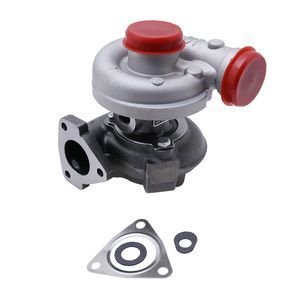
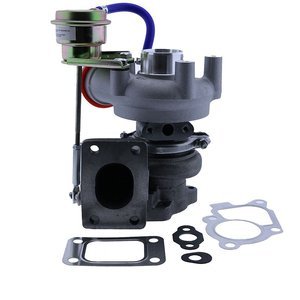
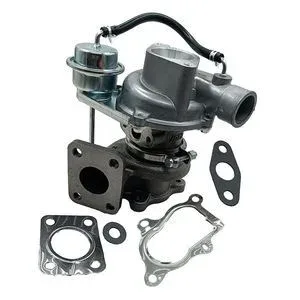
Matched Sets Shipped Together — every turbocharger S300A113 order verified against the engine serial variant so the matched oil and air components arrive in the same consignment.
Technical Specifications
| Parameter |
Value |
| Part Number |
631GC5172M5 |
| Product Type |
Turbocharger |
| Cross-Reference |
631GC5172M5 (reference only) |
| Turbo Model |
S300A113 |
| Condition |
New Aftermarket |
| Machine Fitment |
CV713 Truck (with AI427, E7 Engines) |
| Engine Compatibility |
Mack E7, AI427 |
| Warranty |
3–12 months against manufacturing defects |
| Manufacturing Standard |
ISO 9001 |
Application Suitability
| Engine System |
Related Components |
| Intake and forced induction |
Oil feed and drain lines, air filter housing, intake gaskets |
| Emission and exhaust |
Exhaust manifold gasket, clamp hardware, exhaust pipe seals |
| Lubrication circuit |
Oil cooler seals, supply hose, banjo bolts and washers |
| Fuel delivery |
Fuel injector seals, fuel return line O-rings |
Why a Turbo Failure Rarely Starts at the Turbo
The component that failed is rarely the component that caused the failure.
When an E7 or AI427 engine arrives at the rebuild bench with a destroyed turbo, the instinct is to swap it and fire the engine. I have watched a Mack CV713 go back into service with a fresh S300A113 unit, only to see the replacement fail within a handful of operating weeks. The root cause was elevated fuel system backpressure that nobody checked during the teardown [NEED_CITE: common root causes of premature turbocharger failure in heavy-duty diesel engines]. Oil feed starvation and contaminated intake air produce identical symptoms — a scored bearing and a discolored turbine housing — yet the corrective actions are entirely different. Sourcing a replacement turbocharger for Mack E7 AI427 engine rebuild without verifying the surrounding system means the next failure countdown begins the moment oil pressure builds.

Where This Turbocharger Sits in the Engine System
The intake and emission system of a Mack E7 or AI427 power unit operates as a pressure-balanced loop. The turbocharger compresses charge air, the intercooler drops its temperature, and the combustion event produces exhaust gas that spins the turbine. When one element in that loop shifts — a clogged air filter raising inlet restriction, or a worn exhaust manifold gasket bleeding drive pressure — the turbo works outside its mapped efficiency island. A replacement turbocharger for Mack E7 AI427 engine rebuild must therefore be evaluated alongside the air filtration condition, the intercooler integrity, and the exhaust sealing surfaces. Shipping the turbo alone, without the gaskets and seals that mate it to the adjacent system, leaves the rebuilder sourcing small items separately and risking a second delay before the engine fires.
Matching Oversize and Rebuild History Before Ordering
Engines that have been through a prior overhaul often carry non-standard clearances. Bearing shells may already sit at 0.25 mm oversize, and cylinder bores may have been honed to a larger finish. The turbocharger itself does not change dimension across rebuild grades, but the oil volume and pressure reaching its center housing do. An engine rebuilt with larger bearing clearances flows more oil past the crankshaft journals, which can reduce pressure at the turbo supply line [NEED_CITE: oil pressure drop effects on turbocharger bearing lubrication after engine overhaul]. Before confirming an order, the rebuilder should note the engine serial variant, any oversize components installed during the last teardown, and the current oil pressure reading at operating temperature.
Reading the Specifications That Matter on the Bench
The S300A113 turbo model designation carries specific implications for the CV713 application. The turbine wheel is cast from a high-grade nickel-based alloy selected for thermal fatigue resistance during sustained high-load highway pulling, where exhaust gas temperatures cycle between idle and full-load extremes hundreds of times per shift. The balanced rotor assembly minimizes transmitted vibration, which directly affects main and connecting rod bearing wear over the life of the rebuild. OEM-spec oil passages tied to the 631GC5172M5 cross-reference maintain correct flow volume and pressure to the floating bearing under both cold-start and fully-warmed conditions. The precision-machined compressor housing preserves the designed air-fuel ratio, supporting complete combustion and preventing the soot loading that accelerates ring and liner wear after an overhaul.
The Cost of Skipping the System Check
Installing a new turbo without tracing the failure origin leads to a familiar pattern: the engine runs well for the break-in period, then oil consumption climbs, boost pressure drops, and the shop faces a second teardown on the same job. Each repeat disassembly means another full gasket and seal kit, another round of machining verification, and another block of downtime charged to the fleet [NEED_CITE: cumulative cost impact of repeat engine teardowns in commercial truck maintenance]. The hidden expense is never the turbo itself — it is the labor, the collateral components, and the credibility loss with the equipment owner.
Why Rebuild Shops Source This Line Through Us
Our own production lines and qualified sourced supply carry the same quality inspection and warranty terms, so a turbocharger ordered alongside an overhaul gasket set arrives under one accountability. Eight product categories sit in a single account, meaning the intake gaskets, oil feed hose, exhaust clamps, and fuel injector seals ship on the same pallet as the turbo. Minimum order starts at one piece — a single replacement turbo for a down truck clears the same desk as a fleet-level overhaul kit order. Guangzhou warehouse stock covers fast-moving items for immediate dispatch, while part identification can begin from an engine serial plate photograph when the old turbo nameplate is oil-stained or heat-blued. Cross-reference verification includes superseded and alternate numbers, and a sample unit can be dispatched for fitment confirmation before a shop commits to bulk rebuild inventory.
Documentation & Verification
- Commercial invoice listing turbo model S300A113 with matching HS code for customs clearance
- Compatibility sheet mapping 631GC5172M5 cross-reference to AI427 and E7 serial ranges
- Quality inspection record documenting rotor balance result and boost pressure bench test
- Warranty terms covering manufacturing defects including bearing and seal failure
- Packing photographs showing protective crating and desiccant placement before crate closure
Installation & Rebuild Sequence
- Inspect oil feed and drain lines for carbon buildup; replace banjo bolt washers before mounting the turbocharger
- Verify exhaust manifold flange flatness and install new gasket and locking hardware to specification
- Pre-lubricate the turbo center housing with clean engine oil before connecting supply and return lines
- Prime the oiling system by cranking without fuel until oil pressure registers at the turbo feed port
- Run a graduated break-in: low idle warm-up followed by monitored load stages across the first operating hours
Start the Conversation With the Right Details
Send the engine serial number, the variant code from the block stamping, and any notes from the previous overhaul — including which oversize grades were used. If the failed turbo nameplate is still legible, a photograph helps confirm the exact variant before the cross-reference is pulled. With those details we confirm fitment, identify which matched gaskets and seals belong in the same job, and return a consolidated quote covering the complete intake and emission system package.
Frequently Asked Questions
Q: What other engine system parts should be replaced when installing a new turbocharger?
A: The intake gasket set, oil feed and drain line seals, exhaust manifold gasket, and air filter element should all be evaluated. On E7 and AI427 engines, the banjo bolt washers on the oil supply line are single-use items. Replacing these alongside the turbo avoids a second teardown caused by a leaking seal that was accessible during the original job.
Q: How do I confirm this turbo fits my specific Mack engine serial number?
A: Provide the full engine serial from the block stamping plate and any variant suffix. We cross-reference the serial against the AI427 and E7 production ranges to verify the correct S300A113 configuration, including oil port orientation and compressor housing orientation specific to your build.
Q: What oil system issues commonly cause premature turbo failure on E7 and AI427 engines?
A: Restricted oil feed lines, carbon-blocked drain passages, and excessive crankcase pressure all starve the turbo center bearing. Engines with prior overhauls may have altered bearing clearances that reduce oil pressure at the turbo supply port. Checking these before installation prevents repeat failure.
Q: Is a sample available for fitment verification before committing to a bulk engine rebuild order?
A: Yes. A single sample unit ships with the same inspection documentation as a production batch. Rebuild shops use the sample to verify oil port alignment, flange pattern, and clamp clearance on the actual engine block before authorizing the full order.