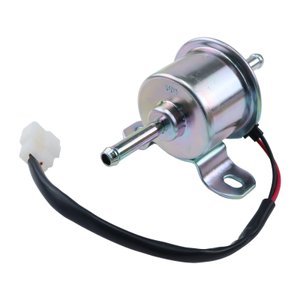
Engine Serial Variants Confirmed — Cross-referencing 1J801-53052 against V2403-CR-E4 and D1803-CR-TE4 build sheets ensures the correct injector variant reaches the rebuild bench.
Technical Specifications
| Parameter |
Value |
| Part Number |
1J801-53052 |
| Product Type |
Injector |
| Cross-Reference |
0445110777, 0 445 110 777, 1J801-53051, 1J801-53050 (reference only) |
| Engine Compatibility |
Kubota V2403, D1803, V2403-CR-E4, D1803-CR-TE4, V2403-CR-E4B-SBFU-1, D1803-CR-E4B-SBFU-2 |
| Machine Fitment |
KX040-4, U48-5, L3301DT, L3560HST, L3901DT, L4060HSTC, L4701DT, MX4800DT, MX5400HSTC, M62 |
| Opening Pressure |
270 ± 5 bar |
| Nozzle Orifice Tolerance |
±0.5 μm |
| Flow Rate Tolerance |
±2.5% |
| Needle Valve Design |
Dual-stage pressure-actuated |
| Condition |
New Aftermarket |
| Warranty |
6-month standard warranty against manufacturing defects |
| MOQ |
1 piece |
| Standards |
ISO 9001, ISO 6162-1, ISO 8535-1 |
Application Suitability
| Engine System |
Related Components |
| High-pressure common rail injection (V2403-CR-E4) |
Fuel filters, supply pump, rail pressure sensor |
| Direct injection diesel system (D1803) |
Feed pump, return lines, injector leak-off pipes |
| Cylinder combustion chamber interface |
Piston crowns, cylinder liners, valve seats |
| Emission aftertreatment upstream |
EGR cooler, exhaust manifold gaskets, turbocharger |
Why Flow Balance Across the Injector Set Dictates Rebuild Success
Replacing a single unit without verifying set-wide flow matching turns a targeted repair into a repeat combustion fault.
When one cylinder receives a different fuel volume than its neighbors, the imbalance forces the engine control module to compensate across all cylinders, accelerating soot accumulation on adjacent piston crowns and increasing ring wear unevenly. I have seen rebuild shops replace four pistons after a misfire diagnosis, only to find the root cause was a single flow-deviating injector feeding that cylinder. Checking the flow rate test record for each unit in the set before assembly prevents this cascade. [NEED_CITE: diesel injector flow matching tolerances during engine overhaul]

The Injector's Position Within the Kubota V2403/D1803 Fuel Circuit
The Fuel Injector 1J801-53052 sits at the final stage of the high-pressure delivery path in Kubota V2403 and D1803 engines, where rail pressure or mechanical pump output meets the combustion chamber. Its atomization quality directly determines whether the air-fuel mixture burns completely or leaves carbon deposits that compromise compression over successive operating cycles. An engine rebuild that installs new pistons and liners but reuses flow-degraded injectors will see the new components degrade faster than the old ones they replaced.
Engine Serial Variants and Why the Base Number Is Not Enough
The identifier 1J801-53052 spans multiple engine build configurations including V2403-CR-E4, D1803-CR-TE4, V2403-CR-E4B-SBFU-1, and D1803-CR-E4B-SBFU-2. These suffix designations reflect differences in emission calibration, rail pressure mapping, and internal flow characteristics that affect which injector variant the ECU expects. Ordering by base number alone without confirming the full engine serial risks receiving a unit whose opening pressure curve does not match the engine's fuel map, causing rough idle and elevated exhaust temperatures. [NEED_CITE: Kubota engine serial suffix designation and fuel system calibration]
Opening Pressure and Orifice Precision Under Operating Conditions
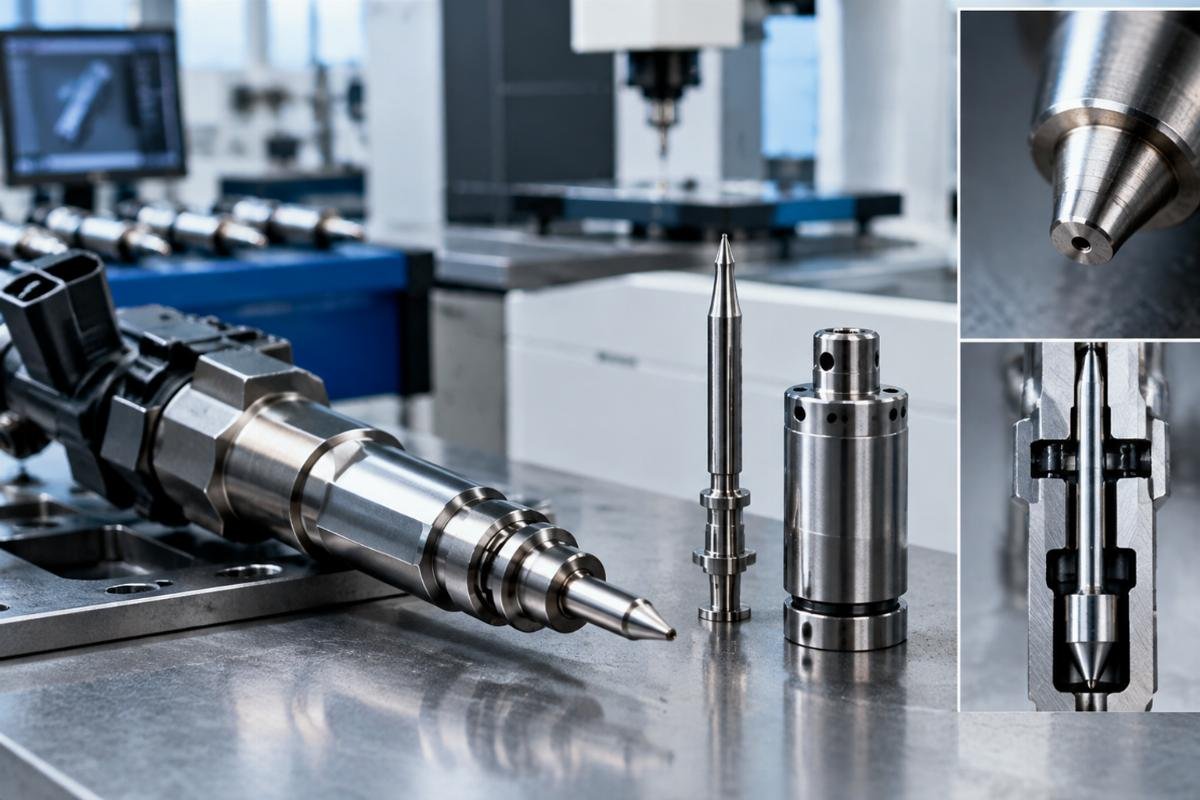
The 270 ± 5 bar opening pressure specification governs the exact moment the needle valve lifts off its seat, controlling injection timing within fractions of a crankshaft degree. Below this threshold, the injector must hold completely sealed; any weeping causes post-injection dribble that washes lubricating oil from the cylinder wall. The ±0.5 μm nozzle orifice tolerance ensures the spray cone angle and droplet size remain consistent across the set, which is essential for meeting emission targets after an engine rebuild without triggering particulate filter overload.
The Hidden Cost of Skipping Root-Cause Diagnosis
Installing a new injector without investigating what destroyed the original unit often leads to the replacement failing within the same operating window. Contaminated fuel from a degraded tank lining, a failing supply pump generating metal particles, or incorrect return-line backpressure can each destroy a new injector within weeks. The cost of a second teardown, a second set of gaskets, and a second round of machine downtime far exceeds the time spent flushing lines and replacing upstream filters during the first repair. [NEED_CITE: common root causes of premature diesel injector failure in mobile equipment]
Sourcing With System-Level Verification
Our own production lines and qualified sourced supply operate under one warranty framework, so whether the Fuel Injector 1J801-53052 ships from our facility or a partner plant, the QC terms remain identical. We stock across eight categories, meaning matched injector sets, fuel filters, seal kits, and leak-off pipes can consolidate into a single dispatch for one rebuild job. Minimum order starts at one piece, allowing a single replacement or a sample unit for fitment confirmation before committing to a full engine set. Our technical team verifies cross-references including superseded numbers 1J801-53051 and 1J801-53050 against your engine serial to prevent variant mismatch. Guangzhou warehouse stock on common variants supports faster dispatch when the machine is already down and the rebuild schedule cannot wait.
Documentation & Verification
- Commercial invoice listing each injector unit with serial traceability
- Cross-reference sheet covering 1J801-53051 and 1J801-53050 (reference only)
- Individual flow rate test record per injector unit before dispatch
- Six-month warranty terms covering manufacturing defects in rebuild service
- Packing photographs showing anti-static bag and foam insert protection
- HS code and customs documentation support for international shipment
Installation & Rebuild Sequence
- Flush all fuel supply and return lines before installing the new injector to prevent upstream contamination from reaching the nozzle orifice.
- Verify injector copper washer seating surface is clean and undamaged to maintain combustion chamber seal at 270 bar.
- Torque injector clamp bolts to the engine manual specification in the stated sequence to avoid nozzle seat distortion.
- Prime the fuel system and check for external leakage at each injector body-to-cylinder-head interface before starting.
- Run the engine through initial warm-up cycle and monitor exhaust smoke pattern for signs of uneven cylinder contribution.
Request a System-Matched Quote
Provide your full engine model, serial number, and any rebuild history so we can confirm the correct injector variant and flow-matching requirements. If the engine has been rebuilt previously, note any oversize components or non-standard fuel system modifications that may affect compatibility.
Frequently Asked Questions
Q: Do I need to replace all injectors as a set or can I replace just one?
A: Replacing a single unit is acceptable for a targeted fault if the remaining injectors have documented flow rates within tolerance. However, during a full engine overhaul, installing a matched set ensures uniform combustion across all cylinders, preventing the imbalanced loading that accelerates ring and liner wear on the cylinders adjacent to a flow-deviating unit.
Q: How do engine serial variants affect injector compatibility?
A: Suffix designations such as V2403-CR-E4 versus V2403-CR-E4B-SBFU-1 indicate different emission calibrations and fuel mapping strategies. The base number 1J801-53052 covers these variants, but the internal flow characteristic and opening pressure curve must match the specific engine build. We verify your exact serial before confirming the order.
Q: What fuel system components should I inspect when replacing injectors?
A: Beyond the injector itself, check supply pump output pressure, fuel filter condition and change interval history, return line backpressure, and tank interior condition for sediment or microbial growth. Addressing the upstream root cause prevents the new injector from suffering the same failure mode that destroyed the original unit.
Q: How is flow rate tolerance verified and documented before shipment?
A: Each unit undergoes individual flow testing at calibrated pressure points, and the measured deviation from nominal is recorded. This test record ships with the injector, providing documentation that the unit falls within the ±2.5% flow rate tolerance required for balanced multi-cylinder operation during engine rebuild.
Q: Can I order a sample injector for fitment testing before committing to a full set?
A: Yes, the one-piece minimum order applies to all items. Ordering a single unit for physical fitment verification and functional testing on the engine is a standard practice before committing to a full set, reducing the risk of discovering a variant mismatch only after all cylinders have been reassembled.