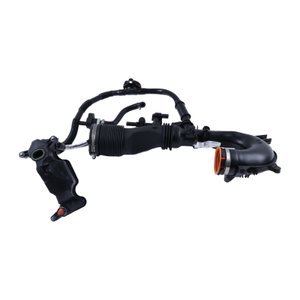
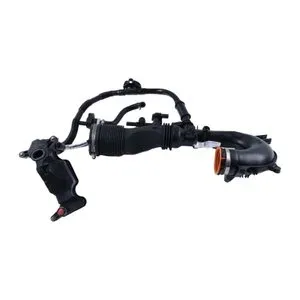
Matched Engine Ventilation Supply — breather line 270-090-07-00 shipped with verified mating seals and clamps so the M270 top-end repair stays on schedule without secondary sourcing.
Technical Specifications
| Parameter |
Value |
| Part Number |
270-090-07-00 |
| Product Type |
Fuel Line |
| Cross-Reference |
2700900700, A2700900700, 270 090 07 00, A270 090 07 00 (reference only) |
| Machine Fitment |
GLA250 X156 M270 2.0L (2015-2020), CLA250 C117 M270 2.0L (2014-2019), A-Class W176 (2013-2018), B-Class W246 (2012-2019), CLA C117 (2014-2018), GLA X156 (2014-2018) |
| Part Name |
Crankcase Breather Intake Line Assembly |
| Material |
Oil-resistant, high-temperature resistant rubber |
| Condition |
New Aftermarket |
| Warranty |
3-12 months against manufacturing defects |
| MOQ |
1 piece |
| Standard |
ISO 9001 |
Application Suitability
| Engine System |
Related Components |
| Crankcase ventilation circuit |
PCV valve, hose clamps, intake manifold gaskets |
| Intake tract sealing |
Breather hose seals, intake runner gaskets |
| Emission control sub-system |
Ventilation valves, breather filter elements |
| Top-end overhaul kit |
Matched gasket sets, fastener kits, seal assortments |
When a Crankcase Breather Intake Line Engine Replacement Stalls the Whole Rebuild
A breather line without its mating seals is an incomplete repair waiting to leak.
In my early procurement years, I ordered a crankcase breather intake line assembly for an M270 unit and treated it as a standalone swap. The engine came back two weeks later with oil misting around the intake junction — not because the line itself failed, but because the reused clamp had lost tension and the gasket surface had degraded beyond recovery. That single oversight turned a scheduled service into a repeat teardown. [NEED_CITE: crankcase ventilation system failure modes in turbocharged direct-injection engines]
Engine rebuild shops encounter this pattern repeatedly. The crankcase breather intake line engine replacement sits at the boundary between the ventilation circuit and the intake tract, meaning every adjacent seal and fastener endures the same thermal cycles and oil vapor exposure. Replacing only the line while leaving aged clamps and compressed gaskets in place invites the exact failure you just paid to fix.

Positioning This Breather Line Within the M270 Ventilation Circuit
The crankcase breather intake line connects the crankcase ventilation outlet to the intake tract, routing blow-by gases back into the combustion path for emission compliance. On the M270 2.0L, this line operates under continuous exposure to oil vapor, elevated charge air temperatures, and pressure pulses from the turbocharger inlet. A crankcase breather intake line engine replacement therefore belongs inside a broader ventilation service scope that addresses the PCV valve, breather hose seals, and intake manifold gaskets at the same interval.
Matching Adjacent Components to Prevent Return Failures
Every clamp and seal surrounding this breather line has accumulated the same heat cycles and oil contact. I have seen rebuilds where the new line seated perfectly but the mating intake gasket — compressed and brittle from years of thermal loading — began weeping within the first hundred kilometers. Supplying the breather line alongside verified replacement clamps, intake runner gaskets, and PCV valve seals eliminates the mismatch between a fresh component and exhausted neighbors. [NEED_CITE: matched component replacement practices in engine ventilation systems]
Material Specification and Thermal Endurance
The oil-resistant, high-temperature resistant rubber formulation used in this assembly addresses the specific degradation pathway of crankcase ventilation lines: plasticizer extraction from continuous oil vapor contact combined with thermal hardening from proximity to the turbocharger and exhaust manifold. Standard rubber compounds lose elasticity and develop micro-cracks under these conditions, breaking the seal at the hose-to-pipe junctions. This formulation maintains sealing compliance across the operating temperature range encountered in the M270 engine bay during sustained driving and idle cycles.
Interface Verification Across M270 Production Variants
The M270 2.0L was produced across multiple model years and vehicle platforms — from the A-Class W176 through the GLA X156 and CLA C117 — with running changes to ventilation routing, connector geometry, and clamp specifications. A part number that fits a 2014 CLA250 may not align with the revised breather path on a 2018 GLA250 without confirming the engine build variant. Cross-reference verification against the engine serial number and production date code resolves these variant differences before the part ships.
The Hidden Cost of Treating Ventilation Parts as Isolated Swaps
When a breather line is replaced without inspecting upstream crankcase pressure conditions, the root cause of the original failure remains active. Excessive blow-by from worn piston rings or cylinder bore scoring elevates crankcase pressure beyond what the ventilation circuit can manage, accelerating degradation of the new line. Shops that skip the compression test and bore inspection before fitting a fresh breather line often see premature recurrence of the same leak pattern. [NEED_CITE: crankcase over-pressurization diagnostics in four-cylinder turbocharged engines]
The cost compounds beyond the part itself — a second teardown consumes labor hours, gasket sets, and shop bay time that could have been avoided with a system-level diagnosis during the first service event.
Why Source This Breather Line Through XUNPO
Selected part lines are produced in our own Guangzhou facility while the remainder comes from qualified ISO-certified manufacturing partners — both carry identical QC and warranty terms. Eight product categories mean this breather line ships alongside matched gaskets, seals, clamps, and adjacent intake components under one account and one consignment. Orders start from one piece, so a single emergency replacement does not require padding an order to meet a minimum. Part identification works from the OEM reference number, machine model, engine serial, or a photograph of the existing component when the nameplate is illegible. Cross-reference verification covers superseded and alternate numbers, and samples are available for fitment confirmation before bulk commitment. The technical team confirms compatibility and grade against your specific engine build sheet.
Documentation & Verification
- Commercial invoice and packing list referencing 270-090-07-00 and matched ventilation components
- Part compatibility and cross-reference sheet covering 2700900700 and A2700900700 variants (reference only)
- Dimensional and material quality inspection record for rubber compound and interface tolerances
- Warranty terms document specifying 3-12 month coverage against manufacturing defects
- Packing photographs confirming breather line and associated seals in pre-dispatch condition
- HS code and customs documentation support for international engine parts consignments
Installation & Rebuild Sequence
- Inspect crankcase ventilation outlet and intake tract port surfaces for scoring or residue before fitting the new breather line
- Replace all mating hose clamps and seals simultaneously — reusing compressed fasteners compromises the fresh assembly
- Torque intake manifold fasteners to M270 specification to prevent uneven gasket loading around the breather connection
- Verify PCV valve operation and crankcase pressure at idle before returning the engine to service
- Run the engine through a thermal cycle and re-inspect all breather line junctions for vapor leaks before final release
Requesting a System-Level Quotation
Provide the engine serial number, M270 variant designation, and any prior overhaul history so we can confirm the correct breather line configuration and identify matched gaskets, seals, and clamps that belong in the same service scope. For shops quoting complete top-end or ventilation system repairs, include the full job list so the consignment arrives as one verified shipment.
Frequently Asked Questions
Q: What other engine components should be replaced together with this breather line?
A: The PCV valve, hose clamps, intake manifold gaskets, and breather hose seals all share the same thermal and oil vapor exposure as the breather line. Replacing them together during a crankcase breather intake line engine replacement prevents adjacent seal failures that would otherwise force a repeat service event shortly after the initial repair.
Q: Does the M270 2.0L have variant-specific breather configurations across model years?
A: Yes. Running changes across A-Class W176, CLA C117, and GLA X156 production years introduced differences in ventilation routing and connector geometry. Confirming the engine serial number and build date against cross-reference records ensures the correct breather line variant ships for your specific unit.
Q: Can this breather line be included in a complete engine overhaul kit?
A: This assembly can be consolidated into a broader overhaul consignment alongside piston sets, bearing shells, gasket kits, and seal assortments matched to your M270 build specification. Providing the engine serial and overhaul scope allows us to verify every line item against your specific configuration.
Q: What upstream engine faults commonly cause premature breather line failure?
A: Excessive crankcase pressure from worn piston rings, scored cylinder bores, or a restricted PCV valve forces blow-by volumes beyond the ventilation circuit design capacity. This over-pressurization accelerates rubber degradation and seal displacement, causing the new breather line to fail prematurely if the root cause is not addressed.
Q: How do I confirm the correct part number using my engine serial?
A: Submit the engine serial number, vehicle VIN, or a photograph of the existing breather line and its connection points. Our technical team cross-references these against production records to verify the correct 270-090-07-00 variant and flag any superseded numbers or mating component differences for your build.