Matched System Supply — Belt and clutch wear verified together before dispatch to prevent early CVT failure on Club Car utility fleets.
Technical Specifications
| Parameter |
Value |
| Part Number |
105245801 |
| Cross-Reference |
10G3758 (reference only) |
| Product Type |
Belt |
| Machine Fitment |
Onward, Carryall 300 Turf, Carryall 500 Turf, Carryall 550 Turf, Carryall 700 Turf, Carryall 900, Cafe Express, Precedent |
| Part Name |
Drive Belt |
| Condition |
New Aftermarket |
| Material |
Chloroprene rubber compound with aramid cord reinforcement |
| Temperature Range |
–20°C to +80°C |
| Dimensional Tolerance |
±0.3 mm |
| Warranty |
6 months against manufacturing defects |
| MOQ |
1 piece |
| Standards |
ISO 9001, SAE J1903 |
Application Suitability
| Engine System |
Related Components |
| CVT Primary Clutch Drive |
Primary and secondary clutch sheaves, tension springs |
| Accessory Drive (Turf Models) |
Idler pulleys, belt guides, clutch alignment shims |
| Utility Transport Powertrain |
Drive clutch roller weights, slider buttons |
| Fleet Maintenance Overhaul |
Complete CVT service kits, clutch pullers |
Why the Same Drive Belt Fails Twice in One Month
A new drive belt that snaps prematurely usually indicates unaddressed clutch wear or sheave misalignment in the CVT system, not a defective belt.
In repair bays across the Pearl River Delta, I have pulled shredded belts off Club Car Carryall units where the shop only swapped the rubber and sent the machine back to work. The primary clutch sheave faces were scored, or the secondary clutch spring had lost tension, forcing the replacement drive belt to slip and generate excessive heat. Replacing the belt without diagnosing these root causes guarantees a repeat failure [NEED_CITE: CVT drive system failure root cause analysis for utility vehicles]. This drive belt is designed to replace worn CVT belts on Club Car platforms, but its service life depends entirely on the condition of the hardware it rides on.

The CVT System Context for Belt Replacement
This drive belt operates inside a continuously variable transmission where primary and secondary clutches adjust their effective diameter under load. The belt transfers engine torque through variable ratios, meaning it experiences constant lateral pressure against the sheave faces. When replacing this drive belt, the entire CVT system must be evaluated — worn slider buttons in the primary clutch or a fatigued secondary spring will alter the belt's running position and accelerate wear on the new component.
Matching Belt Geometry to Clutch Condition
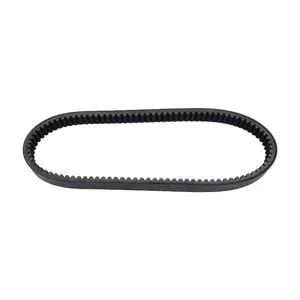
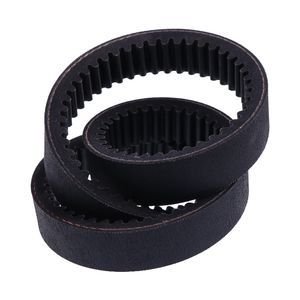
The precision-molded tooth geometry of this drive belt must seat cleanly against the sheave profiles of both clutches. If the sheave faces show grooving or uneven wear patterns from the previous belt, the new belt will not track correctly and will generate chatter under load. Aramid cord reinforcement provides dimensional stability across the –20°C to +80°C operating range, but even high-tensile cords cannot compensate for misaligned or pitted clutch surfaces [NEED_CITE: CVT clutch sheave inspection standards for fleet utility vehicles]. Always measure sheave face runout and check for parallel alignment before installing the replacement belt.
Material Behavior Under Variable CVT Loads
The chloroprene rubber compound used in this drive belt resists heat buildup generated by the friction inherent in CVT operation. Aramid cords resist elongation under the high-tensile loads experienced during heavy cargo transport or steep-grade operation on Carryall 500 and 700 Turf models. The ±0.3 mm dimensional tolerance ensures consistent engagement with the clutch sheaves without excessive slack that causes slippage or over-tightness that overloads the engine crankshaft bearing. These material properties matter most when the CVT system is in good mechanical condition.
The Cost of Skipping System-Level Diagnosis
Fitting a new drive belt onto worn CVT hardware creates a predictable cycle: the replacement belt absorbs the damage that should have been addressed on the clutches, fails within weeks, and the machine returns to the bay for a second teardown. Each repeat failure means additional labor hours, additional freight for emergency parts, and extended vehicle downtime across the fleet [NEED_CITE: fleet vehicle CVT maintenance cost impact of incomplete system service]. Shops that inspect clutch rollers, springs, and sheave faces at every belt change avoid this compounding loss and keep utility vehicles in rotation.
Sourcing Matched CVT Components from One Account
Our Guangzhou facility produces selected part lines and sources the remainder from ISO-certified partners, both covered under the same warranty terms for this drive belt and associated CVT components. Eight product categories mean clutch hardware, seals, and gaskets ship in the same consignment as the belt, eliminating split deliveries. Orders start at one piece for emergency single-vehicle repairs. Cross-reference verification covers superseded numbers across Club Car model generations. Technical support confirms belt compatibility against your specific engine serial variant and CVT configuration before dispatch.
Documentation & Verification
- Commercial invoice listing belt part number 105245801 with HS code for customs clearance
- Compatibility sheet confirming fitment to specific Club Car Carryall or Precedent variant (cross-reference only)
- Dimensional inspection record verifying belt width and tooth profile tolerance
- Six-month warranty terms covering manufacturing defects in compound and cord structure
- Packing photographs showing belt in protective inner sleeve before crate sealing
- Export documentation support including material declarations for chloroprene compound
Installation & Rebuild Sequence
- Inspect primary and secondary clutch sheave faces for scoring before fitting the new drive belt
- Clean all clutch surfaces with non-residue solvent to prevent compound contamination
- Verify belt routing and tension against manufacturer specifications for your specific Carryall variant
- Check clutch roller weights and slider buttons for wear that alters CVT shift behavior
- Run the vehicle at idle for initial seating before applying full load to the CVT system
Requesting a System-Matched Quote
Provide your Club Car vehicle model, production year, and engine serial number so we can confirm the correct drive belt variant and identify any superseded cross-references. If the vehicle has undergone a previous CVT rebuild, share the service history so we can verify dimensional compatibility and recommend matched clutch components for a complete system refresh.
Frequently Asked Questions
Q: What other CVT components should I inspect when replacing the drive belt?
A: Check primary clutch sheave faces for grooving, secondary clutch spring tension, slider button wear, and roller weight condition. Any of these faults will cause the new drive belt to fail prematurely. We supply matched CVT service components alongside the belt so the complete system can be addressed in one order.
Q: Why did my previous belt fail early — is it a system issue?
A: Early belt failure on Club Car CVT systems typically traces to sheave misalignment, contaminated clutch faces, or worn tension components rather than belt quality. Inspect the entire drive system before concluding the belt was defective. System-level diagnosis prevents repeat failures.
Q: Does the same belt part number fit all Club Car Carryall variants?
A: Part number 105245801 (cross-reference 10G3758) covers multiple Carryall and Precedent models, but CVT configurations vary by production year and engine type. Confirm your specific vehicle variant and serial number before ordering to ensure correct fitment.
Q: Can I order matched clutch and belt sets together for a full CVT service?
A: Yes. We consolidate drive belts, clutch hardware, springs, and seals into a single shipment under one account and one warranty. This eliminates split freight costs and ensures all CVT service components arrive together for uninterrupted rebuild scheduling.