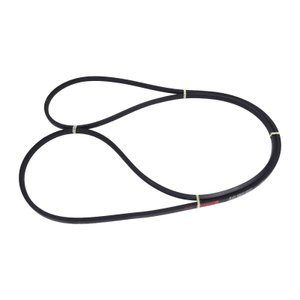
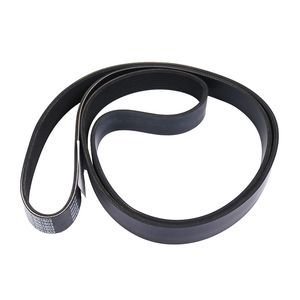
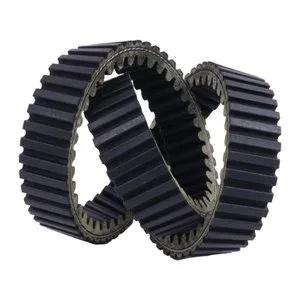
Matched Set Dispatch — every belt ships verified against the exact engine variant and pulley geometry of your mower model to ensure the full drive system performs as one calibrated unit.
Technical Specifications
| Parameter |
Value |
| Part Number |
486586 |
| Product Type |
Belt |
| Cross-Reference |
486586 (reference only), 754-05078, 75405078, 954-05078, 95405078, 574845603, 07200808, 5104583, 71460198, 539107709, 266-187, 266187 (all for identification purposes) |
| Machine Fitment |
Scag SVRII-61V-25FX, SVRII-61V-26CV-EFI, SVRII-61V-29CV-EFI, SVRII-61V-31CV-EFI, SVRII-61V-31FX, SVRII-61V-37BV-EFI, SVRII-61V-38CV-EFI, SVRII-61V-38FX-EFI, SVRII-61V-40BV-EFI |
| Material |
High-modulus EPDM rubber compound with reinforced polyester cord |
| Operating Temperature |
Up to 120°C |
| Elongation at Rated Load |
<0.8% |
| Dimensional Tolerance |
±0.3 mm on width and length |
| Tooth Profile |
Precision-molded to match original pulley geometry |
| Condition |
New Aftermarket |
| Warranty |
3–12 months against manufacturing defects |
| MOQ |
1 piece |
| Quality Standard |
ISO 9001 |
Application Suitability
| Engine System |
Related Components |
| Deck drive power transmission |
Tensioner assembly, idler pulleys, spindle bearings |
| PTO belt drive loop |
Drive clutch sheave, anti-sway brackets, hardware kit |
| Engine-to-deck auxiliary drive |
Mandrel assemblies, belt guards, alignment shims |
| Complete mower overhaul |
Full gasket set, seal kit, fastener assortment |
Why Deck Drive Belt Failures Repeat After a Simple Swap
A new belt inherits the fault condition that destroyed the previous one unless the entire drive path is addressed.
I have seen commercial mowers return to the bench within weeks of a belt swap because the worn tensioner bearing or a glazed idler pulley was never replaced. The fresh belt absorbs the same misalignment, runs hotter, and fails prematurely — sometimes within a single cutting season. This pattern repeats across fleet operations where the focus stays on the broken component rather than the system that broke it [NEED_CITE: mower belt drive system failure root cause analysis]. Addressing a deck drive belt engine system replacement means inspecting every pulley, tensioner arm, and spindle bearing before the new belt ever sees the machine.

System Context: Where This Belt Sits in the Drive Path
This belt transmits torque from the engine crankshaft pulley through an idler and tensioner arrangement to the cutting deck spindle assemblies. On the Scag SVRII-61V series, the deck drive belt engine system replacement involves routing through multiple sheave points that must all maintain correct alignment. Any worn bearing in an idler pulley introduces radial runout, which transfers directly into the belt as cyclic stress. Verifying the health of each adjacent component ensures the new belt operates under the designed load distribution.
Variant Differences Across the SVRII-61V Range
The SVRII-61V platform spans nine distinct engine and deck configurations, from the 25FX to the 40BV-EFI. Each variant places different torque demands on the deck drive loop, and belt routing geometry can shift between engine families. A belt specified for a 26CV-EFI variant may physically fit a 38FX-EFI but experience different tension characteristics due to sheave diameter changes. Confirming the exact engine code and serial prefix against the cross-reference database eliminates fitment uncertainty before the order ships. [NEED_CITE: Scag SVRII-61V deck drive configuration variants and belt routing differences]
Interpreting the Material and Tolerance Specifications
The high-modulus EPDM compound handles continuous operating temperatures up to 120°C, which matters in enclosed deck housings where ambient airflow is limited during prolonged mowing. The reinforced polyester cord limits elongation to less than 0.8% at rated load, meaning the belt maintains consistent tension without requiring mid-season re-adjustment. The ±0.3 mm dimensional tolerance on width and length ensures the tooth profile engages the pulley grooves correctly on the first installation, avoiding the tracking issues that cause edge wear. Precision-molded tooth geometry matches the original pulley form, so the belt seats fully without deck re-alignment procedures.
The Hidden Cost of Ignoring Adjacent Components
Replacing only the belt while leaving a degraded tensioner spring or a pitted idler race in place guarantees the next failure arrives sooner than expected. The downtime cost compounds: a second teardown, a second belt, and a second service call all land on the same machine within one operating season. In fleet environments, this reactive pattern quietly inflates maintenance budgets and pulls machines off revenue-generating work repeatedly. [NEED_CITE: commercial turf equipment maintenance cost impact of incomplete belt drive repairs]
Why Procurement From Here Reduces Repeat Failures
Self-produced lines and qualified sourced supply carry the same QC and warranty terms under one account, so whether the belt or its companion tensioner comes from our facility or a certified partner, coverage is identical. Eight product categories allow a complete belt drive system overhaul — belt, pulleys, seals, fasteners — to ship as one consignment rather than three separate orders. Orders start at one piece for emergency single-machine repairs. Our technical team verifies cross-reference numbers covering superseded and alternate part identifiers, and sample supply is available for fitment confirmation before any bulk commitment. [NEED_CITE: aftermarket belt drive component cross-reference verification standards]
Documentation & Verification
- Commercial invoice listing each belt drive component by verified cross-reference number
- Part compatibility sheet confirming fitment against your specific SVRII-61V variant
- Quality inspection record covering tensile strength test and dimensional check
- Warranty terms document specifying coverage scope for the belt and matched components
- Packing photographs showing belt condition and protective packaging before dispatch
- HS code and customs documentation support for international turf equipment parts shipments
Installation & Rebuild Sequence
- Route the belt following the manufacturer diagram, confirming engagement at every sheave point
- Inspect all idler and tensioner bearings for radial play before installing the new belt
- Set tensioner preload to specification and verify belt tracking under brief idle run
- Check spindle bearings for axial play that could transfer misalignment into the belt loop
- Run the deck at operating RPM for a short break-in cycle and recheck tracking alignment
Requesting a System-Level Quote
Provide your exact machine model designation, engine serial number, and any history of previous belt drive rebuilds. If the nameplate is illegible, a photograph of the deck data stamp or the old belt's printed markings allows our team to confirm the correct variant. For fleet orders, share the full machine roster so matched belt drive overhaul sets can be quoted with companion components included.
Frequently Asked Questions
Q: What other belt drive components should be replaced together with this belt?
A: The tensioner assembly, idler pulleys, and spindle bearings should all be inspected and replaced if bearing play or surface pitting is detected. Replacing these alongside the belt eliminates the root cause of premature failure. We quote matched overhaul sets so the entire drive loop ships together under one order.
Q: How do I confirm this cross-reference number matches my specific mower variant?
A: Provide your machine model designation and engine serial prefix. Our team verifies the belt against the cross-reference database covering all SVRII-61V variants, including superseded numbers. This eliminates fitment uncertainty before dispatch, and sample supply is available for physical confirmation.
Q: What system-level conditions cause premature belt failure beyond the belt itself?
A: Worn tensioner springs, pitted idler bearings, and misaligned spindle housings all introduce cyclic stress and heat that a new belt cannot tolerate indefinitely. Diagnosing the failure path before ordering ensures the replacement addresses the cause, not just the symptom.
Q: Can I get a matched overhaul set including pulleys and tensioners?
A: Yes. We assemble complete belt drive overhaul kits matched to your specific SVRII-61V configuration. All components ship under one consignment with the same warranty terms, preventing split freight and staggered arrival times that delay machine return to service.
Q: How do I identify the correct engine or mower serial for fitment verification?
A: The serial plate is typically located on the frame near the operator platform or on the engine block itself. If the plate is worn or painted over, photograph any visible stamping on the deck housing or the old belt. Our team cross-references these against the fitment database.