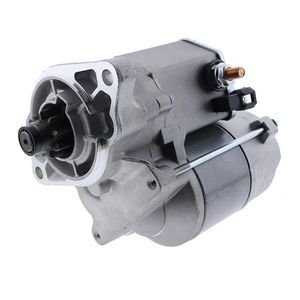
Matched Auxiliary Sets — Every starter motor ships verified against D1105 engine serial variants and auxiliary circuit tolerances, ensuring the 9-tooth pinion meshes correctly from day one.
Technical Specifications
| Parameter |
Value |
| Part Number |
132-4948 |
| Product Type |
Starter Motor |
| Cross-Reference |
132-4948, 98-9705, 989705, 1324948 (for identification purposes) |
| Machine Fitment |
Kubota D1105, D1105T, D1105-T, D1105-T-ES; Toro Groundsmaster 328D, 228-D; Toro Reelmaster 5400-D, 5500-D, 3100-D; Toro Dingo TX 1000 (22327, 22327 G, 22327 HD) |
| Electrical Specification |
12V, 9-tooth pinion |
| Pinion Material |
SAE 1045 steel, induction-hardened |
| Brush Composition |
Silver-graphite |
| Solenoid Rating |
Continuous 12V duty, IP65 sealed |
| Bearing Type |
Pre-lubricated double-shielded, ABEC-3 tolerance |
| Condition |
New Aftermarket |
| Warranty |
6-month standard warranty against manufacturing defects |
| MOQ |
1 piece |
| Production Standard |
ISO 9001 |
Application Suitability
| Engine System |
Related Components |
| Kubota D1105 Engine Auxiliary |
Flywheel ring gear, battery cables, glow plug circuit, alternator |
| Toro Groundsmaster / Reelmaster Powertrain |
Starter solenoid relay, ignition switch, main harness connectors |
| Toro Dingo TX 1000 Compact Utility |
12V battery bank, engine ground strap, starter mounting hardware |
| D1105-T / D1105-T-ES Turbocharged Variants |
Upgraded cranking circuit components, heavy-duty battery terminals |
Why the Same Starter Motor Fails Again Before the Next Oil Change
The replacement Starter Motor 132-4948 engine replacement unit inherits the electrical and mechanical stress that destroyed the previous one.
Turf equipment engines sit in moisture-dense, high-vibration environments where the auxiliary circuit takes continuous abuse. A starter that fails repeatedly usually points to voltage drop across corroded battery cables, a worn flywheel ring gear causing skip-cranking, or glow plug circuit faults forcing extended cranking cycles. Shops replacing the starter motor without tracing the root cause see the new unit fail within the same season [NEED_CITE: root cause analysis for repeated starter motor failure in diesel auxiliary systems]. The cranking torque demand on a Kubota D1105 is modest, but when system voltage sags below threshold due to undersized or degraded cables, the starter draws excessive current and overheats internally.

How This Starter Fits Inside the D1105 Auxiliary System
The starter motor sits at the intersection of the electrical and mechanical auxiliary systems. Its 9-tooth pinion must engage the flywheel ring gear with precise tooth alignment, and any wear on that ring gear transfers shock loads back through the pinion shaft and into the starter bearings. On the D1105 platform, the Starter Motor 132-4948 engine replacement connects to a circuit that also feeds the glow plugs and alternator — meaning a fault anywhere in that loop affects cranking performance. Checking adjacent components as a system prevents misdiagnosis.
Serial Variants and the Fitment Gap They Create
Kubota built the D1105 in several configurations — naturally aspirated D1105, turbocharged D1105T, and the D1105-T-ES variant used in specific Toro equipment. Internal auxiliary component differences across these builds can affect starter engagement depth and solenoid throw. Confirming the exact engine serial variant before ordering ensures the pinion reach and mounting pattern match. A starter fitted to the wrong variant may crank but fail to disengage cleanly, accelerating ring gear wear [NEED_CITE: Kubota D1105 serial variant auxiliary component differences].
Reading the Specifications That Actually Matter
The 12V continuous-duty solenoid with IP65 sealing addresses the reality of turf equipment operation — morning dew, irrigation runoff, and wash-down bay exposure. Silver-graphite brush composition provides stable conductivity under the high-cycle, short-duration duty typical of groundskeeping fleets where machines start and stop dozens of times daily. The SAE 1045 induction-hardened pinion resists the tooth-edge chipping that softer materials develop after repeated engagement impacts. ABEC-3 tolerance bearings maintain shaft alignment under cranking load, preventing the armature from dragging on the field housing.
What a Wrong Spec Decision Costs the Shop
Fitting a starter with incorrect pinion tooth count or engagement depth causes skip-cranking that damages the flywheel ring gear — a repair that requires engine removal on most D1105 installations. Underspecified solenoid sealing allows moisture intrusion that corrodes the pull-in coil, producing intermittent engagement faults that are difficult to diagnose in the field. Shops that skip the root-cause inspection end up absorbing warranty labor on a component that failed because the real problem was never addressed [NEED_CITE: warranty claim patterns for misdiagnosed starter failures in turf equipment].
What This Supply Chain Actually Delivers
Production lines covering this starter motor carry the same quality inspection protocol and warranty terms across both self-manufactured and sourced batches, so your replacement units perform consistently. Eight equipment categories under one account mean the ring gear, battery cables, and glow plugs ship in the same consignment as the starter. Minimum order of one piece supports emergency single-unit repairs without forcing bulk commitments. Cross-reference verification covers superseded numbers so older D1105 variants remain identifiable. Technical support confirms engine serial variant compatibility before the order ships. Sample units available for fitment confirmation before bulk overhaul orders lock in.
Documentation & Verification
- Commercial invoice and packing list referencing Starter Motor 132-4948 and cross-reference numbers
- Engine auxiliary cross-reference sheet marking OEM numbers as reference only
- Cranking torque and voltage drop test records per unit inspected
- 6-month warranty terms covering manufacturing defects in solenoid and bearing components
- Packing photographs showing pinion protection and solenoid housing condition before crate seal
- HS code classification and customs documentation for international auxiliary component shipments
Installation & Rebuild Sequence
- Clean the starter mounting flange and engine block mating surface to ensure electrical ground continuity through the mounting bolts
- Verify flywheel ring gear tooth condition before installing the new starter motor — damaged teeth destroy a new pinion within days
- Confirm battery cable voltage drop under cranking load; excessive drop points to cable degradation rather than starter fault
- Torque mounting hardware to engine specification to prevent housing distortion that misaligns the pinion shaft
- Test glow plug circuit independently before connecting the starter solenoid control wire to isolate auxiliary circuit faults
- Run initial cranking test with engine compression relieved to verify pinion engagement and disengagement before full start
Request the Right Fitment Data
Provide the engine model designation, serial number, and any previous rebuild documentation so the correct starter variant is confirmed against the D1105 build record. If the nameplate is unreadable, a photograph of the existing starter mounting pattern and pinion allows identification. Share the equipment model and production year for cross-reference against Toro variant records. This information enables accurate auxiliary system matching rather than guesswork.
Frequently Asked Questions
Q: What other engine auxiliary parts should I inspect when replacing the starter motor?
A: Check the flywheel ring gear for tooth wear or chipping, test battery cable voltage drop under load, verify glow plug circuit continuity, and inspect the alternator output. These components share the auxiliary circuit with the starter, and a fault in any one of them creates the same overload condition that destroyed the previous unit.
Q: Does the D1105T variant use a different starter specification than the base D1105?
A: The turbocharged D1105T and D1105-T-ES variants may have different auxiliary component configurations affecting starter engagement. Confirm the exact engine serial designation so the correct pinion reach and mounting pattern are verified before shipment.
Q: How do I confirm the 9-tooth pinion is the correct variant for my engine build?
A: Provide the engine serial number or a photograph of the existing starter pinion and flywheel ring gear. Cross-reference verification against the build record confirms the tooth count and engagement depth match your specific D1105 variant.
Q: What system-level faults cause repeated starter motor failures?
A: Corroded battery cables causing voltage drop, worn flywheel ring gear teeth producing skip-cranking, glow plug circuit faults forcing extended cranking cycles, and moisture intrusion through failed solenoid seals all create conditions that destroy replacement starters prematurely.
Q: Can I get a sample to verify fitment before committing to a bulk engine overhaul order?
A: Sample units are available for fitment confirmation on your specific D1105 variant. This allows you to verify pinion engagement, mounting pattern alignment, and solenoid connector compatibility before the bulk order ships.