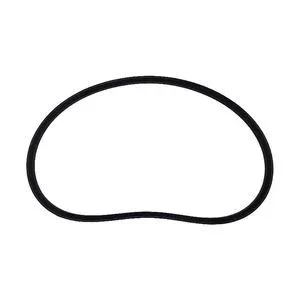
Matched System Kits — Every V-Belt 32993 ships with verified dimensional records confirming 4LX profile tolerances and 670 mm length for tiller drive systems.
Technical Specifications
| Parameter |
Value |
| Part Number |
32993 |
| Cross-Reference |
13X670La (reference only) |
| Product Type |
Belt |
| Belt Profile |
4LX |
| Top Width |
12 mm |
| Height (H) |
8 mm |
| Belt Length (La) |
670 mm |
| Tensile Cord |
Polyester/polyamide |
| Condition |
New Aftermarket |
| Machine Fitment |
Earthquake Rear Tine Tillers |
| Standards |
ISO 9001, ISO 4184, SAE J1459 |
Application Suitability
| Engine System |
Related Components |
| Tine drive power transfer |
Tensioner spring, drive sheave, idler pulley |
| Engine cooling accessory drive |
Water pump pulley, belt guard hardware |
| Generator / PTO accessory loop |
Multi-groove sheaves, pivot brackets |
The Fault That Broke the Belt Is Still in the Drive
A new belt fails early when the pulley that destroyed the old one remains in the system.
Replacing a V-Belt without inspecting the sheave groove, idler bearing, and tensioner pivot addresses the symptom, not the cause. In rear tine tiller service, the engine-to-tine torque path subjects this belt to cyclic shock loads every time the tines strike compacted soil or rock. Edge wear, glazing, and cord separation on the removed belt usually point to a specific misalignment or seized component rather than simple age [NEED_CITE: belt drive failure root cause analysis in agricultural tiller power transmission]. The V-Belt 32993 replacement restores power transfer only if the mating components are brought back to specification at the same time.

Belt Drive System Positioning on Earthquake Tillers
This V-Belt sits between the engine crankshaft output and the tine drive axle, converting rotational torque into the ground-engaging force the operator controls from the handles. When the belt slips, tine speed drops below the threshold needed to fracture soil, and the engine revs without productive work. Matching the V-Belt engine rebuild parts replacement cycle to adjacent drive components prevents the common pattern of replacing belts multiple times per season because the root cause was never addressed.
System-Level Failure Origins
Glazed sidewalls on a removed belt indicate chronic slip caused by a weak tensioner spring or a sheave groove worn beyond the 4LX profile envelope. Cord snap failures near the splice trace to a seized idler bearing creating a hard stress point during engagement. Edge fraying on one side alone signals sheave misalignment that will destroy any replacement belt within a short operating window [NEED_CITE: agricultural belt drive misalignment diagnostic methods for rear tine tillers]. Correcting these conditions during the belt swap eliminates repeat teardowns.
Profile and Length Tolerances in Drive Engagement
The 4LX profile with 12 mm top width and 8 mm height determines how deeply the belt seats in the sheave groove. An undersized belt rides at the bottom of the groove, reducing sidewall contact area and causing slip under load. An oversized belt sits too high, flexing abnormally and generating internal heat that degrades the rubber compound. The 670 mm La length must match the center distance between engine and drive pulleys; even a small deviation forces the tensioner to its limit or leaves it unable to maintain adequate wrap pressure. Polyester/polyamide tensile cords resist elongation under the repeated shock loading of tine engagement, maintaining pitch length through the service interval.
The Cost of Skipping the System Check
Installing this V-Belt engine rebuild parts replacement into a drive with a worn sheave results in the new belt conforming to the degraded groove profile within hours, accelerating sidewall wear from the start. A tensioner that lost spring force cannot maintain grip during tine engagement shocks, producing slip that glazes the belt and reduces torque delivery to the tines. The operator then adjusts the clutch or throttle to compensate, overloading other drive components downstream [NEED_CITE: cascading belt drive failure progression in soil cultivation equipment].
Sourcing With Rebuild Accuracy
Our own production lines and qualified partner facilities operate under one account and one warranty covering the V-Belt 32993 and every associated drive component. Eight product categories allow the complete tiller drive overhaul—belts, tensioners, sheaves, idler bearings, seals—to ship as a single consignment. Orders from one piece upward are accepted, so emergency single-belt requirements and full fleet overhaul kits follow the same process. Guangzhou warehouse stock enables fast dispatch on common belt profiles including 4LX. Part identification proceeds from the number, the tiller model, or a photograph of the worn belt and sheave together. Cross-reference verification covers superseded numbers and alternate stock references like 13X670La. Samples ship for fitment confirmation before bulk commitment on dealer stocking orders.
Documentation & Verification
- Commercial invoice listing V-Belt 32993 with HS code for customs clearance
- Cross-reference sheet mapping 13X670La to verified compatible tiller models (reference only)
- Dimensional inspection record confirming 4LX profile and 670 mm length tolerances
- Warranty terms covering manufacturing defects for the stated period
- Packing photographs showing belt coil protection and tensile cord orientation markers
Installation & Rebuild Sequence
- Clean sheave grooves with solvent to remove rubber residue and verify 4LX seating depth before belt installation
- Inspect idler bearing for free rotation and axial play; replace if any roughness is detected during hand-spin
- Route the 670 mm belt onto the drive sheave first, then stretch over the engine pulley using the tensioner release
- Set tensioner spring to specification and verify belt deflection at the midpoint of the longest span
- Run the tiller at idle for initial seating, then engage tines into soil to confirm torque transfer without slip
Rebuild Planning Inquiry
Provide the tiller engine model and serial number along with any previous rebuild history so the correct belt variant and matching tensioner grade are confirmed. Include photographs of the worn belt sidewalls and sheave grooves to identify root-cause conditions that the new V-Belt engine rebuild parts replacement alone will not resolve. Specify whether the order covers a single machine repair or a stocking quantity for multiple units.
Frequently Asked Questions
Q: What other drive components should be replaced alongside this belt during a tiller overhaul?
A: The tensioner spring, idler bearing, and drive sheave should all be inspected and typically replaced during the same cycle. Worn sheave grooves and weak springs are the primary causes of premature belt failure, and replacing them together with the V-Belt 32993 eliminates repeat teardowns and ensures full torque transfer to the tine axle.
Q: Does the tiller engine serial number affect which belt variant I need?
A: Engine serial ranges across production years may use different pulley diameters or center distances that change the required belt length or profile. Confirming the engine serial number allows verification against the cross-reference table to ensure the 670 mm La and 4LX profile match the specific tiller variant in service.
Q: Can matched sets of belts, tensioners, and pulleys be ordered together?
A: Yes, complete drive system kits ship under one account with consolidated documentation. Matching the V-Belt engine rebuild parts replacement with verified tensioners and sheaves ensures all components meet compatible tolerances, and single-piece or bulk quantities follow the same ordering and quality process.
Q: How is the correct belt profile confirmed when the old belt markings are gone?
A: Photographing the worn belt cross-section alongside the sheave groove allows dimensional comparison against the 4LX profile specifications of 12 mm top width and 8 mm height. The tiller model and engine plate provide additional verification through the cross-reference database covering alternate numbers.
Q: What causes a new belt to fail within the first operating cycle after replacement?
A: A seized idler bearing or a sheave with worn grooves creates immediate abnormal stress on new tensile cords, leading to snap failures or rapid sidewall degradation. The root cause must be diagnosed and corrected during installation; otherwise the replacement belt absorbs the same destructive forces that destroyed the original.