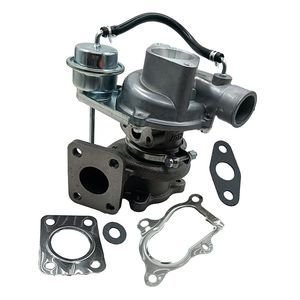
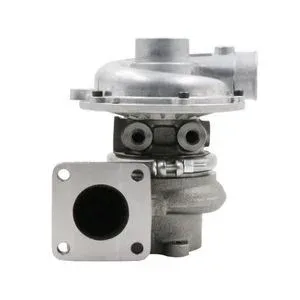
Matched Overhaul Kits — Turbocharger plus gasket sets ship together after cross-checking your Perkins 404C-22T engine serial variant.
Technical Specifications
| Parameter |
Value |
| Part Number |
SBA135756170 |
| Product Type |
Turbocharger |
| Cross-Reference |
M87772751, F41CAD-S0057BG, F41CAD-S0057G, VA420057, VB420057, VC40057, VC420057, VD420057, 135756170, 13575-6170, 87772751, 4T-507 (reference only) |
| Machine Fitment |
New Holland L170, New Holland LS170, New Holland S55, New Holland SL55B |
| Turbo Model |
RHF4-46001P8.5NHBRL323CAZ |
| Condition |
New Aftermarket |
| Engine Fitment |
Perkins 404C-22T, Perkins 404D-22T, Perkins 404D-22TA, CAT 3024C, CAT C2.2T, Shibaura N844L, Shibaura N844LT |
| Warranty |
3–12 months against manufacturing defects |
| MOQ |
1 piece |
| Standards |
ISO 9001 |
Application Suitability
| Engine System |
Related Components |
| Exhaust manifold and gasket sealing |
Manifold gasket set, turbo mounting studs and nuts |
| Oil supply and drain circuit |
Oil feed line, drain hose, oil seal ring |
| Intake and intercooler path |
Air filter element, intake hose clamps, intercooler gaskets |
| Crankcase ventilation |
Breather valve, ventilation hose |
| Emission and exhaust after-treatment |
Exhaust pipe gasket, heat shield fasteners |
Why a Turbo Failure Rarely Starts at the Turbo
A burned RHF4 turbocharger is usually the last component to fail in a chain of upstream problems. Replacing it without diagnosing the root cause invites a repeat failure within weeks.
I have worked in mining repair bays where the same New Holland L170 came back three times in one season, each time with a different RHF4 turbocharger installed. The actual cause was a partially blocked oil drain hose that allowed oil to pool in the bearing housing, overheating the journal bearings until the shaft seized. Nobody checked the drain path because the assumption was always that the turbo itself was defective [NEED_CITE: common root causes of turbocharger bearing failure in compact diesel engines].
When you order this RHF4 turbocharger engine rebuild component, the conversation should start with what failed upstream — oil quality, air restriction, blow-by pressure, or exhaust back-pressure — not just the part number on the nameplate. The turbo is the symptom more often than the disease.

The Exhaust and Intake System This Turbo Lives In
The RHF4-46001P8.5NHBRL323CAZ sits between the exhaust manifold outlet and the intake air path on Perkins 404C-22T and Shibaura N844LT engines. Hot exhaust gas enters the turbine housing, spins the shaft, and exits through the downpipe while the compressor side pushes pressurized air through the intercooler into the cylinders. Every connection in that loop — manifold gasket, turbo inlet flange, outlet clamp, intercooler hose — must seal correctly or the boost pressure drops and the engine runs hot.
When planning an RHF4 turbocharger engine rebuild, include the manifold-to-turbo gasket and the compressor outlet hose in the same order. A leaking manifold gasket alters exhaust gas velocity entering the turbine, reducing boost at low RPM and forcing the engine to work harder under load.
Engine Serial Variants and Why They Matter
Within the Perkins 404C-22T and 404D-22T family, turbo mounting flange orientation and oil port position can differ between serial ranges. A turbo that physically bolts on but has the oil drain port facing the wrong direction will restrict drainage, causing oil to back up into the bearing housing. This is one of the most frequent installation errors on compact skid steer engines where the engine bay is tight and visibility is poor [NEED_CITE: Perkins 404 series engine serial variant differences in turbo mounting configuration].
Before dispatch, we verify the oil port orientation and flange bolt pattern against your specific engine serial number. If your nameplate is worn or painted over, send a photograph of the block casting number and we will cross-check the variant. The RHF4 turbocharger engine rebuild process depends on getting this detail right before the unit leaves the warehouse.
What the Spec Sheet Actually Means for Your Rebuild
The RHF4-46001P8.5NHBRL323CAZ designation encodes the turbine wheel trim, compressor inducer diameter, and bearing type. The 46001P8.5 trim defines the flow capacity matched to the displacement of 2.2-liter four-cylinder diesels like the CAT 3024C and Shibaura N844LT. A mismatch here produces either excessive lag or over-boosting at high RPM, both of which damage pistons and valves.
The journal bearing design relies on a steady supply of clean oil at sufficient pressure. Oil contamination from a degraded filter or bypassed filtration introduces abrasive particles that score the bearing surfaces. Dynamic balancing of the rotating assembly is verified before dispatch to prevent vibration-induced seal wear. The ISO 9001 production standard covers dimensional checks on the turbine housing bore and compressor wheel clearance, which directly control boost response and oil consumption past the piston ring seals.
The Cost of Skipping the Root-Cause Diagnosis
Installing a fresh turbocharger onto an engine with unresolved upstream faults produces predictable results. A restricted air filter increases exhaust temperature entering the turbine, accelerating carbon buildup on the shaft and seals. Excessive crankcase blow-by pressurizes the oil drain line, preventing gravity drainage and flooding the center bearing housing.
In demolition and mining support environments where machines run under sustained load, these conditions destroy a new turbocharger within a single shift. The repair cost then doubles because you are pulling the unit back out to install another one — and still have not fixed the underlying problem [NEED_CITE: diesel engine crankcase ventilation and turbo oil drain system interaction].
What We Supply Beyond the Turbocharger Unit
Our production lines cover selected part ranges directly, while remaining components come from qualified ISO 9001 manufacturing partners — both carry identical warranty terms. For this RHF4 turbocharger engine rebuild, that means the turbocharger, mounting gaskets, oil seals, and adjacent exhaust hardware all ship under one account with one warranty.
Identification works from a part number, machine model, photograph, or nameplate image. If the cross-reference table you have been given lists SBA135756170 alongside superseded numbers like VC420057 or VD420057, we verify which number applies to your specific engine build. Samples ship for fitment confirmation before you commit to bulk quantities. The technical team confirms compatibility and grade based on your engine serial variant and overhaul history.
Documentation & Verification
- Commercial invoice listing turbocharger part number and matched gasket components
- Cross-reference sheet mapping SBA135756170 to superseded numbers (reference only)
- Dimensional inspection record covering flange bolt pattern and oil port position
- Dynamic balancing verification for the rotating assembly before packing
- Packing photographs showing turbocharger and gasket kit contents in crate
- HS code assignment for turbocharger and exhaust gasket classification
Installation & Rebuild Sequence
- Verify oil feed and drain line condition before mounting the RHF4 turbocharger unit
- Confirm turbo flange bolt pattern matches your Perkins 404C-22T exhaust manifold
- Pre-lubricate journal bearings with clean engine oil before first start
- Torque manifold-to-turbo fasteners to engine manual specification in sequence
- Run engine at idle for initial minutes to establish oil flow through the bearing housing
- Check all intake and exhaust connections for leaks after warm-up cycle
What to Send with Your Inquiry
Provide your engine model, serial number, and any previous overhaul history so we can confirm the correct RHF4 turbocharger variant and matched gasket contents. If the nameplate is illegible, a photograph of the engine block casting number and existing turbo housing is sufficient for identification.
Frequently Asked Questions
Q: What other engine system parts should I inspect or replace when installing a new turbocharger?
A: Check the oil feed and drain lines for restriction or degradation, replace the air filter element, inspect the exhaust manifold gasket for leaks, and verify crankcase breather valve function. Contaminated oil or restricted drainage will destroy the new turbocharger quickly. Include turbo mounting gaskets and oil seal rings in your overhaul order to avoid split shipments.
Q: How do engine serial variants within the Perkins 404C/404D family affect turbo fitment?
A: Different serial ranges within these families may use different oil port orientations or mounting flange bolt patterns. A turbo that bolts on but has incorrect port alignment will restrict oil drainage. Provide your engine serial number or block casting photograph so we verify the correct variant before shipping.
Q: What is typically included in a turbo-related overhaul gasket kit for this engine platform?
A: A matched kit typically includes the exhaust manifold-to-turbo gasket, turbo outlet gasket, oil supply and drain seal rings, and mounting hardware. Contents vary by specific engine build. We cross-check the kit against your engine serial number to ensure every required seal is included and no critical gasket is missing.
Q: How do I identify the root cause of turbo failure to prevent repeat damage?
A: Inspect oil quality and filter condition, check air filter restriction, measure crankcase blow-by pressure, and verify exhaust back-pressure downstream. A blocked oil drain line or degraded ventilation system often causes repeat failures. Addressing only the turbocharger without resolving upstream faults leads to predictable repeat damage within a short operating period.