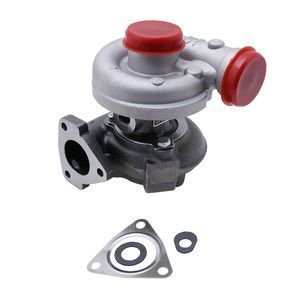
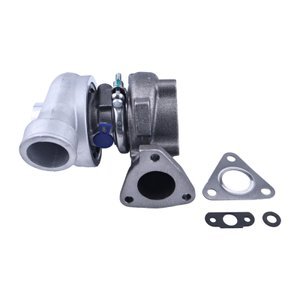
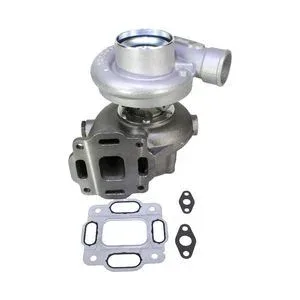
Engine Serial Variants Verified — Each S1B turbocharger 315666 is cross-checked against Deutz BF3L914 and BF4M1011F production serial breaks before dispatch.
Technical Specifications
| Parameter |
Value |
| Part Number |
315666 |
| Product Type |
Turbocharger |
| Cross-Reference |
4234298KZ, 4272467KZ, 4272466KZ, 4272465KZ, 317904, 317905, 317906, 315639, 315640, 315641 (reference only) |
| Machine Fitment |
Deutz BF3L914, BF4M1011F |
| Turbo Model |
S1B |
| Turbine Housing Material |
Ni-resist ductile iron (ASTM A439 Type D2) |
| Compressor Wheel Material |
Forged 7075-T6 aluminum alloy |
| Compressor Wheel Radial Tolerance |
±0.02 mm |
| Max Operating Speed |
125,000 rpm |
| Bearing Type |
Dual ceramic ball bearings |
| Sealing Surface Finish |
Ra ≤0.4 μm |
| Max Exhaust Gas Temperature |
above 650°C |
| Sustained Boost Pressure |
up to 1.8 bar |
| Condition |
New Aftermarket |
| Warranty |
6 months against manufacturing defects |
| Standards |
ISO 9001, ISO 8573-1 Class 2, ISO 1940 G2.5, ASTM A439 Type D2 |
Application Suitability
| Engine System |
Related Components |
| Intake & Boost Delivery |
Intake manifold gaskets, air filter elements, boost pressure sensors |
| Lubrication Feed & Drain |
Turbo oil feed line, oil return hose, crankcase breather |
| Exhaust & Thermal Management |
Exhaust manifold studs and nuts, heat shields, flex pipe sections |
| Engine Overhaul Package |
Head gasket set, main and rod bearings, piston ring sets, full engine seal kit |
When the Rebuild Fails Again After a Fresh Turbo
The turbo did not fail — the system around it did.
I have pulled enough turbochargers off Deutz BF3L914 and BF4M1011F engines in Yangtze River Delta workshops to know the pattern. The machine comes back on the stand within a few hundred hours. Carbon-coked bearings, a scorched compressor seal, or a shaft that wobbles from heat distortion. In most cases, the replaced unit was not the root cause. Contaminated oil feed lines, cracked exhaust manifolds leaking hot gas past the turbine flange, or a collapsed air intake hose forced the new turbo to operate outside its design envelope [NEED_CITE: common root causes of premature turbocharger failure in diesel engines]. A Turbocharger S1B 315666 installed without tracing the upstream and downstream faults is simply the next component in line to fail.

The Intake-to-Exhaust Chain Around This Turbo
A turbocharger sits at the intersection of three engine circuits: pressurized intake air, high-temperature exhaust gas, and pressurized lubrication oil. The Turbocharger S1B 315666 for Deutz BF3L914 and BF4M1011F engines depends on each circuit delivering within specification. When planning an engine rebuild, the turbo is never an isolated line item. It arrives as part of a system-level conversation between the air filter housing, the intercooler plumbing, the exhaust manifold, and the oil gallery feeding the center cartridge.
Matching Turbo Variant to Engine Serial and Rebuild History
Deutz BF4M1011F engines left the factory across multiple production runs, and turbo mounting flanges, oil port clocking, and wastegate actuator bracket positions have shifted between serial ranges. A unit pulled from a mid-production engine may share the same base OEM reference number but differ in oil inlet orientation or compressor outlet diameter [NEED_CITE: Deutz engine serial variant identification procedures for BF4M series]. I have seen shops order by the stamped number alone, only to find the oil feed line would not route without a kink. Before we ship, we verify the engine serial and any prior rebuild modifications to confirm the correct variant. An engine that went through a previous overhaul may already carry non-standard bearing clearances or an oversized crankshaft, which changes oil pressure at the turbo feed port and affects how quickly the ceramic ball bearings receive adequate lubrication on cold start.
How Ni-Resist Iron and Ceramic Bearings Change the Rebuild Equation
The turbine housing is cast from Ni-resist ductile iron conforming to ASTM A439 Type D2. This material resists thermal fatigue cracking when the housing cycles between cold starts and sustained high-load operation — a condition common in compactors and quarry crushers that run in high-temperature, high-humidity environments. Standard gray iron housings tend to develop micro-cracks along the volute after repeated thermal shock, eventually leaking exhaust gas past the turbine wheel and reducing boost efficiency.
The dual ceramic ball bearings carry a lower friction coefficient than conventional steel journal bearings, which matters during the first seconds after engine start when oil pressure is still building. The compressor wheel, machined from forged 7075-T6 aluminum to a radial tolerance of ±0.02 mm, stays balanced up to the 125,000 rpm operating ceiling. That balance is verified against ISO 1940 G2.5, the same standard applied to precision rotating assemblies [NEED_CITE: ISO 1940 balance quality grades for turbocharger rotating assemblies]. The sealing surfaces are lapped to Ra ≤0.4 μm, which keeps oil from migrating into the intake tract and depositing carbon on the cylinder head — a frequent contributor to premature valve and piston wear after a turbo swap.
The Cost of Skipping the System Diagnosis
Replacing the turbo without flushing the oil feed line, inspecting the exhaust manifold for cracks, and pressure-testing the intake plumbing leads to predictable outcomes. Carbon accumulates in the new bearing cartridge within the first few hundred hours. Oil consumption climbs as the compressor seal degrades from ingested dust bypassing a cracked intake boot. The engine returns to the bench, and the next turbo goes on the invoice [NEED_CITE: diesel engine overhaul repeat failure rates from undiagnosed system faults]. Shops that treat the turbocharger as a system component — replacing it alongside oil lines, gasket sets, and air intake seals — close the repair once. Those that swap only the unit they see leaking tend to see the same machine again before the next scheduled service interval.
Why Rebuild Shops Source This Turbo From Us
Our own production lines and qualified sourced supply sit under a single account with a single six-month warranty, so the turbo and the matching gasket set carry the same coverage terms. Eight product categories — from engine overhaul kits to seal kits and electrical components — allow a complete rebuild list to ship as one consignment rather than split across several suppliers with mismatched lead times. Minimum order is one piece, so a single emergency turbo for a downed BF3L914 ships without waiting to build a larger order. Our Guangzhou warehouse stocks fast-moving configurations for immediate dispatch. Part identification works from a part number, a machine model, a photograph of the nameplate, or an image of the old unit's data tag — whichever is available on the shop floor. Cross-reference verification covers superseded and alternate OEM reference numbers so the correct variant is confirmed before the package leaves. Samples are available for fitment confirmation before a fleet operator commits to a bulk order for multiple machines.
Documentation & Verification
- Commercial invoice and packing list referencing turbocharger model S1B and destination engine serial.
- Part compatibility and cross-reference sheet marking all OEM numbers as reference only.
- Quality inspection record covering compressor wheel balance and sealing surface finish.
- Warranty terms specifying six-month coverage against manufacturing defects.
- Packing photographs showing turbine housing protection and oil port sealing caps.
- HS code and customs documentation support for cross-border engine parts shipments.
Installation & Rebuild Sequence
- Flush oil feed and return lines before mounting to prevent carbon ingress into the ceramic bearing cartridge.
- Verify turbine flange stud pattern against the exhaust manifold before applying gasket sealant.
- Pre-lube the center cartridge with clean engine oil and crank without firing to build oil pressure.
- Torque compressor outlet clamp to specification and check for intake leaks with boost pressure applied.
- Run the engine at idle for several minutes, then inspect oil return flow and listen for abnormal whistle.
Before You Place the Order
Send us the Deutz engine model, the full serial number from the nameplate, and any notes on prior overhaul work such as crankshaft regrind or non-standard bearing sizes. If the old turbo is still on the bench, a photograph of the data tag and the oil port orientation helps us confirm the correct variant before we quote the rebuild kit and turbo together.
Frequently Asked Questions
Q: What other engine system components should be inspected when this turbo fails?
A: Check the oil feed and return lines for sludge or restriction, inspect the exhaust manifold for cracks or warped flanges, and pressure-test the intake tract for leaks. Replace the air filter element and verify crankcase breather function. Contaminated oil or restricted drain flow will destroy the new turbocharger cartridge just as quickly as the old one failed.
Q: How do I confirm which cross-reference number applies to my Deutz engine?
A: Provide the full engine serial number from the nameplate along with any prior rebuild history. We cross-check the serial against production variant records to confirm oil port orientation, flange pattern, and actuator bracket position. The OEM reference numbers listed are for identification purposes and must be verified against your specific engine build.
Q: Can oil contamination cause the new turbo to fail prematurely?
A: Yes. Carbon particles and metallic debris in the oil feed line score the ceramic ball bearing surfaces and degrade the sealing rings. Always flush feed and return lines during installation, use oil meeting the engine manufacturer's specification, and replace the engine oil filter. A clean lubrication circuit is the single most important factor in turbocharger service life.
Q: Is a sample available before I commit to a bulk order?
A: We supply samples for fitment verification. Mount the sample on one engine, confirm oil port alignment, flange match, and boost delivery across the operating range. Once fitment is validated, the bulk order ships with the same manufacturing specification and quality inspection standard as the approved sample unit.
Q: What test records ship with the turbocharger?
A: Each unit includes a quality inspection record documenting compressor wheel balance grade, sealing surface finish measurement, and dimensional verification of the turbine and compressor housings. Flow bench data covering boost pressure at multiple operating points is available upon request for fleet rebuild programs requiring full traceability documentation.