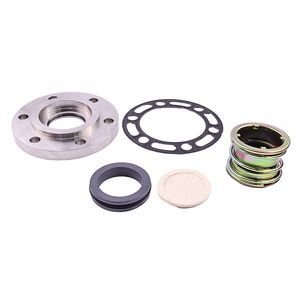
Matched Valve Train Set — Every push rod is verified against the specific Deutz engine serial prefix before dispatch, preventing variant mismatch during D2011L02 overhauls.
Technical Specifications
| Parameter |
Value |
| Part Number |
02109085 |
| Product Type |
Push Rod |
| Cross-Reference |
0210-9085, 0210 9085, 2109085 (reference only) |
| Machine Fitment |
D2011L02, D2011L03, D2011L04I, F2L2011, F2L1011F, F2L1011FT, BF2L2011, BF2L1011F, BF2L1011FT, F3L2011, F3L1011F, F3L1011FT, BF3L2011, BF3L1011F, BF3L1011FT, F4L2011, F4L1011F, F4L1011FT, BF4L2011, BF4L1011F, BF4L1011FT, F2M1011F, F3M1011F, F4M1011F, BF2M1011F, BF3M1011F, BF4M1011F |
| Material |
High-carbon alloy steel, heat-treated |
| Surface Treatment |
Phosphate coating |
| Condition |
New Aftermarket |
| Warranty |
6 months against manufacturing defects |
| MOQ |
1 piece |
| Standard |
ISO 9001 |
Application Suitability
| Engine System |
Related Components |
| Deutz D2011/F2L2011 Valve Train |
Hydraulic lifters, rocker arms, valve stem seals |
| Deutz BF4L2011 Turbocharged Series |
Matched push rod sets, cylinder head gaskets, camshaft bearings |
| Deutz F4M1011F Industrial Configuration |
Complete overhaul kits, piston assemblies, main bearing shells |
| Scheduled Maintenance Intervals |
Valve clearance adjustment shims, timing gear inspection |
Systemic Causes Behind Push Rod Failure in Rebuilds
Replacing the push rod without diagnosing camshaft lobe wear or lifter scoring guarantees a second teardown.
When an engine overhaul kit arrives, the push rod grade or length often doesn't match the specific Deutz engine serial variant, forcing the rebuild team to halt work and source the correct component. I have seen D2011L03 engines return to the shop within weeks because the replacement push rods were dimensionally correct for the base model but incompatible with the production run's revised valve train geometry [NEED_CITE: Deutz engine serial variant identification procedures for valve train components]. The root cause of repeated push rod engine rebuild replacement failure is rarely the rod itself — it's the unaddressed wear on adjacent surfaces that transfers destructive loads back into the new component.

Valve Train System Matching for Complete Overhauls
A push rod never operates in isolation. It transfers motion from the camshaft lobe through the lifter and into the rocker arm, opening the valve against spring pressure. When sourcing a push rod engine rebuild replacement, the entire valve train must be evaluated as a system. Mismatched lifters or worn rocker arm pivots will induce bending loads that the new rod cannot withstand, leading to premature failure and lost compression.
Engine Serial Variants and Dimensional Grades
The Deutz D2011 and F2L2011 families span multiple production runs, each introducing subtle changes to valve train geometry. A push rod that fits an early F2L1011F may be dimensionally incompatible with a later BF2L1011FT, even though both share the same base engine designation. Confirming the exact serial prefix and cross-referencing against the engine build sheet prevents the costly mistake of installing rods that alter valve timing or fail to achieve proper lash adjustment [NEED_CITE: Deutz engine serial prefix cross-reference for internal component compatibility].
Material and Surface Treatment Under Thermal Cycling
The high-carbon alloy steel core provides the compressive strength needed to transfer cam lobe lift without buckling, while heat treatment ensures the tips resist deformation under repeated impact loading. The phosphate coating serves a critical break-in function, retaining oil film during the initial run-in period when boundary lubrication conditions prevail. This surface treatment reduces scuffing between the push rod tip and the rocker arm cup, extending the component's service life through the critical first hours of operation.
The Hidden Cost of Variant Mismatch
Installing push rods that don't match the engine's specific production variant results in incorrect valve timing, even when the rods physically fit. The engine may start and run, but valve events occur at the wrong crankshaft angles, reducing power output and increasing exhaust temperatures. This condition often goes undiagnosed until piston-to-valve contact or catastrophic valve train failure occurs, turning a scheduled overhaul into an emergency engine replacement [NEED_CITE: valve timing deviation effects on Deutz air-cooled diesel engines].
Why Source Valve Train Components Here
We maintain dimensional records for each Deutz engine variant in the D2011 and F2L2011 families, allowing us to verify compatibility before dispatch rather than leaving fitment confirmation to the rebuild shop. Our technical team cross-references your engine serial number against production build sheets to identify whether your specific unit requires the standard or revised push rod length. We supply matched sets covering the entire valve train — push rods, lifters, rocker arms, and associated gaskets — under a single account with unified warranty terms. Guangzhou warehouse stock enables fast dispatch on common configurations, while low-volume variants are sourced from ISO 9001 certified manufacturing partners carrying the same quality standards. Sample supply is available for fitment confirmation before bulk commitment, eliminating the risk of receiving incompatible components on a critical rebuild.
Documentation & Verification
- Commercial invoice and packing list with engine serial variant notation
- Push rod dimensional verification report against specified length tolerance
- Cross-reference sheet confirming compatibility with D2011L02 through BF4M1011F range
- Quality inspection record including tip hardness and straightness measurement
- Packing photographs showing component protection for international transit
- HS code and customs documentation support for engine parts classification
Installation & Rebuild Sequence
- Verify push rod length matches engine build sheet before removing protective coating
- Inspect lifter faces for scoring or pitting — replace if wear exceeds service limit
- Apply assembly lubricant to both push rod tips and lifter contact surfaces
- Install rods in original cylinder positions to maintain break-in wear patterns
- Set valve clearance to cold specification after all rods are seated
- Run engine at idle for initial break-in, then recheck valve lash after warm-up
Requesting a Matched Valve Train Quote
Provide your Deutz engine model designation and the complete serial number from the engine data plate. Include any previous overhaul records noting whether the block has been bored or the crankshaft ground, as these affect related component selection. If the engine nameplate is illegible, submit clear photographs of the block casting numbers and any remaining identification stamps for technical verification.
Frequently Asked Questions
Q: What other valve train components should be replaced together with the push rods?
A: Hydraulic lifters, rocker arms, and valve stem seals should be evaluated as a set during any push rod engine rebuild replacement. Worn lifter faces will damage new push rod tips, while pitted rocker arm cups induce bending loads. Sourcing these components together ensures dimensional compatibility and unified warranty coverage across the entire valve train system.
Q: How do engine serial variants affect internal part compatibility?
A: Deutz D2011 and F2L2011 families include multiple production runs with revised valve train geometry. A push rod dimensionally correct for one serial prefix may alter valve timing on another, even within the same base model. Always confirm the exact engine serial number and cross-reference against production build sheets before ordering internal components.
Q: What typically causes repeated push rod failure after a rebuild?
A: Unaddressed camshaft lobe wear, lifter scoring, or rocker arm pivot damage transfers destructive loads into new push rods. The rod itself is rarely the root cause — it's the symptom of adjacent component wear. Diagnosing and replacing the entire valve train as a system prevents the cycle of repeated failures and second teardowns.
Q: Can I order a matched set for the entire valve train system?
A: Yes, we supply complete valve train sets including push rods, lifters, rocker arms, and associated gaskets under one part number and one warranty. This eliminates compatibility mismatches between components sourced from different suppliers and ensures all parts arrive together for a single, coordinated rebuild.
Q: How do I confirm the exact engine model and build configuration?
A: Locate the engine serial number on the data plate, typically mounted on the valve cover or block. If the plate is missing or illegible, photograph any casting numbers stamped into the block. Our technical team cross-references these identifiers against production records to confirm the correct push rod variant for your specific engine.