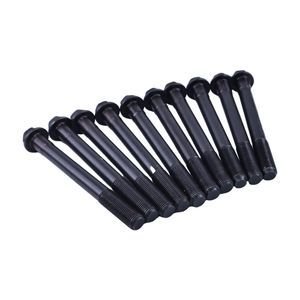
Verified Rebuild Match — every liner, piston, and bearing grade inside this kit is cross-checked against your B3.3 or QSB3.3 serial range before dispatch.
Technical Specifications
| Parameter |
Value |
| Part Number |
4944477 |
| Product Type |
Overhaul Kit |
| Cross-Reference |
4944477 (reference only) |
| Machine Fitment |
Cummins B3.3, QSB3.3 |
| Kit Contents |
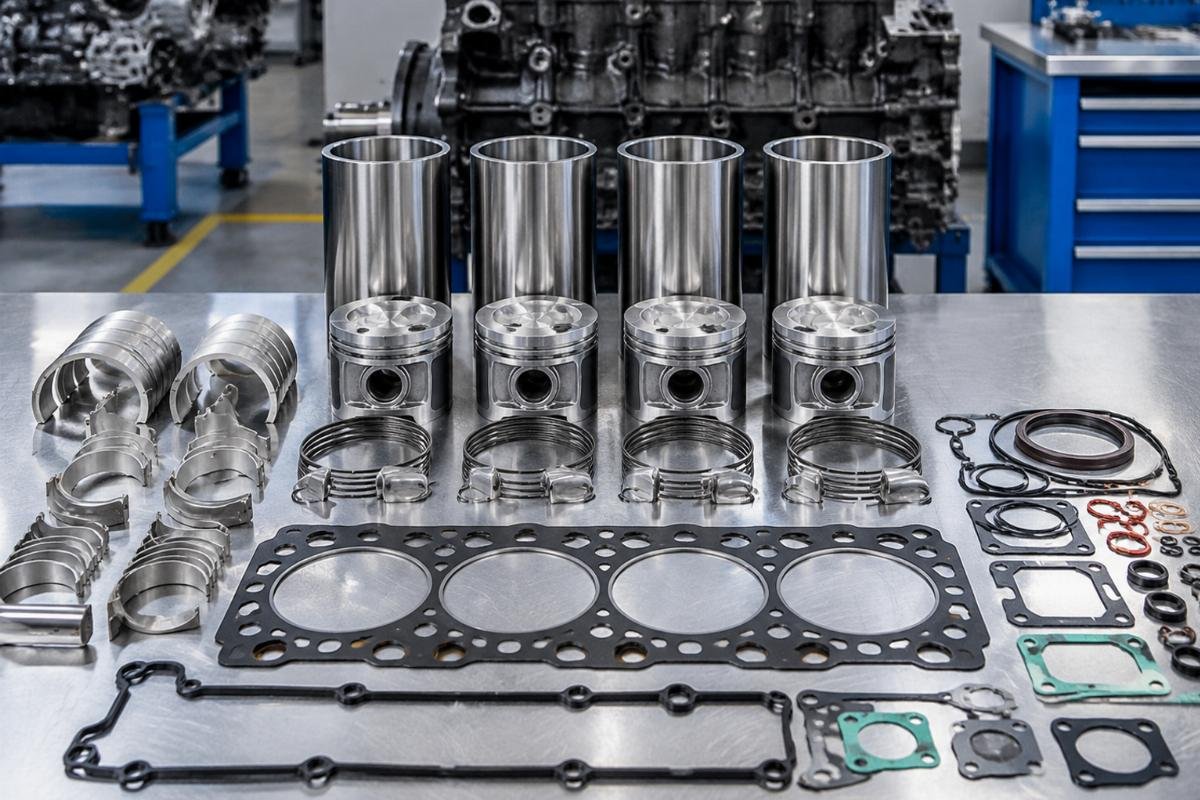
Overhaul gasket set, semi-finished cylinder liners, standard pistons, piston pins, snap rings, rod bushings, standard piston rings, main bearings, connecting rod bearings, thrust washer, intake/exhaust valves, valve guides, intake/exhaust valve seats |
| Cylinder Liner Material |
Centrifugally cast grey iron (ASTM A48 Class 30), nitrided inner bores (HV950 surface hardness) |
| Cylinder Liner Roundness |
±0.005 mm |
| Gasket Construction |
Multi-layer steel (MLS) with Viton elastomer coating |
| Gasket Temperature Range |
50–250°C |
| Gasket Burst Pressure |
12 MPa |
| Piston Ring Specification |
Chrome-plated top ring, molybdenum-coated second ring |
| Bearing Specification |
SAE 40, crush allowance 0.025–0.035 mm |
| Oversize Grade |
STD (Standard) |
| Condition |
New Aftermarket |
| Warranty |
6-month standard warranty against manufacturing defects |
| MOQ |
1 piece |
| Applicable Standards |
ISO 9001, ISO 8536-3, ASME B16.20, ASTM A48 Class 30, SAE J352, SAE 40 |
Application Suitability
| Engine System |
Related Components |
| Cylinder and bottom-end assembly |
Crankshaft journals, connecting rods, block deck surface |
| Fuel delivery and combustion |
Injectors, fuel pump, turbocharger condition |
| Cooling and thermal management |
Water pump, thermostat, radiator cap pressure rating |
| Emission and exhaust |
EGR valve, exhaust manifold gaskets, aftertreatment sensors |
| Lubrication circuit |
Oil pump relief valve, oil cooler integrity |
Why a Complete Cummins B3.3 QSB3.3 Engine Overhaul Rebuild Kit Must Address Root Causes
An overhaul that replaces only what is visibly broken leaves the failure mechanism intact — the rebuilt engine will fail again at the same point.
When I was buying parts for fleets in Central Asia, the most expensive mistake was never the kit itself. It was the teardown that happened two weeks after a rebuild because the bearing grade did not match the reground crankshaft, or because the liner roundness exceeded tolerance and oil consumption climbed from day one [NEED_CITE: crankshaft regrind grade matching for mid-range diesel engines]. Shops that tore down engines a second time almost always traced the cause to a mismatch the original kit did not account for — a superseded part number that changed a valve stem diameter, or a liner spec that shifted between early and late serial variants of the same base engine model.
The System This Kit Belongs To
A Cummins B3.3 QSB3.3 engine overhaul rebuild kit sits at the intersection of three systems — the cylinder assembly, the valvetrain, and the bottom-end bearing group. Each component in this set is specified to the same build grade so that piston-to-liner clearance, valve-to-guide fit, and bearing crush allowance all resolve within a single tolerance stack. When a shop sources these items separately, tolerance drift between suppliers means the assembled engine can pass a compression test on the bench yet show excessive blow-by under load.
Serial Variant Verification and Oversize Grade Selection
The B3.3 and QSB3.3 family has gone through internal revisions that affect liner outside diameter, piston crown profile, and bearing shell width. Within the same base part number, early-production blocks may accept a different semi-finished liner dimension than later units [NEED_CITE: Cummins mid-range engine serial range variant identification]. Before this kit ships, your engine serial number is checked against the variant table so that every item in the box matches your specific block casting. If your crankshaft was reground during a previous overhaul, the bearing shells must shift to the corresponding undersize — ordering STD bearings against a 0.25 mm undersize crank guarantees journal contact failure.
Tolerance Breakdown for Field Rebuilders
The centrifugally cast grey iron liners hold roundness within ±0.005 mm across the bore, which is the threshold that controls oil film stability at the ring-to-liner interface. Deviation beyond that band causes localized scuffing and accelerates ring gap widening. The chrome-plated top compression ring resists micro-welding under the peak combustion temperatures common in turbocharged QSB3.3 applications, while the molybdenum-coated second ring provides conformability during the initial seating period. MLS gaskets with Viton elastomer coating maintain seal integrity across the 50–250°C thermal cycling range, and the 12 MPa burst rating provides headroom above peak cylinder pressure [NEED_CITE: multi-layer steel gasket failure modes in medium-duty diesel engines]. Main and connecting rod bearings carry a SAE 40 specification with crush allowance held between 0.025 and 0.035 mm — that crush is what retains the shell in the bore under dynamic load and prevents spinning.
The Cost of Missing One Item from the List
Ordering a kit that omits valve guides or thrust washers forces a second purchase mid-rebuild — but the real cost is the re-contamination risk every time the engine block is re-exposed to the shop environment. Shops that buy partial kits frequently report that the second shipment arrives with a slightly different bearing lot, introducing clearance variation that the initial build did not anticipate [NEED_CITE: diesel engine rebuild contamination control between phased parts deliveries]. A single missing snap ring set can stall assembly while the block sits open on the bench, accumulating particulate that no amount of final flushing will fully remove.
Why Source This Overhaul Kit Through XUNPO
Self-produced gasket lines and qualified sourced supply carry identical QC protocols under one account, so warranty claims do not split between vendors. Eight product categories mean the turbo gaskets, injector seals, or front crankshaft seal that sit outside the overhaul kit ship in the same consignment. The MOQ is one kit — no padding an order to meet a threshold when a single engine is down. Guangzhou warehouse stock covers common B3.3 and QSB3.3 configurations for prompt dispatch on standard-grade sets. Part identification works from your engine serial plate photograph when the data tag is painted over or illegible. Cross-reference verification covers superseded and alternate numbers so you receive the current applicable variant, not the obsolete listing copied from an outdated table.

Documentation & Verification
- Commercial invoice listing each kit sub-component with quantity count
- Part compatibility sheet mapping 4944477 (reference only) to your specific engine serial range
- Dimensional inspection record covering liner roundness and bearing crush measurement
- Six-month warranty terms covering manufacturing defects across all kit items
- Packing photographs showing anti-static foam protection for pistons and liners
- HS code and customs classification support for international overhaul kit shipments
Installation & Rebuild Sequence
- Verify liner semi-finished bore against block deck height before final honing
- Match bearing shell grade to measured crankshaft journal diameter, not assumed STD
- Torque main caps in staged sequence and confirm bearing clearance with Plastigauge
- Check piston ring end gaps at three bore positions before installing piston assemblies
- Pre-lube all bearing surfaces and cylinder walls before first cranking
- Follow structured break-in load progression for ring seating during initial run hours
Before You Request a Quote
Provide your engine serial number, the measured crankshaft journal dimensions, and any known history of previous regrinds or bore work. If the engine data plate is unreadable, a photograph of the block casting number and any visible stamped identifiers allows the technical team to confirm the correct variant before the kit is assembled for dispatch.
Frequently Asked Questions
Q: What is included in this B3.3 overhaul kit, and what might I still need to order separately?
A: The kit covers cylinder liners, pistons, rings, pins, snap rings, rod bushings, gasket set, main and rod bearings, thrust washer, valves, guides, and seats. Items outside the kit include injectors, turbo gaskets, and accessory drive belts. Confirm your full rebuild scope so supplementary items ship together.
Q: My crankshaft was reground during a previous overhaul — how do I select the correct bearing grade?
A: Provide your measured crankshaft journal diameters. The bearing shells in this kit are available in STD, 0.25 and 0.50 oversize to match reground journals. Shipping STD bearings against an undersize crank will cause immediate journal contact failure.
Q: Do different B3.3 serial ranges use different internal components within the same base part number?
A: Yes. Liner outside diameter, piston crown profile, and valve stem diameter have changed across production ranges. Your engine serial number is required to confirm which variant applies so that every item in the kit matches your specific block casting.
Q: What system-level checks should I run alongside this overhaul to prevent repeat failure?
A: Inspect the oil pump relief valve, verify injector spray pattern, check turbo shaft play, and confirm coolant system pressure integrity. The failure that caused the original teardown often lives in an adjacent system, not in the worn components themselves.
Q: How do I confirm my exact engine model and serial variant before ordering?
A: Send a photograph of the engine data plate or the block casting number. If the plate is worn or painted over, casting marks and visible stamped codes allow the technical team to identify the correct serial range and confirm component compatibility.