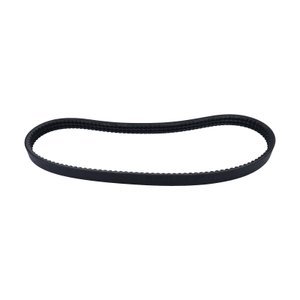
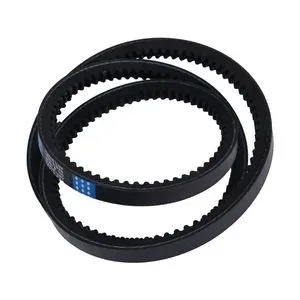
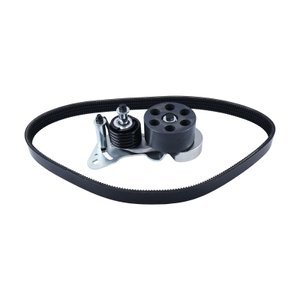
Matched Set Dispatch — every belt drive component for Bobcat loaders verified against engine serial before shipping together.
Technical Specifications
| Parameter |
Value |
| Part Number |
6736775 |
| Product Type |
Belt |
| Cross-Reference |
6736775 (for identification purposes) |
| Machine Fitment |
753, S130, S150, S160, S175, S185, S205, T140, T180, T190, Toolcat 5600 |
| Design Type |
Flat, cogged drive belt with 3 grooves |
| Length |
58.15 inches (1477 mm) |
| Width |
1.19 inches (30.2 mm) |
| Condition |
New Aftermarket |
| Warranty |
3–12 months against manufacturing defects |
| Standards |
ISO 9001 |
Application Suitability
| Engine System |
Related Components |
| Belt drive system powering hydraulic drive pump |
Tensioner assembly, idler pulley, pulley bearings |
| Engine accessory drive on Bobcat S-series loaders |
Drive pump coupling, belt guard hardware |
| Track loader engine belt drive (T-series) |
Tensioner bracket, mounting fasteners |
| Toolcat utility vehicle pump drive |
Pulley alignment shims, belt routing guides |
Why the Belt Fails Weeks After a Fresh Rebuild
A new Drive Pump Belt for Bobcat Loaders rebuild parts rarely fails on its own — the tensioner or pulley beside it is usually the real cause.
In tropical workshops across Southeast Asia, I have watched loaders return to the bench within weeks of a belt swap. The rubber was fine; the tensioner bearing had been wobbling since the last overhaul, throwing the groove engagement off by fractions that shred cord reinforcement over time. Rebuild shops that treat the belt as an isolated consumable end up chasing the same failure repeatedly [NEED_CITE: belt drive system root cause analysis for mobile hydraulic equipment].

The Belt Drive System Behind the Hydraulic Pump
This belt sits at the front of the engine, transferring crankshaft rotation directly to the hydraulic drive pump. When an engine is opened for overhaul, the Drive Pump Belt for Bobcat Loaders rebuild parts should never go back on without checking the tensioner spring rate, idler bearing play, and pulley face condition. A glazed pulley surface reduces friction coefficient enough to cause micro-slip under peak hydraulic load, generating heat that hardens the belt backing prematurely.
Matching Dimensions to the Engine Build Variant
Bobcat loader engines across S130 through S205 and T140 through T190 share the same base belt drive architecture, but pulley spacing and tensioner arm geometry shift between serial ranges. The 58.15-inch length and 1.19-inch width of this Drive Pump Belt for Bobcat Loaders rebuild parts must match the specific routing path — a belt that is even slightly long will ride low in the groove, while one that is short overloads the tensioner spring. Confirming engine serial and cross-referencing against the machine parts manual eliminates the variant mismatch that causes tracking issues [NEED_CITE: Bobcat loader engine serial variant identification for belt drive components].
Groove Geometry and Thermal Management
The triple-groove cogged profile is not just about grip. Each cog reduces bending resistance as the belt wraps around the pulley, lowering internal heat generation during continuous duty cycles. The fiber-loaded backing resists the thermal buildup common in enclosed engine bays where ambient temperature already pushes material limits. Dimensional tolerance held to ±0.3 mm on both length and width means the belt seats correctly in OEM-spec pulleys without forcing the tensioner beyond its designed travel range. This precision matters most during reassembly when pulley faces may already carry wear from the previous service interval.
The Cost of Skipping System-Level Inspection
Replacing only the belt while leaving a worn tensioner in place is the most common reason loaders come back with the same complaint. The misalignment from a fatigued tensioner bearing creates uneven load across the three grooves, wearing one side of the cord reinforcement until the belt splits longitudinally. Shops that skip the adjacent component check end up absorbing the labor cost of a second teardown — and the customer absorbs another day of machine downtime [NEED_CITE: premature belt failure patterns linked to tensioner wear in skid steer loaders].
Why Rebuild Shops Source This Belt Through XUNPO
Own production on selected belt lines and qualified sourced supply share the same QC protocol and warranty terms, so you get consistency across your entire overhaul parts order. Eight categories of engine and hydraulic components mean the tensioner, idler, seals, and gaskets ship in one consignment alongside this Drive Pump Belt for Bobcat Loaders rebuild parts. Minimum order from one piece supports both emergency single-machine repairs and fleet stocking. Our technical team verifies compatibility against engine serial and cross-references superseded numbers before confirming your order. Sample supply is available for fitment confirmation before you commit to bulk quantities. Quality inspection records accompany every shipment, documenting dimensional checks on length, width, and groove profile.
Documentation & Verification
- Commercial invoice listing belt part number and matched tensioner components
- Cross-reference sheet mapping 6736775 (reference only) to engine serial variants
- Dimensional inspection record covering length, width, and groove depth
- Warranty terms document specifying 3–12 month coverage scope
- Packing photographs showing protective foam and reinforced carton condition
- HS code provided for customs clearance at destination port
Installation & Rebuild Sequence
- Inspect tensioner bearing for axial play and pulley faces for glazing before belt installation
- Verify belt routing matches the three-groove pulley engagement path on the specific engine build
- Apply manufacturer-specified tension and confirm tracking after initial cranking
- Run engine at idle for break-in period, then recheck tension before loading the hydraulic system
- Record belt installation date and engine hour meter reading for next service interval planning
Requesting a Matched Belt Drive Set
Provide your engine model, serial number, and any previous rebuild history so we can confirm the correct belt length, groove count, and compatible tensioner variant for your specific Bobcat loader build. Photos of the existing belt routing and pulley arrangement help us verify fitment accuracy before dispatch.
Frequently Asked Questions
Q: What other belt drive components should be replaced alongside this belt during an engine overhaul?
A: The tensioner assembly and idler pulley bearings should be inspected and typically replaced as a matched set. Worn tensioner springs or pitted pulley bearings introduce misalignment that destroys a new belt within weeks. We supply the complete belt drive service set under one order, verified against your engine serial number.
Q: How do I confirm this belt fits my specific Bobcat loader engine variant?
A: Share your engine model and serial number so we can cross-reference the belt routing and groove count against the correct build variant. Bobcat loader engines across S-series and T-series have pulley spacing differences that affect belt length requirements. We verify compatibility before confirming any order.
Q: Is premature belt failure usually caused by the belt or by adjacent system components?
A: In most cases we see, the root cause is a worn tensioner bearing or misaligned pulley left over from a prior rebuild. The belt is the visible symptom. Inspecting the full belt drive system — tensioner, idler, pulley faces — before installing a replacement prevents repeat failure within the same service cycle.
Q: Can I order a matched set including belt, tensioner, and idler under one purchase order?
A: Yes. We consolidate belt drive components alongside engine seals, gaskets, and filters into a single shipment. This eliminates split deliveries and ensures all matched parts arrive together for your overhaul schedule. Provide your machine model and we will quote the complete service set.