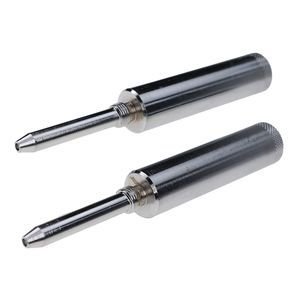
Engine sequence variants confirmed — Every Belt Tensioner 504315786 we ship is verified against the specific F4DFE or F4HFE engine family serial to prevent variant mismatch during rebuild.
Technical Specifications
| Parameter |
Value |
| Part Number |
504315786 |
| Product Type |
Belt Tensioner |
| Cross-Reference (reference only) |
504028028, 87803067, 2856945, 4892866, 504315781, 504315786, 534026610, 2855622, 2852161 |
| Machine Fitment |
New Holland T6080, T6090, T7.170, T7.185, T7.200, T7.210, TS6.110, TS6.120, TS6.140, TS6020, TS6030, B110, B115 |
| Condition |
New Aftermarket |
| Quality Standard |
ISO 9001 |
| Warranty |
3–12 month warranty against manufacturing defects |
| Minimum Order Quantity |
1 piece |
Application Suitability
| Engine System |
Related Components |
| Accessory Drive |
Alternator, Water Pump, AC Compressor |
| Front-End Drive Train |
Idler Pulleys, V-Belt / Multi-Rib Belt |
| Cooling & Charging |
Radiator Fan, Serpentine Belt Routing |
Why a Belt Tensioner engine rebuild requires system-level verification before ordering
A failed tensioner is rarely the root cause; it is usually the symptom of a glazed belt or misaligned accessory pulley that will destroy the new unit if not addressed.
In the repair shops I frequent across Southeast Asia, a machine often comes back with a shredded belt a week after an overhaul because the builder reused the old idler pulley or failed to check the alternator bearing. When we rebuilt a T7.210, the customer insisted the vibration was the new belt, but it was actually a worn water pump bearing pulling the drive system out of alignment [NEED_CITE: diagnostic procedures for accessory drive vibration in agricultural tractors]. Correcting the fault at the system level prevents the tensioner spring from fatiguing prematurely.

The tensioner's role within the accessory drive architecture
The Belt Tensioner maintains the precise load required across the entire front-end routing, ensuring the alternator charges and the water pump circulates coolant without cavitation. A Belt Tensioner engine rebuild must treat the arm, spring, and pulley bearing as a single calibrated unit rather than individual serviceable items. Replacing the full assembly restores the original damping characteristics that individual component swaps cannot replicate.
Engine serial variants across the F4DFE and F4HFE families
Engines sharing the same block architecture often use different tensioner variants depending on the emission tier and auxiliary mounting configuration. The F4DFE and F4HFE families have multiple part number supersessions that do not cross-fit, even when the mounting pattern appears identical. Verifying the exact engine serial number against our cross-reference database ensures the spring rate and arm geometry match the specific accessory load of your build [NEED_CITE: engine family variant identification for belt drive components].
Engineering tolerances and thermal loading
The internal spring mechanism and the pulley bearing are subjected to significant thermal cycling as the engine operates under heavy PTO or hydraulic load. The bearing must maintain its grease stability and radial clearance at elevated temperatures to prevent seizure, which would instantly snap the drive belt. Proper tensioning also prevents the belt from slipping and generating the friction heat that degrades the rubber compound and accelerates cord failure.
The hidden cost of reusing adjacent drive components
A mechanic might save time by reusing the old belt or idler, but a glazed belt cannot grip properly even under high tension, forcing the tensioner to work at the extreme end of its travel. This constant high-stress cycling leads to metal fatigue in the tensioner arm and eventual catastrophic failure mid-season. Addressing the root cause during the overhaul avoids the repeated downtime and warranty disputes that follow a piecemeal repair [NEED_CITE: belt drive system failure analysis and root cause determination].
Why this supply model supports your workshop
Our production on selected lines and qualified sourced supply mean every tensioner carries the same quality assurance and warranty terms. We provide eight categories of components so your complete overhaul list ships as a single consignment, avoiding split freight charges. You can order from one piece for an emergency rebuild, and our technical team verifies compatibility using the engine serial, nameplate image, or superseded number.
Documentation & Verification
- Commercial invoice and packing list referencing the verified part number and engine serial
- Compatibility and cross-reference sheet for OEM interchange numbers (reference only)
- Dimensional quality inspection record for arm travel and pulley bearing runout
- Warranty terms documentation specific to the belt drive component category
- Packing photographs showing the tensioner assembly protected against bearing contamination
Installation & Rebuild Sequence
- Verify belt routing diagram against the T6080 or T7.170 service manual before tensioning
- Clean the mounting bracket face to ensure the tensioner arm pivots without binding
- Install the belt and use the square drive to relieve tension during final placement
- Torque the mounting fastener to specification and check pulley alignment with a straight edge
- Run the engine to operating temperature and re-check belt tracking and tensioner position
Request a system-verified quote
Provide the engine model, serial number, and any previous overhaul history so we can confirm the correct tensioner variant and identify adjacent components that should be replaced.
Frequently Asked Questions
Q: What other belt drive components should be replaced together with the tensioner during an engine rebuild?
A: During a rebuild, we recommend replacing the multi-rib belt, all idler pulleys, and inspecting the alternator and water pump bearings. A worn bearing on any accessory creates misalignment that the new tensioner cannot compensate for, leading to premature belt wear and repeated system failure.
Q: How do I confirm the correct tensioner part number when my engine serial differs from the listed models?
A: Send a clear photograph of the engine nameplate and the existing tensioner arm geometry. Our technical team cross-references the serial number against superseded numbers and manufacturing variations to identify the exact unit required for your specific engine build.
Q: Can a failed tensioner be the symptom of another system fault rather than the root cause?
A: Yes, a seized idler pulley, a locked AC compressor clutch, or a failing water pump bearing can create excessive drag that overcomes the tensioner spring. We advise diagnosing the entire accessory drive train to prevent the new tensioner from failing immediately after installation.
Q: Are the tensioner arm, spring, and pulley bearing supplied as a complete assembly?
A: This unit is supplied as a complete, calibrated assembly. Attempting to service the internal spring or press out the pulley bearing separately compromises the damping characteristics and alignment, so complete unit replacement is the standard procedure for a reliable overhaul.
Q: How do I identify my engine model when the nameplate is worn or unreadable?
A: You can identify the engine family by the casting numbers on the block or the injection pump model number. Providing a photograph of the mounting bracket and pulley spacing allows us to verify the variant against the F4DFE or F4HFE series specifications.