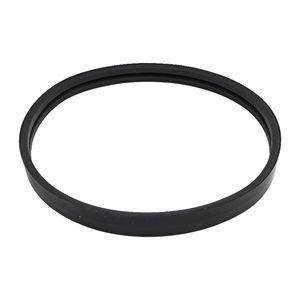
Verified Cross-References Matched — Alternator belt 78-1918 and 78-1543 validated against Thermo King Tripac APU belt drive system requirements, including tensioner and pulley interface verification.
Technical Specifications
| Parameter |
Value |
| Part Number |
78-1918 78-1543 |
| Product Type |
Alternator Belt |
| Cross-Reference |
78-1918, 781918, 78-1543, 781543 (reference only) |
| Machine Fitment |
Thermo King Tripac APU |
| Part Name |
Alternator Belt |
| Condition |
New Aftermarket |
| Warranty |
3-12 months against manufacturing defects |
| Standards |
ISO 9001 |
Application Suitability
| Engine System |
Related Components |
| Belt Drive System |
Tensioner assembly, idler pulleys, alternator |
| Auxiliary Power Unit Cooling |
Water pump (if belt-driven), cooling fan drive |
| Electrical Generation |
Alternator, battery charging circuit, voltage regulator |
| Idle Power Management |
APU control module, compressor clutch |
Why the Belt Drive System Fails Before the Belt Does
A snapped alternator belt on a Tripac APU rarely points to the belt itself as the root cause.
When a replacement alternator belt fails within days of installation, the real fault usually sits in the tensioner bearing, a misaligned pulley, or a seized idler. I have seen fleet workshops swap belts three times before someone checked pulley runout with a dial indicator. Continuous APU thermal cycling in hot climates accelerates tensioner spring fatigue, which then transfers destructive harmonic loads onto the belt cords [NEED_CITE: belt drive tensioner fatigue diagnostics in auxiliary power units].

Where the Alternator Belt Sits Inside the APU Drive System
The alternator belt operates as part of a multi-component drive loop that also powers the APU compressor and, in some Tripac builds, the coolant pump. Every time the engine thermally cycles — which happens repeatedly during idle operation — the belt experiences expansion and contraction stress. This alternator belt engine rebuild replacement must account for those thermal loads, not just the static tension specification printed in the service manual.
What the Previous Rebuild Changed — and What It Didn't
If the APU was previously overhauled and the crankshaft pulley was machined or replaced, the effective pitch diameter may have shifted, altering the belt ride height. A belt that was correct for the original build may sit too deep or too high in the groove after rebuild work, causing accelerated sidewall wear. Always confirm the current pulley condition before selecting the replacement belt, and check whether any previous rebuild introduced an oversize or undersize pulley variant [NEED_CITE: APU crankshaft pulley dimensional variance after rebuild].
Interpreting Belt Specifications for APU Duty
The material compound used in this alternator belt is selected to resist the specific thermal environment of a continuously cycling APU, which operates at higher under-hood temperatures than a main engine. Cord reinforcement construction determines how well the belt resists stretching under the alternating loads imposed by the alternator's electromagnetic drag. Proper tension retention depends on both the belt's resistance to elongation and the tensioner's ability to maintain consistent force across temperature swings. A belt rated for standard automotive duty will soften and slip long before one engineered for APU thermal cycling reaches its fatigue limit.
The Cost of Fitting a Belt Without Checking the System
Replacing the alternator belt without inspecting the tensioner, idler bearings, and pulley alignment is the most common reason the new belt fails prematurely. Misalignment as small as a few degrees creates uneven cord loading, which causes the belt to track to one side and eventually fray at the edge. A seized idler bearing imposes a dead drag that the belt was never designed to handle, leading to rapid heat buildup and cord separation. The downtime cost of a second failure far outweighs the time spent on a full system inspection during the first belt change [NEED_CITE: belt drive system root cause analysis methodology].
Why Procurement Through This Channel Works
Our own production on selected belt lines and qualified sourced supply from ISO 9001 manufacturing partners means this alternator belt carries consistent QC and warranty terms regardless of origin. Eight product categories under one account allow you to combine the alternator belt with tensioner components, seal kits, and engine overhaul gaskets in a single consignment. Orders start from one piece, which matters when a single APU is down and you need to confirm fitment before committing to fleet quantity. Cross-reference verification covers both 78-1918 and 78-1543, including superseded numbers that legacy parts catalogs still list. A sample is available for fitment confirmation before bulk orders, and the technical team can verify grade and compatibility against your specific APU serial variant.
Documentation & Verification
- Commercial invoice and packing list referencing both 78-1918 and 78-1543 cross-reference numbers
- Part compatibility sheet confirming Tripac APU belt drive system fitment (reference only)
- Quality inspection record with dimensional verification of belt length and rib profile
- Warranty terms covering manufacturing defects for 3-12 months from dispatch
- Packing photographs showing belt condition and labeling before crate closure
- HS code and customs documentation support for international APU parts shipments
Installation & Rebuild Sequence
- Inspect tensioner spring force and bearing play before routing the new alternator belt onto pulleys
- Confirm pulley groove condition and clean all contact surfaces of oil, coolant, and debris residue
- Route the belt following the Tripac APU service manual diagram, verifying correct rib-to-groove alignment
- Apply specified tension and rotate the crankshaft two full revolutions by hand, then recheck tension
- Run the APU under no-load for initial break-in, monitoring belt tracking and listening for abnormal noise
- Record tension reading after first thermal cycle and adjust if deviation from specification is detected
Requesting the Right Part for Your APU Rebuild
Provide the APU model designation, engine serial number, and any known rebuild history so we can confirm whether the standard belt matches your current pulley configuration. If the old belt part number is worn or unreadable, a photograph of the nameplate or the existing belt rib profile is sufficient for identification. For fleet-level orders, share the engine serial range across your units so we can flag any variant differences before dispatch.
Frequently Asked Questions
Q: What other belt drive components should be inspected or replaced alongside the alternator belt?
A: The tensioner assembly and idler pulleys must be checked for bearing play, spring fatigue, and groove wear. A tensioner that has lost its force specification will destroy the new belt just as quickly as the old one. We recommend replacing the tensioner and idler as a matched set during any alternator belt engine rebuild replacement to eliminate root-cause uncertainty.
Q: Do different Tripac APU engine serials use different alternator belt variants?
A: Yes, certain Tripac APU build generations use slightly different belt lengths or rib counts depending on the alternator bracket and pulley configuration fitted at the factory. Providing your engine serial number allows us to verify the correct cross-reference and avoid shipping a belt that is dimensionally close but not an exact match.
Q: How do I confirm the correct part number when the old belt is unreadable?
A: Send a photograph of the APU nameplate, the alternator data plate, or the belt drive layout. We cross-reference 78-1918 and 78-1543 against current and superseded numbers, and can confirm the correct match from your machine model alone. A photo of the pulley groove profile also helps verify rib count compatibility.
Q: What system faults cause premature alternator belt failure on the Tripac APU?
A: The most common causes are tensioner spring fatigue, idler bearing seizure, and pulley misalignment from a previous service event. Oil contamination from a leaking front crankshaft seal also degrades the belt compound rapidly. Diagnosing these faults before fitting the replacement belt prevents repeated failures and secondary damage to the alternator [NEED_CITE: premature belt failure root causes in auxiliary power units].
Q: Is sample testing available before committing to a fleet-level order?
A: Yes, we supply samples for fitment confirmation on one APU before you commit to a bulk order across your fleet. This allows your workshop to verify belt length, rib engagement, and tensioner interaction under actual operating conditions, and gives us the opportunity to adjust the specification if any build variant differences are discovered.