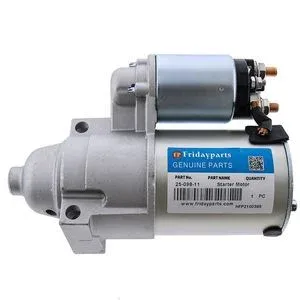
Verified Variant Match — engine serial cross-checked against starter rotation, tooth count, and mounting pattern before dispatch.
Technical Specifications
| Parameter |
Value |
| Part Number |
25-098-11 |
| Product Type |
Starter Motor |
| Cross-Reference |
25-098-11, 25-098-11-S, 2509811, 2509811S, 128000-7480, 1280007480 (reference only) |
| Machine Fitment |
CH12.5-CH26, CV12.5-CV26, CH620-CH1000, CV624-CV730 |
| Voltage |
12V |
| Power Output |
0.8 kW |
| Drive Teeth |
10 |
| Rotation |
CCW |
| Condition |
New Aftermarket |
| Warranty |
3-12 months |
| Quality Standard |
ISO 9001 |
Application Suitability
| Engine System |
Related Components |
| Starting Circuit |
Solenoid relay, battery cables, ignition switch, flywheel ring gear |
| Fuel Delivery |
Fuel pump, injectors, throttle linkage — all load the starter during cranking |
| Charging System |
Alternator, voltage regulator — weak charging masks starter faults |
| Engine Block Auxiliary |
Oil pump drive, water pump — seized auxiliaries overload the starter motor |
Why the Wrong Starter Motor Causes Repeat Teardowns During Engine Rebuilds
A starter motor engine rebuild replacement must match the specific Kohler engine serial variant, or you risk flywheel damage and a second teardown.
In engine shops across West African mining regions, I have seen rebuilt Kohler CH and CV engines returned with no-crank complaints within weeks. The root cause was not the starter itself but a variant mismatch — a starter with the wrong tooth count or rotation direction forced against a flywheel ring gear it was never designed to engage. When the engine has already been torn down once for bearing or piston work, discovering the starter motor engine rebuild replacement does not align with the ring gear means pulling the flywheel and possibly splitting the case again [NEED_CITE: Kohler engine serial variant identification for starter compatibility]. The cost is not the part; it is the labor, the lost machine time, and the credibility hit with the equipment owner.

Matching the Starter to the Engine Build Variant
Every Kohler CH and CV series engine carries a serial number that determines which starter configuration left the factory. Within the CH12.5 through CH26 range alone, flywheel ring gear tooth counts and bell housing mounting patterns shift between production runs. A starter motor engine rebuild replacement that spins the wrong direction — CW instead of the required CCW — will grind teeth off the ring gear on the very first crank attempt. Before ordering, confirm the engine serial number and cross-check it against the starter rotation, tooth count, and bolt pattern. This single verification step eliminates the most common cause of post-rebuild starting failures.
Previous Rebuilds Change What the Engine Needs
An engine that has been through one or more overhauls may no longer accept the starter it was born with. If the flywheel was replaced during a prior rebuild, the ring gear specification may differ from the original build sheet. Crankshaft end-play adjustments and aftermarket flywheel installations alter the distance between the starter drive gear and the ring gear face. A starter that engaged perfectly before the rebuild may now sit too deep or too shallow, causing partial engagement and accelerated tooth wear. Always inspect the ring gear condition and measure the starter-to-flywheel clearance before final installation [NEED_CITE: flywheel ring gear inspection standards for small engine overhaul].
Reading the Specifications That Actually Matter
The 0.8 kW output rating tells you the cranking torque this unit delivers to the flywheel. Kohler CH and CV engines with fuel injection require sufficient cranking speed to build injection pressure before the first combustion event — an undersized starter turns the engine too slowly, causing extended cranking and battery drain. The 10-tooth drive gear must mesh fully with the ring gear; partial engagement concentrates load on two or three teeth and shears them within days. CCW rotation is fixed for these Kohler applications; installing a CW unit on a CCW engine will destroy the ring gear instantly. The 12V system rating means the starter expects a fully charged battery and clean cable connections — voltage drop across corroded terminals robs the starter of the current it needs, and the symptom mimics a failed unit.
The Hidden Cost of Skipping Root-Cause Analysis
Replacing a starter without diagnosing why the original failed is how shops end up replacing starters twice. A no-crank condition might stem from a seized oil pump, a locked-up alternator bearing, or a shorted solenoid — all of which present identically to a dead starter at the key switch. I have watched technicians condemn two new starters before tracing the fault to a corroded ground cable that dropped available voltage below the cranking threshold. When a starter fails prematurely, inspect the entire starting circuit and the engine auxiliaries it must turn before concluding the starter was the fault [NEED_CITE: electrical starting circuit diagnostic sequence for industrial engines].
Why Rebuild Shops Source This Starter Through XUNPO
Self-produced and qualified-sourced starter lines carry the same inspection protocol and warranty terms, so you are not managing two quality tiers in one job. Eight product categories under one account means the starter, solenoid, ring gear, and seal kits ship in a single consignment — no split freight and no waiting on a second supplier. One-piece minimum order lets you confirm fitment on a single engine before committing to a batch for the shop's common Kohler builds. Part identification works from a number, a machine model, or a photograph of the nameplate when the tag is worn or painted over. Cross-reference verification covers superseded and alternate numbers so you do not order a discontinued variant. A sample unit can ship ahead of bulk commitment, giving your technicians a physical fitment check before you stock the shelf.
Documentation & Verification
- Commercial invoice and packing list itemize each starter unit by part number and engine fitment range
- Part compatibility sheet cross-references 25-098-11 and alternate numbers marked as reference only
- Quality inspection record documents load test results, cranking speed, and torque values before dispatch
- Warranty terms cover manufacturing defects for 3-12 months with clear claim procedure
- Packing photographs confirm unit condition and protective wrapping before the crate is sealed
- HS code and customs documentation support provided for international engine parts shipments
Installation & Rebuild Sequence
- Verify 10-tooth drive gear meshes fully with the Kohler ring gear before torquing mounting bolts
- Clean the starter mounting flange and engine block mating surface to ensure solid electrical ground path
- Confirm CCW rotation with a bench test before installing the starter into the bell housing
- Check battery cable terminals and ground strap for corrosion that would drop voltage below cranking threshold
- After installation, measure cranking RPM on first start to confirm the 0.8 kW output meets engine requirement
Request the Right Part for Your Rebuild
Send the Kohler engine model, serial number, and any previous rebuild records so the correct starter variant is confirmed against the flywheel and ring gear specification. If the engine has been overhauled before, note whether the flywheel or ring gear was replaced and provide photographs of the nameplate and the existing starter mounting face. This information lets the technical team verify rotation, tooth count, and clearance before the unit ships.
Frequently Asked Questions
Q: How do I confirm my Kohler engine serial matches this starter variant?
A: Provide the full engine serial number from the nameplate or build record. The technical team cross-references it against rotation direction, tooth count, and mounting pattern to confirm the 25-098-11 is the correct match. If the nameplate is unreadable, a photograph of the existing starter and the flywheel housing bolt pattern is usually sufficient for verification.
Q: My engine was rebuilt before — does that change which starter I need?
A: It can. A prior rebuild may have replaced the flywheel with one carrying a different ring gear specification, altering the required starter drive gear tooth count or engagement depth. Share the rebuild records and photographs of the current ring gear so the correct variant is identified before ordering.
Q: What other engine auxiliary components should be inspected when replacing the starter?
A: Inspect the flywheel ring gear for chipped or worn teeth, test the battery and cable connections for voltage drop, and verify the solenoid relay operates correctly. Also check that engine auxiliaries like the oil pump and alternator turn freely — a seized component will overload the new starter and cause premature failure.
Q: Is the no-crank condition caused by the starter or another system fault?
A: Not always the starter. Corroded cables, a weak battery, a failed solenoid, or a seized engine auxiliary can all produce the same no-crank symptom. A systematic circuit test — measuring voltage at the starter terminal during a crank attempt — isolates the fault before you replace parts unnecessarily.
Q: Can I get a sample to verify fitment before ordering for multiple engines?
A: Yes. A single sample unit ships against the confirmed engine serial so your technicians can test physical fitment, engagement depth, and cranking performance before you commit to a batch order for the shop's Kohler rebuild pipeline.