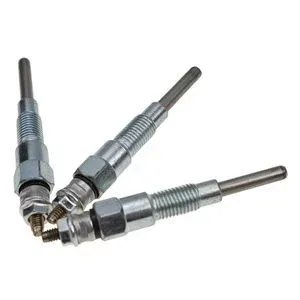
Matched Sets Dispatch — every spark plug order verified against engine build code and ignition coil compatibility before the carton leaves Guangzhou.
Technical Specifications
| Parameter |
Value |
| Product Type |
Spark Plug |
| Part Number |
4955850 4937472 5473010 |
| Cross-Reference |
4955850, 4937472, 5473010 (reference only) |
| Machine Fitment |
ISB5.9G CM2180, C Gas Plus CM556, ISL G CM2180, L Gas Plus CM556, QSL9 G CM558, ISC8.3 G CM2180 C101, C8.3 G, L9N CM2380 L124B |
| Condition |
New Aftermarket |
| Electrode Material |
Copper core |
| Shell Finish |
Nickel-plated |
| Heat Resistance |
up to 1200°C |
| Thread Accuracy |
within 0.01mm |
| Standard |
ISO 9001 |
| Warranty |
3-12 months against manufacturing defects |
Application Suitability
| Engine System |
Related Components |
| Ignition subsystem — CM2180 natural gas engines |
Ignition coils, wiring harness connectors, ECU timing module |
| Ignition subsystem — CM556 alternative fuel engines |
Coil-on-plug assemblies, high-temperature boots, intake gaskets |
| Ignition subsystem — CM558 and CM2380 gas variants |
Spark plug tubes, cylinder head seals, fuel pressure regulators |
When a Misfire Is Not Just a Plug Problem
A recurring misfire often traces back to a heat-range mismatch or a superseded reference number that slipped past cross-reference checks.
In the Guangzhou warehouse, I have watched rebuild shops pull engines apart for the second time in a month because the spark plug engine replacement they fitted was electrically functional but thermally wrong for that specific build code. An ISC8.3 G CM2180 C101 carries different combustion chamber geometry from a standard CM2180, and the plug that works in one will foul or pre-ignite in the other. The gas engine ignition part is small, but its specification sits at the intersection of fuel delivery, compression ratio, and ECU timing — all of which shift across engine serial variants. Misdiagnosis at this stage cascades into coil burnout and cylinder head damage [NEED_CITE: gas engine misfire root cause diagnosis for heavy-duty industrial applications].

The Ignition Subsystem as a Matched Set
Treating this spark plug engine replacement as a standalone line item is where overhaul budgets quietly leak. The plug fires inside a circuit that includes the coil, the boot, the harness connector, and the ECU map — each component aged to a different degree. When a shop replaces plugs without inspecting coil output voltage or boot integrity, the new plug inherits the stress the old one was absorbing, shortening its service life from the first hour. Sourcing the gas engine ignition part alongside matched coils and boots from a single account keeps warranty accountability clean and eliminates the blame-shifting that delays a machine getting back to work.
Engine Build Codes and the Variant Trap
The same base engine family — take the ISC8.3 G — may carry several build codes across production years, each with subtle combustion chamber revisions. A CM2180 and a CM2180 C101 differ in piston crown profile and compression specification, which directly changes the heat range the plug must handle. Ordering by the base engine model alone, without confirming the build code stamped on the dataplate, is the single most common reason a gas engine ignition part arrives correct on paper but wrong on the bench. Cross-reference numbers 4955850, 4937472, and 5473010 (reference only) map across different production batches, and a superseded number may point to a plug with a different gap or electrode configuration than what the current catalog specifies [NEED_CITE: Cummins engine build code identification for ignition component selection].
Reading the Specification Sheet Beyond the Part Number
The copper core electrode is not a cosmetic choice — copper conducts heat away from the firing tip faster than solid nickel, which matters in natural gas combustion where flame temperatures run higher than diesel. The nickel-plated shell resists seizing in the cylinder head thread bore, a practical concern when the next removal may happen at 4,000 operating hours in a dusty generator room. Thread accuracy held within 0.01mm prevents cross-threading in aluminum heads and ensures the plug seats squarely against the gasket, maintaining compression seal. Heat resistance rated to 1200°C aligns with the sustained exhaust gas temperatures typical of stoichiometric natural gas engines under continuous load [NEED_CITE: thermal requirements for spark plugs in stoichiometric natural gas engines].
The Cost of Skipping the System Check
A plug that is the wrong heat range will not announce itself immediately. It will run acceptably for a few hundred hours, then begin to foul on rich cycles or erode on lean cycles, producing intermittent misfires that the ECU logs but does not always flag to the operator. The engine rebuild shop then faces a diagnostic loop — checking fuel pressure, testing coils, pulling injectors — before circling back to the plug itself. That diagnostic loop costs more in labor and machine downtime than a full matched set of verified plugs would have cost at the outset. Repeated removal also damages the cylinder head thread insert, converting a minor ignition service into a head-off repair.
Why This Source for Ignition Components
Our Guangzhou facility holds stock of these spark plug engine replacement units alongside the coils, boots, and seals that travel with them in a complete ignition refresh. Cross-reference verification covers superseded and alternate numbers — when a buyer supplies an engine serial and build code, we confirm which of the three reference numbers applies before anything ships. Sample units are available for thread fitment and gap measurement before a fleet-level commitment. Every component, whether produced on our own line or sourced from qualified ISO-certified partners, carries the same warranty terms under one account. The technical team confirms heat range and gap against the specific engine variant, not just the base model designation.
Documentation & Verification
- Commercial invoice listing each spark plug reference number with corresponding engine build code
- Cross-reference sheet mapping 4955850, 4937472, 5473010 to engine serial ranges (reference only)
- Dimensional inspection record covering thread pitch, electrode gap, and shell torque-seat angle
- Quality test log including simulated combustion-cycle firing validation
- Packing photographs showing individual plug protection and carton labeling
Installation & Rebuild Sequence
- Verify electrode gap with a wire-type feeler gauge before installation; do not rely on factory pre-set gap after transit.
- Apply anti-seize compound to nickel-plated shell threads only — keep the electrode and insulator nose completely clean.
- Torque to cylinder head specification using a calibrated wrench; over-torque distorts the shell and alters heat transfer path.
- Reconnect ignition coils and boots in sequence, confirming each harness connector clicks past the locking tab.
- Run the engine at idle for initial heat-cycle seating, then recheck torque after the first cool-down.
Provide Engine Details Before Quoting
Send the engine model, build code from the dataplate, and engine serial number so the correct plug variant is confirmed against current cross-reference tables. If the dataplate is worn or painted over, a photograph of the ECU label or the existing plug shell marking is sufficient for identification. Include any known rebuild history — previous oversize work or head replacement may affect thread specification and heat-range selection for your gas engine ignition part order.
Frequently Asked Questions
Q: How do I confirm which spark plug number fits my specific engine build code?
A: Provide the full engine model, build code such as CM2180 or CM556, and the engine serial number. We cross-reference these against the current parts catalog to confirm which of the listed reference numbers applies to your specific variant. Build codes change combustion chamber geometry, so the correct heat range depends on this identification.
Q: Are 4955850, 4937472, and 5473010 interchangeable?
A: Not always. These numbers map to different production batches and engine generations within the Cummins gas engine family. Some variants share the same thread and gap but differ in heat range or electrode configuration. Verification against the engine serial is required before treating them as interchangeable for your spark plug engine replacement order.
Q: What other ignition components should I replace alongside the spark plugs?
A: Ignition coil boots, high-temperature wiring connectors, and coil assemblies should be inspected and typically replaced as a matched set during an ignition refresh. Reusing aged boots or weak coils places immediate stress on new plugs. We supply these as consolidated line items under one warranty account.
Q: Can recurring plug failure point to a deeper engine issue?
A: Yes. Repeated fouling or electrode erosion often indicates upstream fuel-system imbalance, intake air leaks, or compression loss rather than a plug defect. We recommend system-level diagnosis before concluding the plug is the root cause. Our technical team can advise on which adjacent gas engine ignition part assemblies to inspect first.
Q: How do I verify the correct heat range and electrode gap before bulk ordering?
A: Request sample units before committing to a fleet quantity. Measure thread engagement, electrode gap, and insulator nose projection against your cylinder head. This fitment check confirms the variant is correct for your specific engine build code and prevents costly return shipments on large orders.