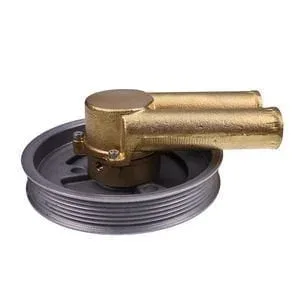
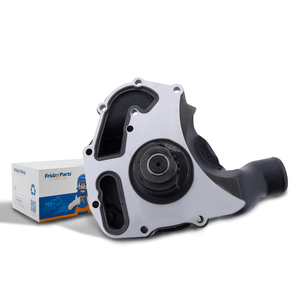
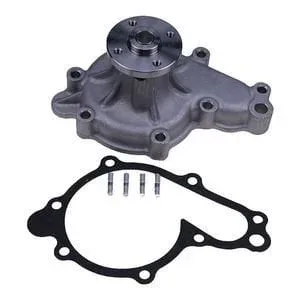
Matched Cooling Components — Overhaul kit contents verified against engine serial variants for Volvo Penta 3.0–5.7 marine engines, ensuring every seal and gasket ships together.
Technical Specifications
| Parameter |
Value |
| Part Number |
21214599 |
| Product Type |
Water Pump |
| Cross-Reference (reference only) |
21214599, 3812693, 3862482, 3857202 |
| Machine Fitment |
Volvo Penta 3.0, 4.3, 5.0, 5.7 marine engine families |
| Condition |
New Aftermarket |
| Impeller Material |
Marine-grade bronze (CuSn10) |
| Shaft Seal Type |
Dual-lip NBR elastomer |
| Shaft Seal Temperature Rating |
120°C |
| Shaft Seal Pressure Rating |
4.0 bar |
| Housing Tolerance |
±0.05 mm |
| Internal Surface Treatment |
Electroless nickel plating (25–30 μm thickness) |
| Bench Test Pressure |
3.5 bar |
| Bench Test Temperature |
85°C |
| Standards |
ISO 9001, ASTM A957 |
Application Suitability
| Engine System |
Related Components |
| Raw Water Cooling Circuit |
Thermostat, heat exchanger gaskets, coolant hoses |
| Engine Block Thermal Management |
Zinc anodes, raw water strainer, hose clamps |
| Marine Overhaul & Rebuild |
Seal kits, impeller replacement sets, mounting hardware |
| Auxiliary System Cooling |
Expansion tank caps, temperature sensors |
Root Causes Behind Repeated Sea Water Pump for Volvo Penta Engine Rebuild Failures
System-level diagnosis prevents the new pump from failing in its first season.
When a Sea Water Pump for Volvo Penta engine rebuild is installed without addressing upstream restrictions or downstream blockages, the new unit often suffers premature impeller cavitation or seal blowout. I have seen engines return to the bench within weeks because the heat exchanger was still packed with marine growth, forcing the new pump to operate against excessive backpressure [NEED_CITE: marine heat exchanger fouling impact on raw water pump service life]. Similarly, a thermostat stuck in the closed position creates localized boiling that degrades NBR seals beyond their thermal limits. The pump is rarely the root cause; it is the first component to show symptoms of a neglected cooling circuit.

Cooling System Adjacency During a Complete Overhaul
Replacing this water pump in isolation leaves adjacent wear items untouched, guaranteeing a return visit. A proper cooling system overhaul for Volvo Penta 3.0–5.7L engines demands simultaneous replacement of the thermostat, heat exchanger gaskets, and raw water hose clamps. These components share the same thermal and pressure cycles, meaning their service lives converge. Sourcing them as a matched set for a Sea Water Pump for Volvo Penta engine rebuild eliminates the risk of gasket incompatibility and ensures consolidated dispatch from a single supplier.
Serial Variant Differences Across Engine Families
The 3.0, 4.3, 5.0, and 5.7 engine families share displacement architecture but diverge in port orientation and flange patterns across serial variants. A pump casting that fits a 5.7GXi-C may not align with the raw water inlet on a 5.7OSi-BF, even though both carry similar base designations. Verifying the exact engine serial before confirming an order prevents flange misalignment and avoids the costly return cycle that stalls a vessel launch [NEED_CITE: Volvo Penta engine serial variant identification for cooling system components].
Material and Seal Specifications Explained
The CuSn10 bronze impeller resists dezincification and galvanic corrosion in continuous saltwater exposure, maintaining hydraulic profile integrity over extended duty cycles. The electroless nickel plating at 25–30 μm thickness on internal surfaces prevents housing erosion from suspended silt and sand common in estuarine and harbor operations. Dual-lip NBR shaft seals rated to 120°C and 4.0 bar contain coolant under the transient pressure spikes that occur during engine startup and rapid throttle changes. The ±0.05 mm housing tolerance ensures concentric impeller rotation, preventing the vibration-induced bearing wear that shortens pump life in less precisely machined units.
The Hidden Cost of Skipping Root-Cause Verification
Installing a replacement pump without flushing the cooling circuit or testing the thermostat invites immediate recurrence. I once fitted a new unit on a commercial fishing vessel, only for the customer to report cavitation damage on the bronze impeller within a month. The real fault was a blocked raw water strainer creating suction starvation. The second teardown, second set of gaskets, and second round of labor costs far exceeded the time a proper system diagnosis would have taken [NEED_CITE: marine engine cooling system diagnostic procedures before component replacement].
Why Procurement Through This Channel Works
Selected part lines are produced in-house while the remainder is sourced from qualified ISO-certified manufacturing partners, all under one account and one warranty. This Sea Water Pump for Volvo Penta engine rebuild ships alongside matched thermostats, gaskets, and seal kits as a single consignment, eliminating split freight and mismatched lead times. Orders begin at one piece, supporting single-vessel emergency repairs without minimum-quantity barriers. The technical team confirms engine serial compatibility, cross-reference verification covers superseded and alternate numbers, and sample supply is available for fitment confirmation before bulk commitment on fleet orders.
Documentation & Verification
- Commercial invoice and packing list itemizing each cooling circuit component by engine serial variant.
- Part compatibility and cross-reference sheet marking OEM numbers as reference only against service documentation.
- Quality inspection record confirming bench test at 3.5 bar and 85°C before dispatch.
- Warranty terms covering manufacturing defects for the stated coverage period.
- Packing photographs showing impeller and seal condition prior to crate closure.
- HS code and customs documentation support for international marine parts import.
Installation & Rebuild Sequence
- Flush the entire raw water circuit and inspect the heat exchanger for marine growth before unboxing this water pump.
- Verify port orientation and flange bolt pattern against the engine block casting before applying gasket sealant.
- Torque mounting fasteners to the sequence specified in Volvo Penta service documentation, confirming housing tolerance is not distorted.
- Prime the pump housing with coolant to prevent dry-run damage to the dual-lip NBR shaft seals on first startup.
- Run the engine at idle and monitor the raw water discharge flow, checking for leaks at all hose clamp connections.
Requesting a Matched Rebuild Quotation
Provide the exact Volvo Penta engine model and serial number from the nameplate or service manual to confirm flange and port compatibility. Include any previous rebuild history so the technical team can advise on oversize or variant-specific seal requirements. Requesting a consolidated cooling system component list at the same time ensures all gaskets, thermostats, and hose clamps arrive in a single shipment.
Frequently Asked Questions
Q: What other cooling system parts should be replaced at the same time as the seawater pump?
A: The thermostat, heat exchanger gaskets, raw water hose clamps, and zinc anodes should be replaced concurrently. These components share identical thermal cycles and service intervals, so replacing them together with a Sea Water Pump for Volvo Penta engine rebuild prevents partial rework and ensures the entire cooling circuit is restored to matched condition in one overhaul event.
Q: How do I confirm which engine serial variant I have and whether this pump fits?
A: Locate the engine serial number on the identification plate mounted to the engine block or valve cover. Cross-reference this serial against Volvo Penta service documentation to determine your specific variant, then provide that number for verification. Port orientation and flange patterns differ across 3.0, 4.3, 5.0, and 5.7 families, making serial-level confirmation essential before dispatch.
Q: Are the OEM reference numbers (21214599, 3812693, 3862482, 3857202) all interchangeable for my engine?
A: These numbers serve as cross-reference identifiers and may represent superseded versions or application-specific variants across different model years. Not all numbers map to every engine serial. Providing your exact engine model and serial number allows the technical team to verify which cross-reference is valid for your specific application before confirming the order.
Q: What root causes in the cooling system can lead to premature seawater pump failure?
A: Common upstream faults include a blocked raw water strainer causing suction cavitation, a fouled heat exchanger creating excessive backpressure, or a malfunctioning thermostat producing localized overheating that degrades shaft seals. Diagnosing and correcting these system-level issues during a Sea Water Pump for Volvo Penta engine rebuild prevents the new unit from repeating the same failure pattern within its first operating season.
Q: Can I order a complete cooling system rebuild kit including this pump and all associated gaskets and seals?
A: Yes. A consolidated kit can be assembled containing this water pump, matching thermostat, heat exchanger gaskets, hose clamps, and seal sets specific to your engine serial variant. Sourcing the complete kit as one consignment from a single supplier eliminates mismatched lead times, reduces split freight costs, and ensures every component in the overhaul is accounted for before the engine is torn down.