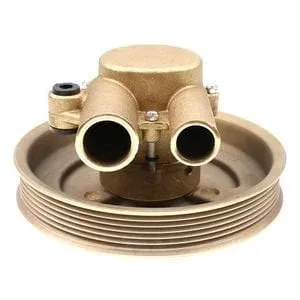
Matched Cooling System Set — Impeller, shaft seal, housing gasket and double V-belt verified against engine serial variants before dispatch.
Technical Specifications
| Parameter |
Value |
| Part Number |
21214596 3858229 |
| Product Type |
Water Pump |
| Cross-Reference |
21214596, 3858229, 3862487, 3812697 (for identification purposes only) |
| Machine Fitment |
Volvo Penta 4.3L, 5.0L, 5.7L, 4.3GIJWTR, 4.3GiPEFS, 4.3GIPWTC, 4.3GIPWTR, 4.3GL-A, 4.3GL-B, 4.3GL-C, 4.3GL-D, 4.3GLPEFS, 4.3GLPWTC, 4.3GLPWTR, 4.3GSJWTR, 4.3GSPWTC, 4.3GSPWTR, 5.0GiPEFS, 5.0GiPWTR, 5.0GL-A, 5.0GL-B, 5.0GL-C, 5.0GL-D, 5.0GL-E, 5.0GLPEFS, 5.0GLPWTR, 5.7GL-A, 5.7GL-B, 5.7GL-C, 5.7GL-D, 5.7GL-E, 5.7GSIPEFS, 5.7GSIPWTR, 5.7GSiPWTRCE, 5.7GSPEFS, 5.7GSPWTR |
| Pulley Type |
Double V Belt |
| Condition |
New Aftermarket |
| Part Name |
Double V Belt Pulley Sea Water Pump |
| Standard |
ISO 9001 |
| Warranty |
3-12 months against manufacturing defects |
| Minimum Order |
1 piece |
Application Suitability
| Engine System |
Related Components |
| Raw-water cooling circuit |
Heat exchanger, thermostat, exhaust manifold cooling passages |
| Sea water circulation |
Impeller, shaft seal, housing gasket, double V-belt, belt tensioner |
| Marine engine overhaul (4.3L / 5.0L / 5.7L) |
Complete cooling system kit, matched seals, anodes |
| Scheduled cooling maintenance |
Thermostat housing, coolant hoses, temperature sender |
Why the Same Sea Water Pump Engine Replacement Number Ships in Multiple Variants
The base part number covers different internal builds across engine serial ranges, and only one variant matches your specific engine.
In the Pearl River Delta workshops I support, I once watched a Volvo Penta 4.3L sit with its cylinder block open for an entire week. The sea water pump that arrived had the right external casting but a different pulley offset — the double V belt would not align with the crankshaft sheave. The engine model on the order was correct, but the internal variant was not. [NEED_CITE: marine engine serial number variant identification procedures] This happens because manufacturers revise internal components across production runs while retaining the same external part family. The pump housing, impeller bore and seal seat can all shift between variants, making a sea water pump engine replacement that looks identical on the shelf completely incompatible on the bench. Cross-reference numbers 21214596, 3858229, 3862487 and 3812697 each map to specific serial ranges and build configurations. Ordering by engine model alone leaves the critical variant question unanswered.

Where This Pump Sits Inside the Raw-Water Circuit
The sea water pump is the first active component in the raw-water side of a marine cooling system. It draws saltwater through the hull intake, pushes it through the heat exchanger tube bundle, then routes it through the exhaust manifold cooling jackets before discharge overboard. Every component downstream depends on the flow rate and pressure this pump delivers. When the pump underperforms, heat exchanger efficiency drops and exhaust manifold temperatures climb — symptoms that often get misdiagnosed as thermostat or heat exchanger fouling. A proper sea water pump engine replacement must therefore be evaluated against the entire circuit condition, not just the pump itself.
Engine Serial Variants and the Seal Grade Question
Across the 4.3L, 5.0L and 5.7L families, the pump housing casting may appear interchangeable, but the shaft seal specification and impeller material grade differ between serial ranges and between freshwater-cooled versus raw-water-cooled configurations. An engine that has been through a previous rebuild may also have had its seal seat machined, requiring a different seal profile than the factory-original specification. [NEED_CITE: marine water pump shaft seal material selection for saltwater service] Confirming the correct seal and impeller grade before ordering prevents the situation where the pump physically bolts on but leaks within the first running hours. This is why we verify engine serial number and rebuild history before releasing the matching variant from stock.
Reading the Specifications That Matter
The double V belt pulley configuration means this pump is driven by a twin-groove belt arrangement, which distributes load across two belt strands and reduces individual strand stress at high RPM. This matters in marine duty where the engine may run at sustained high revolutions for extended periods. The pulley must align precisely with the crankshaft sheave — even minor offset causes accelerated belt wear and eventual pump bearing failure. The ISO 9001 manufacturing standard applied here covers dimensional consistency in bore diameter, pulley runout and seal seat concentricity. These are the parameters that determine whether the pump will run quietly and leak-free, or whether it will develop shaft wobble within the first season. [NEED_CITE: ISO 9001 quality management requirements for automotive and marine pump manufacturing]
The Cost of Skipping the Root Cause Check
When a sea water pump fails, the visible damage — a seized bearing, a scored shaft, a shattered impeller — is usually the symptom, not the cause. Belt misalignment from a worn tensioner can overload the pump bearing. A partially blocked hull intake can cause cavitation that erodes the impeller and housing from the inside. Installing a replacement pump without checking the belt path, intake strainer and heat exchanger condition means the new pump inherits the same destructive conditions. I have seen rebuilt engines return to the workshop within a season because the cooling system fault that killed the first pump was never addressed. [NEED_CITE: marine engine cooling system root cause analysis after component failure] The sea water pump engine replacement then becomes a recurring line item rather than a one-time repair.
Why Buyers Source This Pump Through Our Engine System Desk
We produce selected cooling system components in our own facility and source the remainder from qualified ISO-certified partners, so every pump ships under the same quality control and warranty terms. Eight product categories sit under one account, meaning the pump, matched impeller, gasket set, V-belts and thermostat all travel in one consignment rather than arriving on separate timelines. Orders start from a single piece — useful when a vessel needs one pump before the weekend tide window. Identification works from a part number, engine model, photograph of the old unit or a nameplate image, so even painted-over plates do not block the order. Cross-reference verification covers superseded and alternate numbers across all four references listed above. A sample unit is available for fitment confirmation before a fleet operator commits to a bulk cooling system renewal program.
Documentation & Verification
- Commercial invoice and packing list itemising each pump variant by engine serial range
- Cross-reference sheet mapping 21214596, 3858229, 3862487, 3812697 to specific fitment notes (reference only)
- Dimensional inspection record covering pulley runout, bore diameter and seal seat concentricity
- Warranty terms document specifying coverage period and manufacturing defect conditions
- Packing photographs taken before crate closure showing pump orientation and protection
- HS code and customs classification support for international marine parts shipments
Installation & Rebuild Sequence
- Inspect heat exchanger tube bundle and exhaust manifold passages for salt deposits before pump installation
- Verify double V belt alignment with crankshaft sheave using a straightedge across both grooves
- Confirm shaft seal orientation matches the engine serial variant specification sheet
- Torque housing mounting bolts in the sequence specified by the service manual
- Prime the raw-water circuit through the hull intake before first engine start
- Monitor discharge flow and bearing temperature during the initial running-in period
Request a Fitment-Confirmed Quote
Provide the engine model designation, serial number and any previous rebuild documentation so we can confirm the correct pump variant, seal grade and matched components. If the nameplate is worn, send a photograph of the existing pump pulley and housing casting — we can cross-check the variant from physical features.
Frequently Asked Questions
Q: What other components should be replaced at the same time as the sea water pump?
A: During a cooling system service, the impeller, shaft seal, housing gasket, double V-belt and belt tensioner should all be inspected and typically renewed together. Reusing a worn belt or tensioner transfers misalignment load to the new pump bearing, causing premature failure. A matched set ensures all wear surfaces start their service life simultaneously.
Q: Are there different pump variants within the same base part number?
A: Yes. The cross-reference numbers cover multiple serial ranges across the 4.3L, 5.0L and 5.7L families. Internal differences include seal seat profile, impeller bore and pulley offset. Confirming your engine serial number is essential to receive the correct variant rather than a pump that fits the bolt pattern but not the belt path.
Q: How do I confirm the correct seal material for saltwater operation?
A: Seal material selection depends on the engine configuration and whether it operates in a raw-water or closed-loop cooling arrangement. Provide the engine serial number and any rebuild history so we can verify whether the standard seal grade applies or whether a previous machining operation requires an alternate profile.
Q: What does a complete cooling system overhaul kit include versus this pump alone?
A: A full kit typically adds thermostat, thermostat housing gasket, heat exchanger seal set, zinc anodes and all required fasteners to the pump and impeller assembly. The individual pump covers only the pump housing, pulley and shaft seal. We can itemise both options so you can decide based on the scope of your service.
Q: How can I verify my engine model when the nameplate is painted over?
A: Send photographs of the existing pump, focusing on the housing casting number, pulley configuration and any visible stampings. We cross-check these physical features against the serial range database to confirm fitment without relying on the nameplate alone.