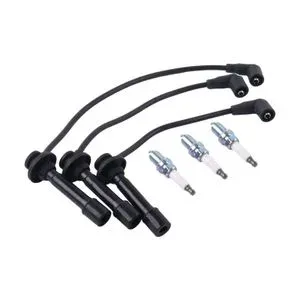
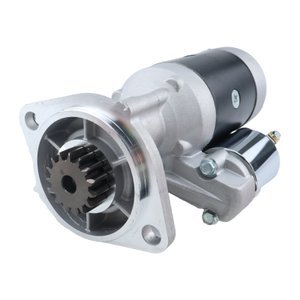
Matched Sets for Overhaul — Every recoil starter unit ships with verified compatibility sheets covering engine serial variants, ensuring the pawl-to-flywheel engagement matches your specific Briggs & Stratton build.
Technical Specifications
| Parameter |
Value |
| Part Number |
150-481, 695058 |
| Product Type |
Recoil Starter |
| Cross-Reference (reference only) |
150-481, 150481, 695-058, 695058 |
| Compatible Brand |
Briggs & Stratton |
| Engine Power Range |
15.5HP-17.5HP |
| Condition |
New Aftermarket |
| Quality Certification |
ISO-Certified |
| Warranty |
3-12 months against manufacturing defects |
Application Suitability
| Engine System |
Related Components |
| Ignition & Starting |
Flywheel ring gear, starter pawl, return spring |
| Engine Auxiliary |
Blower housing, rewind pulley, starter rope |
| Engine Rebuild Sequence |
Cylinder head gasket, crankshaft seal, governor linkage |
Root-Cause Failures That a Recoil Starter Replacement Alone Will Not Fix
A slipping or seized starter often points to damage on adjacent engine components rather than the starter assembly itself.
We have opened engines where the recoil rewind pull starter assembly was blamed for a no-start condition, only to find chipped teeth on the flywheel or a sheared governor gear preventing cranking. Replacing the starter without inspecting the flywheel engagement surface leads to repeat failure within a short service window. [NEED_CITE: small engine starting system diagnostic procedures and flywheel inspection standards] Technicians who skip this verification step often log multiple warranty returns on the same engine, masking the true mechanical fault.

The Starting System Within the Engine Auxiliary Network
The recoil starter sits at the boundary between manual input and the engine's internal rotating assembly. For Briggs & Stratton 15.5HP-17.5HP platforms, the starter housing must align precisely with the blower shroud mounting pattern, and the pawl must reach the flywheel cup without lateral play. This recoil starter engine rebuild replacement is evaluated not in isolation but as one node in the starting and ignition chain. If the flywheel key is sheared or the ignition coil air gap is out of tolerance, a new starter will not resolve the underlying no-start symptom.
Engine Serial Variants and the Risk of Housing Mismatch
Within the 212902, 215707, and 215802 engine series, the base starter design may appear identical while the housing bolt circle or rope exit angle differs between serial suffixes. A unit stamped 215707-0117-E1 may use a different blower housing contour than one ending in -B1, affecting how the starter assembly seats. [NEED_CITE: Briggs and Stratton engine model and type code nomenclature for serial variant identification] We cross-check the full engine type and code number before confirming fitment, because the superseded part numbers 150-481 and 695058 span multiple production generations where physical dimensions shifted without a new part designation.
Interpreting the Specification Sheet for Rebuild Planning
The 15.5HP-17.5HP power range indicates this starter is engineered for the torque and rotational mass of mid-frame Briggs & Stratton singles. The high-tensile spring rewind mechanism must store sufficient energy to retract the rope fully against the compression resistance of a large-bore cylinder. Corrosion-resistant coating on metal components matters in engines stored outdoors or in agricultural environments where moisture ingress accelerates housing degradation. The ISO-certified manufacturing standard governs dimensional tolerances on the pulley bore and pawl pivot, which directly affect engagement smoothness and rope retraction speed over repeated pull cycles.
The Hidden Cost of Skipping Adjacent Component Inspection
When a rebuild shop installs a new starter without checking the flywheel ring gear or the blower housing alignment, the engine may crank but fail to fire, sending the technician back into diagnostics. This misdirection wastes labor hours and delays equipment return to service. [NEED_CITE: engine overhaul sequencing best practices for auxiliary component inspection] Shops that treat the starter as an isolated swap rather than a system-level verification often accumulate repeat visits on the same machine, eroding customer confidence and inflating warranty claim rates.
Why Source This Recoil Starter Through Our Engine System Workflow
We produce selected auxiliary component lines in our own facility and source the remainder from qualified ISO-certified manufacturing partners, with both channels carrying identical warranty terms. Our eight-category engine parts inventory means the starter, flywheel key, blower housing gasket, and governor seal can ship in one consignment under a single account. Minimum order starts from one piece, so a single emergency replacement does not force a bulk commitment. The Guangzhou warehouse maintains stock on common Briggs & Stratton auxiliary items for fast dispatch. Part identification is confirmed from the engine type code, a photograph of the nameplate, or the existing starter housing marking. Our technical team verifies the cross-reference across superseded numbers 150-481, 150481, 695-058, and 695058 to resolve part number migration across engine generations.
Documentation & Verification
- Commercial invoice listing engine model and serial variant for each starter unit
- Compatibility cross-reference sheet marking 150-481 and 695058 as reference only
- Dimensional inspection record covering housing bolt pattern and pawl reach
- Warranty terms document specifying coverage period for manufacturing defects
- Packing photographs showing starter units secured against transit impact
Installation & Rebuild Sequence
- Inspect flywheel cup teeth and pawl engagement surfaces before mounting the new starter assembly
- Verify blower housing bolt pattern alignment to prevent starter housing distortion during tightening
- Confirm rope length and knot seating in the pulley groove to ensure full rewind travel
- Test pull stroke smoothness and retraction speed before reassembling shrouds and engine covers
Requesting a Fitment Quote
Provide the complete Briggs & Stratton engine model, type, and code number from the nameplate, along with any rebuild history such as previous oversize work or flywheel replacement. If the nameplate is worn, a clear photograph of the existing starter housing and the flywheel cup will allow our team to verify serial variant compatibility and confirm the correct assembly before dispatch.
Frequently Asked Questions
Q: What else should be inspected in the engine starting system when replacing the recoil starter?
A: Check the flywheel cup teeth for chipping or wear, verify the blower housing bolt pattern for cracks, and confirm the flywheel key is intact. A sheared key or damaged engagement surface will cause repeat starter failure regardless of the replacement unit quality. Addressing these adjacent faults during the same service window prevents unnecessary second teardowns.
Q: Do different engine serial variants within the same model series require different starter assemblies?
A: Yes, within the 212902 and 215707/215802 series, suffix codes can indicate different blower housing contours or mounting patterns. We verify the full type and code number to ensure the starter housing seats correctly and the rope exit angle matches the shroud opening, preventing binding during pull operation.
Q: How do superseded part numbers 150-481 and 695058 relate — are they interchangeable?
A: These numbers represent the same starter function across different production generations of Briggs & Stratton engines. Physical dimensions may vary between generations, so we treat them as cross-reference for identification purposes and confirm actual fitment against your engine serial number rather than relying on number equivalence alone.
Q: What root-cause checks should be done before installing a new starter to prevent repeat failure?
A: Inspect the flywheel ring gear for damaged teeth, confirm the ignition coil and spark plug are functional, and verify the governor linkage moves freely. A mechanical bind elsewhere in the engine can overload the starter pawl and spring, causing premature failure of the replacement unit shortly after installation.
Q: Can a sample unit be supplied for fitment confirmation before committing to a bulk order?
A: We provide sample units so rebuild shops can verify housing fitment, pawl engagement depth, and rope routing on the actual engine before ordering fleet quantities. This step is particularly valuable when working across multiple serial variants within the same model series where dimensional differences exist.