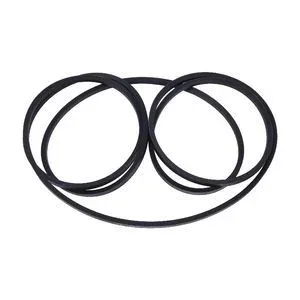
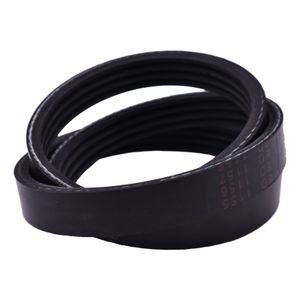
Engine Rebuild Compatibility — Aramid-reinforced EPDM belt matched to CVT sheave tolerances across KAF-series variants, with dimensional verification before dispatch.
Technical Specifications
| Parameter |
Value |
| Part Number |
59011-1077 |
| Cross-Reference |
59011-1077 (reference only), 590111077 (reference only), 59011-1053 (reference only), 590111053 (reference only) |
| Product Type |
Drive Belt |
| Machine Fitment |
Mule 2010 KAF540, Mule 2020 KAF540, Mule 2030 KAF540E, Mule 3000 KAF620G, Mule 3010 KAF620E 4x4, Mule 3020 KAF620F, Mule 4000 KAF620P9F/PAF/PBF/PEF/PFF/PGF/PHF/PJF/WKF/PLF/WMFNN/PNFNN/PPFNN, Mule 4010 4x4 KAF620M9F/MAF/MBF/MCF/MDF/MEF/MFF/MGF/MKF/MLF/MNFNN/MPFNN/MHF/THF/ZHF, Mule 4010 Trans4x4 KAF620RAFA/RBF/RBFA/RCF/RDF/REF/RFF/RGF/RHF/RJF/RLS/SLF/SLS/SGF/VGF/VHF/VJF/WMFNN/AMFNN/SMFNN/CNFNN/DNFNN/BPFNN/CPFNN/DPFNN |
| Material |
Aramid-reinforced EPDM rubber compound |
| Continuous Operating Temperature |
up to 120°C |
| Profile |
Trapezoidal |
| Tensile Cord Static Strength |
>1,800 N per ISO 4184 |
| Dimensional Tolerance |
±0.15 mm |
| Surface Treatment |
Micro-textured grip surface |
| Assembly State |
Single belt, retail boxed with foam insert |
| Condition |
New Aftermarket |
| Warranty |
3–12 months against manufacturing defects |
| MOQ |
1 piece |
| Standards |
ISO 9001, ISO 4184, JIS D 4201 |
Application Suitability
| Engine System |
Related Components |
| CVT primary clutch assembly |
Primary sheave bearings, slider weights, clutch spider |
| CVT secondary clutch assembly |
Secondary sheave spring, driven clutch bearings |
| Belt drive tensioner system |
Tensioner arm, pivot bushing, return spring |
| Engine mounting and alignment |
Engine mounts, drive shaft coupler, alignment shims |
Why a Drive Belt 59011-1077 Fails Before the Engine Rebuild Is Complete
A belt failure is rarely an isolated event — it signals unresolved issues in the CVT system that will destroy the replacement just as quickly.
I have pulled shredded belts out of Mule 3010 and 4010 transmissions where the sheave faces still carried deep wear grooves from the previous cycle. The technician swapped the belt, reassembled, and the machine was back in the shop within weeks. The root cause was sitting right there on the clutch halves — scored surfaces, bearing play, and a tensioner spring that had lost its preload. [NEED_CITE: CVT belt failure root cause analysis in utility vehicle powertrains]
When a Kawasaki Mule comes in for engine rebuild replacement work, the CVT belt drive system deserves the same diagnostic rigor as the engine internals. Misaligned engine mounts shift the primary clutch off-axis. Contaminated sheave surfaces create hot spots that degrade rubber compounds. A worn tensioner allows the belt to slip under load, generating heat that accelerates EPDM breakdown.

The Belt Drive System Within the CVT Powertrain
This drive belt functions as the power transfer link between the engine-driven primary clutch and the secondary clutch connected to the transmission input. In a properly serviced CVT system, the belt rides at correct depth within the sheave grooves, transferring torque without slip across the full ratio range. The Drive Belt 59011-1077 engine rebuild replacement must be evaluated alongside the entire CVT assembly — sheaves, springs, weights, and bearings — because each component directly affects belt loading and service life.
Sheave Condition and System-Level Wear Patterns
The trapezoidal profile of this belt engages both sheave halves at precise angles. When sheave faces develop wear ridges or lateral play from bearing degradation, the belt cannot seat correctly and begins to slip under load. I have seen machines in quarry haul road service where the belt lasted only a fraction of its expected service interval because the secondary sheave bearing had axial play that altered belt tracking. [NEED_CITE: CVT sheave wear inspection standards for off-road utility vehicles]
Engine mount degradation also shifts the primary clutch centerline relative to the secondary, forcing the belt to run at an angle that accelerates sidewall wear. Checking mount condition and drive shaft alignment before installing a new belt prevents repeat failures that buyers often blame on the belt itself.
Reading the Specifications Against Real Operating Demands
The aramid-reinforced EPDM compound handles continuous operation up to 120°C, which matters because CVT enclosures on Mule UTVs trap heat during sustained load — particularly in mining and demolition applications where machines crawl at low speeds under heavy loads. The tensile cord static strength exceeds 1,800 N per ISO 4184, giving the belt adequate reserve against shock loads when the clutch engages abruptly.
The ±0.15 mm dimensional tolerance controls how the belt seats in the sheave groove. A belt that is marginally too narrow will ride deeper, altering the effective ratio and causing the secondary clutch to respond late. One that is marginally too wide will ride high, reducing grip and inviting slip. The micro-textured grip surface improves initial engagement but cannot compensate for incorrect dimensional match or worn sheave geometry.
What Happens When the CVT System Is Not Inspected as a Whole
Skipping system-level inspection before belt installation leads to predictable outcomes. A tensioner spring that has lost preload allows belt slip during clutch engagement, generating localized heat that hardens and cracks the EPDM compound. Sheave bearings with undetected play cause the belt to track unevenly, wearing one sidewall faster and eventually exposing the tensile cords to abrasion.
I recall a Mule 4000 series unit used in agricultural field transport where three consecutive belts failed in rapid succession. The root cause turned out to be a worn engine mount that tilted the primary clutch just enough to push the belt off its intended tracking path. [NEED_CITE: engine mount degradation effects on belt-driven CVT alignment] The cost of three replacement belts and three teardowns far exceeded the cost of inspecting the mounts during the first rebuild.
Procurement Advantages for Engine Rebuild and CVT Overhaul Work
Our facility produces selected part lines directly and sources the remainder from qualified ISO-certified manufacturing partners, both carrying identical QC and warranty terms. This drive belt ships from our Guangzhou warehouse stock on common Mule fitments, reducing wait times for repair centres working against machine downtime. Orders from one piece upward are accepted, supporting both single-unit emergency repairs and fleet-level preventive stocking.
Our technical team cross-references OEM numbers against specific KAF-series engine and transmission designations, catching variant differences that generic interchange tables miss. A sample supply is available for physical fitment verification before bulk commitment — particularly valuable when outfitting an entire fleet of mixed-model Mule UTVs. Compatibility and grade confirmation is provided based on your machine serial number and service history.
Documentation & Verification
- Commercial invoice and packing list with belt profile and dimension specifications noted
- Part compatibility and cross-reference sheet listing verified KAF-series fitments (reference only)
- Quality inspection record confirming dimensional tolerance and tensile cord strength compliance
- Warranty terms covering manufacturing defects for 3–12 months from delivery
- Packing photographs showing belt condition and protective foam insert before crate closure
- HS code and customs documentation support for international engine rebuild parts shipments
Installation & Rebuild Sequence
- Inspect primary and secondary sheave faces for wear grooves before installing the new Drive Belt 59011-1077
- Check clutch bearings for axial and radial play; replace any bearing exceeding specified clearance
- Verify engine mount condition and primary clutch alignment relative to the secondary sheave centerline
- Confirm tensioner spring preload and pivot bushing condition; replace worn components as matched sets
- Route the belt following the correct path through both clutch assemblies without twisting or forcing
- Run the CVT system at idle and low load initially to seat the belt surfaces before applying full operational load
Requesting a Fitment-Verified Quote
Provide your KAF-series engine designation, machine serial number, and any prior CVT service history so we can confirm the correct belt variant and identify adjacent components that should ship together. For fleet orders, sharing the model mix across your units allows us to verify cross-references and arrange sample dispatch before bulk production begins.
Frequently Asked Questions
Q: What other CVT components should be inspected or replaced when changing this belt?
A: The primary and secondary sheave faces, clutch bearings, slider weights, tensioner spring, and pivot bushing all directly affect belt loading and tracking. Worn sheave bearings or a fatigued tensioner spring will cause the replacement belt to slip and fail prematurely. We recommend inspecting these components as a matched set and replacing any that show measurable wear during the CVT teardown.
Q: How do I confirm the correct belt variant for my specific KAF engine serial number?
A: Different Mule model generations share similar names but use distinct engine and transmission designations that affect belt fitment. Provide your full machine model designation and serial number, and our technical team will cross-reference against verified compatibility records. A sample belt can be dispatched for physical fitment confirmation before you commit to a bulk order for your fleet.
Q: Why did my previous belt fail early — what system-level causes should I check?
A: Common root causes include worn sheave bearings allowing axial play, degraded engine mounts shifting clutch alignment, contaminated sheave surfaces creating friction hot spots, and fatigued tensioner springs reducing belt grip during engagement. Each of these conditions destroys a replacement belt just as quickly as the original. A systematic CVT inspection during the rebuild addresses the fault rather than just the failed component.
Q: Are the 59011-1077 and 59011-1053 numbers interchangeable on the same machine?
A: These cross-reference numbers (reference only) may apply to overlapping but not identical machine ranges, and variant differences exist within the same Mule model name across production years. Confirming interchangeability requires checking your specific KAF-series engine designation and serial range against our verified compatibility records rather than relying on generic cross-reference tables.
Q: Can I order a sample to verify fitment before purchasing for the entire fleet?
A: Yes, sample supply is available for physical fitment verification before bulk commitment. This is particularly important for fleet operators managing mixed-model Mule UTVs where variant differences between production years can affect belt engagement. The sample ships with the same dimensional tolerance and material specification as the production batch.