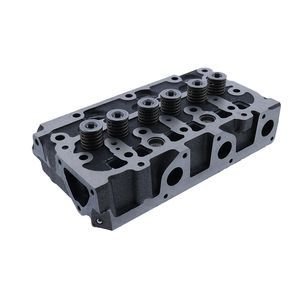
Matched Set Dispatch — Every gasket in this overhaul kit is verified against the Shibaura N844L/N844LT serial range before packing, ensuring cylinder head, oil pan, and timing cover seals arrive as one validated set.
Technical Specifications
| Parameter |
Value |
| Product Type |
Overhaul Gasket Kit |
| Engine Compatibility |
Shibaura N844L, N844LT |
| Engine Displacement |
2.2L |
| Cylinder Head Gasket Material |
Multi-layer steel (MLS) with elastomer coating |
| Cylinder Head Gasket Tolerance |
±0.02 mm thickness |
| Oil Pan Gasket Material |
Nitrile rubber (NBR) rated to 150°C |
| Sealing Surface Roughness |
Ra ≤ 0.8 μm |
| Kit Contents |
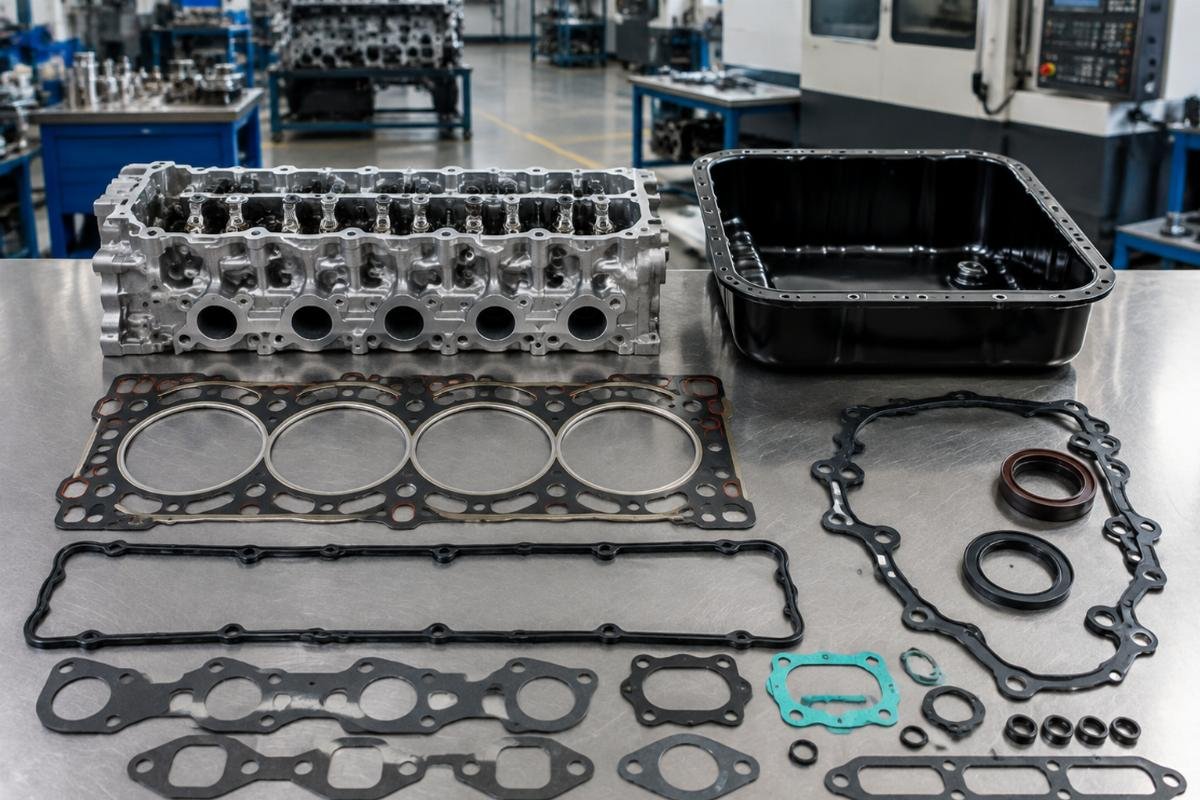
Cylinder head gasket, oil pan gasket, timing cover gasket, injector seat copper washers, viton O-rings for water pump housings |
| Condition |
New Aftermarket |
| Warranty |
6 months (extendable to 12 months upon request) |
| Standards |
ISO 9001, ISO 4548-12, SAE J1940 |
| Machine Fitment |
CASE SR160, CASE SR175, CASE SV185, JCB TLT30, JCB TLT30D, New Holland C175, New Holland L170, New Holland LS170, New Holland L175, New Holland LS175, New Holland L215, New Holland L218, New Holland L220, New Holland LX665 |
Application Suitability
| Engine System |
Related Components |
| Cylinder Head Assembly |
Valve stem seals, head bolt set, injector sleeves |
| Crankcase & Oil Pan |
Rear main seal, front crankshaft seal, oil pickup gasket |
| Timing Cover & Front Drive |
Timing seal, tensioner O-ring, cam cover gasket |
| Cooling Circuit |
Water pump housing O-rings (viton included), thermostat gasket |
| Fuel Injection System |
Injector seat copper washers (included), return line seals |
Why Gasket Kits Fail Before the Engine Does
An Overhaul Gasket Kit that misses a single water pump O-ring or ships a cylinder head gasket in the wrong thickness variant can idle a skid steer loader for days while the correct part crosses a border. In mining support camps across the Andes, I have watched teardowns stall because the kit on the bench lacked the viton seals specific to the later N844LT cooling passage layout — the engine serial number had shifted, but the gasket set had not. Rebuild shops end up sourcing emergency seals locally at marked-up cost, and the machine sits [NEED_CITE: engine rebuild delay cost factors in remote mining operations]. The root cause is almost always a mismatch between the kit contents list and the actual engine build variant, not the gasket material itself.
What Separates a Complete Kit from an Almost-Complete One
A proper engine overhaul for the Shibaura N844L family demands more than the major face seals. The injector seat copper washers crush to a specific thickness on first torque and cannot be reused, yet many aftermarket kits omit them entirely. This Overhaul Gasket Kit includes those washers along with the viton O-rings for water pump housings — components that frequently get overlooked during teardown planning but cause coolant seepage within the first hundred hours if recycled or substituted with nitrile stock.
Serial Variants and the Thickness Question
The N844L and N844LT share a 2.2L displacement block, but the LT variant runs higher boost and altered head stud torque values, which shifts the required cylinder head gasket compressed thickness. Earlier production engines may also carry a different timing cover profile that changes the gasket cutout shape. I have encountered units in Peru where a previous rebuild used non-standard head shims, meaning the next overhaul must account for that accumulated stack-up. Confirming the engine serial number and any rebuild history is the only way to avoid shipping the wrong variant [NEED_CITE: Shibaura N844 engine serial range identification for aftermarket parts].
Reading the Specifications That Actually Matter
The multi-layer steel cylinder head gasket in this kit holds a ±0.02 mm thickness tolerance across its sealing beads. MLS gaskets rely on embossed stopper layers to control clamp load distribution; if one bead sits even slightly proud of specification, the local contact pressure drops and combustion gas migrates past the fire ring. The elastomer coating fills micro-imperfections on the mating surfaces, compensating for head or block deck roughness up to the Ra ≤ 0.8 μm threshold noted in the spec sheet. On the oil pan side, the NBR gasket is rated to 150°C continuous — necessary because modern low-SAPS oils and EGR-equipped N844LT installations push sump temperatures higher than older naturally aspirated variants. The viton O-rings for the water pump housing resist glycol degradation and temperature cycling that would flatten standard nitrile rings within one oil-change interval.

The Cost Hidden Behind a Missing Copper Washer
Reusing a crushed injector seat washer seems harmless until combustion blow-by erodes the copper seating surface on the cylinder head — a repair that now requires head removal, machining, and potentially a replacement casting. When a rebuild kit is missing those washers and the shop improvises with aluminum or soft steel substitutes, galvanic corrosion accelerates between dissimilar metals in the hot zone. I have seen injector bores scored beyond salvage because someone saved a few grams of copper [NEED_CITE: injector seat copper washer reuse failure modes in diesel rebuilds]. The downtime cost of pulling a cylinder head a second time dwarfs the price of including the correct washers in the first place.
Why Procurement Flows Differently Here
Selected part lines are manufactured in our own Guangzhou facility while the remainder is sourced from qualified ISO-certified partners, so both production streams carry identical QC and warranty terms. Eight core categories under one account mean that if a teardown reveals a worn water pump or cracked injector sleeve, the associated components can ship alongside this Overhaul Gasket Kit in a single consignment rather than a split delivery. Minimum order is one piece — a single emergency kit for a down machine in a quarry or port yard ships without MOQ friction. Part identification works from engine serial number, machine model, or a photograph of the torn-down seal layout when the original packaging is long gone. The technical team confirms compatibility against superseded part references and variant-specific thickness requirements before packing, reducing the risk of a bench surprise during reassembly [NEED_CITE: aftermarket gasket kit cross-reference verification process].
Documentation & Verification
- Commercial invoice listing each gasket component with individual line items for customs clarity
- Part compatibility sheet confirming N844L/N844LT serial range match (reference only)
- Dimensional inspection record covering MLS gasket thickness and O-ring cross-section
- Warranty terms document with six-month baseline and twelve-month extension conditions
- Packing photographs showing sealed anti-static lining and moisture-proof wrapping before crate closure
- HS code schedule with customs classification support for destination-country import filings
Installation & Rebuild Sequence
- Verify cylinder head and block deck flatness within Ra ≤ 0.8 μm before laying the MLS gasket dry — never use sealant on multi-layer steel
- Install injector seat copper washers new each time; crush-fit means they seal once and cannot be reused
- Torque head bolts in the manufacturer-specified spiral sequence to ensure uniform MLS bead compression
- Seat viton water pump O-rings with clean glycol-compatible lubricant to prevent pinching during housing installation
- Confirm oil pan bolt holes are clean and dry before NBR gasket placement to avoid extrusion under clamp load
- Run initial break-in at moderate load for the first operating hours and re-check head bolt torque at the prescribed interval
Before You Request a Quote
Provide the full engine serial number from the Shibaura nameplate along with any known rebuild history — previous oversize work, head shims added, or aftermarket fasteners installed. If the nameplate is unreadable, a photograph of the existing cylinder head gasket or the block casting number allows variant confirmation. Shops planning fleet-level overhauls should share the machine model list and approximate engine hours so the correct kit variant ships for each unit.
Frequently Asked Questions
Q: What gaskets and seals does this overhaul kit include?
A: The kit contains the cylinder head gasket in MLS construction, oil pan gasket in NBR, timing cover gasket, injector seat copper washers, and viton O-rings for water pump housings. These cover the primary sealing surfaces on the N844L and N844LT. Always confirm against your specific engine build, as some field-modified units may require additional seals not in the standard set.
Q: How do I confirm this kit fits my engine variant?
A: Share the engine serial number from the Shibaura nameplate or the machine model and production year. The N844L and N844LT have different boost pressures and head torque specifications that affect gasket thickness requirements. A photograph of the old cylinder head gasket or block casting mark also helps when nameplates are worn or painted over.
Q: Does this kit work on engines that have been rebuilt before?
A: It can, but previous rebuilds may have introduced non-standard head shims, aftermarket studs, or oversize components that alter the sealing stack. Always measure deck flatness and check for prior modifications before ordering. If a previous rebuild used different fastener torque values, the gasket thickness selection may need adjustment.
Q: What causes repeated gasket failure after a fresh overhaul?
A: Common causes include warped head or block surfaces exceeding the Ra ≤ 0.8 μm threshold, incorrect head bolt torque sequence, reused copper crush washers, or failing to address the original failure root cause — such as a cracked injector sleeve or blocked cooling passage causing local hot spots. [NEED_CITE: common causes of cylinder head gasket failure after diesel engine rebuild]
Q: How do I verify the kit contents match my specific engine build?
A: Request the compatibility sheet and dimensional inspection record with your shipment. These documents list the exact gasket thickness, O-ring sizes, and washer quantities packed. Cross-check against your teardown notes before discarding old gaskets, so you can confirm every sealing position is covered.