Matched Sets Verified by Engine Serial — Every bearing shell in this kit is graded against the specific Kubota V3800 crankshaft journal state, eliminating trial fitment at the rebuild bench.
Technical Specifications
| Parameter |
Value |
| Product Type |
Main Bearing / Con Rod Bearing |
| Machine Fitment |
Kubota M105S, M108S, M5-091, M5-111, M96S, SVL95-2S, SVL95-2SC; Bobcat S220, S250, S300, T250, T300; Takeuchi TL11R3, TL12R2, TL12V2; Gehl CTL85 |
| Content |
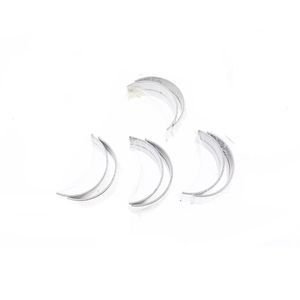
1 Set Main Bearings + 1 Set Connecting Rod Bearings + 1 Set Thrust Washer |
| Condition |
New Aftermarket |
| Bearing Material |
Tri-metal (steel backing + copper-lead alloy + tin overlay) |
| Standards |
ISO 9001, SAE J431, ISO 4384 |
| Oversize Grades |
Available in STD, 0.25 and 0.50 oversize |
| Warranty |
3–12 months against manufacturing defects |
| MOQ |
1 set |
Application Suitability
| Engine System |
Related Components |
| Bottom-end rotating assembly |
Crankshaft, main caps, con rod bolts |
| Lubrication circuit |
Oil pump, oil cooler, full-flow filter |
| Cooling system |
Thermostat, water pump, radiator |
| Cylinder head & valve train |
Head gasket, valve stem seals, rocker shaft |
When a Main & Connecting Rod Bearing Set for Kubota V3800 V3300 Engine Rebuild Goes Wrong
The crankshaft was already ground, but the bearings arrived standard size.
I have seen this exact scenario with a Kubota V3800DI-T pulled from a compact track loader. The overhaul kit showed up with STD main and con rod bearings while the crankshaft journals had been machined to 0.25 oversize. The shop did not catch the mismatch until the engine was assembled, oil pressure checked, and the shells started scoring within the first hour of break-in. The teardown, inspection, and reorder cycle pushed the machine out of service for an additional multi-week window [NEED_CITE: engine rebuild sequencing standards for diesel power units]. That kind of error does not come from bad parts — it comes from incomplete communication between the crankshaft machinist, the parts supplier, and the technician on the floor.

Where Bearings Sit Inside the Kubota V3300/V3800 Rebuild Sequence
The main and connecting rod bearings form the load-carrying interface between the crankshaft and the block in the Kubota V3300/V3600/V3800 engine family. During an overhaul, these shells are among the last components installed before the block is sealed — meaning any error in grade selection or fitment forces a full teardown to correct. The thrust washer, included in this set, controls axial crankshaft movement and is frequently overlooked in partial rebuilds.
Sizing, Rebuild History, and the Grade Trap
Every V3800 that has been through a previous rebuild may have crankshaft journals ground to a smaller diameter, requiring oversize bearing shells. A block that was bored and fitted with oversize main bearings during the first overhaul will need the same grade again — or the next step up if journals were reground. Ordering standard shells for a block with documented 0.25 grind history is the single most common cause of early bearing failure in engines I have inspected [NEED_CITE: crankshaft journal measurement practices for industrial diesel engines]. The engine serial number and variant — for example V3800DI-T versus V3800-TIE5B — must be confirmed before grade selection, because internal component dimensions differ across production runs.
Tri-Metal Construction and What the Numbers Mean for Your Bench
The tri-metal structure in these bearings — a steel backing layer for rigidity, a copper-lead intermediate layer for load distribution, and a tin overlay for conformability — is the standard architecture for medium-duty diesel engines operating under cyclic loading. The steel backing maintains shell geometry under combustion pressure. The copper-lead layer absorbs peak bearing loads during the power stroke. The thin tin overlay allows the bearing to accommodate minor journal irregularities during break-in without galling. Journal clearance tolerance and surface finish values control the hydrodynamic oil film that separates the bearing surface from the crankshaft journal during operation — too tight and the film breaks down under heat, too loose and oil pressure drops at idle [NEED_CITE: hydrodynamic bearing lubrication theory for internal combustion engines].
The Cost of Skipping Root Cause Before Installing New Shells
Replacing bearings without diagnosing why the previous set failed is a pattern I encounter regularly. Oil starvation from a blocked pickup screen, contamination from a bypassed filter, or a worn oil pump delivering insufficient pressure will destroy a new bearing set just as quickly as it destroyed the old one. Shops that install fresh shells into an engine with an unresolved lubrication fault often see scoring or spun bearings within the first several hundred operating hours [NEED_CITE: diesel engine bearing failure analysis methodologies]. The bearing is rarely the root cause — it is the symptom.
Why Rebuild Shops Source This Bearing Set Through Our Account
Our Guangzhou facility and qualified partner lines both operate under the same quality control and warranty terms, so a matched Main & Connecting Rod Bearing Set for Kubota V3800 V3300 engine rebuild ships with consistent documentation regardless of production origin. We stock across eight core engine part categories, meaning the same overhaul order can include gaskets, piston rings, valve train components, and seal kits under one account. Single-set orders are accepted — no minimum order value blocks an emergency rebuild. Engine serial numbers, machine model plates, or workshop photographs are all accepted as identification input. Our technical team verifies oversize grade against your crankshaft measurement before dispatch, and sample sets are available for fitment confirmation before you commit to fleet quantity.
Documentation & Verification
- Commercial invoice listing each bearing grade and set quantity per engine serial
- Part compatibility sheet cross-referencing Kubota V3300/V3600/V3800 variants (reference only)
- Dimensional inspection record covering shell wall thickness and crush height
- Warranty terms document specifying coverage period and defect claim procedure
- Packing photographs showing set contents and grade markings before crate closure
- HS code and customs documentation support for international overhaul kit shipments
Installation & Rebuild Sequence
- Verify crankshaft journal diameter with a micrometer before opening bearing packaging to confirm oversize grade match
- Clean block oil galleries and main cap bores with solvent and compressed air to remove machining residue
- Install main bearings dry into block saddles and caps — never apply assembly lube to the backing surface
- Torque main cap bolts to specification in the correct sequence, then check crankshaft end-play with a dial indicator
- Plastigauge every main and con rod journal to confirm oil film clearance falls within tolerance before final assembly
- Prime the lubrication system and monitor oil pressure during the first start-up to confirm hydrodynamic film establishment
Requesting the Correct Grade for Your Overhaul
Provide the engine serial number, variant code, and crankshaft journal measurement from your machinist. If the block has rebuild history, share the oversize grade installed during the last overhaul so we can cross-check against current journal condition. Photographs of the engine nameplate and old bearing shells help confirm internal configuration differences across V3800 production runs.
Frequently Asked Questions
Q: What oversize grade do I need after a crankshaft regrind?
A: The grade depends on the finished journal diameter measured by your machinist, not on the original factory specification. After a regrind to 0.25 mm undersize, you need 0.25 oversize bearing shells. Always measure before ordering — previous rebuild history alone is not a reliable indicator if journals were touched again.
Q: Does this bearing set fit all V3800 variants?
A: The V3800 family includes multiple variants such as V3800DI-T and V3800-TIE5B, and internal dimensions can differ across production runs. Engine serial number confirmation is required before dispatch to ensure the correct shell configuration ships to your bench.
Q: What other components should be replaced during a bottom-end rebuild?
A: Con rod bolts are stretch-fastened and should not be reused. Main cap bolts require inspection for elongation. The oil pump, pickup screen, and full-flow filter should be replaced or verified to eliminate the root cause that destroyed the previous bearing set.
Q: Why did the previous bearing fail?
A: Common root causes include oil starvation from a blocked pickup, contaminated oil bypassing a failed filter element, excessive crankshaft journal taper, or incorrect bearing grade from a prior rebuild. Diagnosis before reassembly prevents repeat failure.
Q: Can I get a sample set to verify fit before ordering for the fleet?
A: Yes. Single-set sample orders are available so your rebuild shop can confirm shell fitment, wall thickness, and grade marking before committing to bulk quantity across multiple engine platforms.