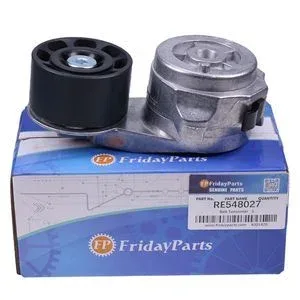
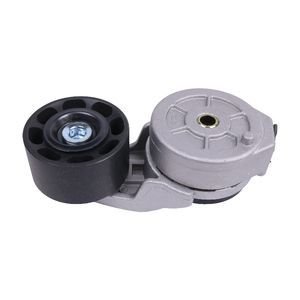
Matched Sets Shipped — Every belt tensioner RE548027 leaves our warehouse paired with the exact belt, idler and seal specifications for your engine serial variant, eliminating mismatched tolerances that cause early failures.
Technical Specifications
| Parameter |
Value |
| Part Number |
RE548027 |
| Product Type |
Belt Tensioner |
| Cross-Reference |
RE548027 (reference only) |
| Compatible Engines |
4045, 3029, 6068, 6090, 6125, 6135 |
| Condition |
New Aftermarket |
| Warranty |
3–12 months against manufacturing defects |
| Manufacturing Standard |
ISO-certified production |
Application Suitability
| Engine System |
Related Components |
| Accessory Belt Drive |
Serpentine belt, idler pulleys, belt routing hardware |
| Cooling System |
Water pump pulley, fan drive hub, coolant seals |
| Charging System |
Alternator mounting bracket, alternator pulley |
| Hydraulic Pump Drive |
Hydraulic pump coupling, pump shaft seal |
| Engine Front Cover |
Front cover gasket, crankshaft front seal |
Why Rebuilds Fail When the Belt Tensioner RE548027 Is Skipped
A reused tensioner on a fresh belt is the most common cause of accessory drive comebacks within the first hundred operating hours.
During my purchasing days at a Jakarta fleet workshop, I saw complete overhauls on 4045 and 6068 engines returned to the bay because the belt drive was treated as a secondary concern. The internal components — pistons, liners, bearings — were matched and verified, but the accessory drive was assembled from leftover stock. Spring fatigue inside the tensioner went undetected, and the new belt began chirping under load within weeks. The machine came back down, and the owner paid for a second teardown. [NEED_CITE: belt drive system diagnostic procedures for heavy-duty diesel engines]
That experience shifted how I evaluate every overhaul parts list. When a buyer orders piston kits and gasket sets but leaves the belt tensioner RE548027 off the list, the rebuild is incomplete. The accessory drive system is not a separate concern — it is the engine system's first point of failure after reassembly.

The Belt Tensioner RE548027 Within the Accessory Drive System
The belt tensioner RE548027 sits at the centre of the accessory drive on John Deere 4045, 3029, 6068, 6090, 6125 and 6135 engines. It maintains constant load on the serpentine belt, which in turn drives the alternator, water pump, fan and hydraulic pump. When tension drops — whether from spring degradation or pivot bearing wear — every driven accessory suffers. Charging voltage drops, coolant flow decreases, and hydraulic response becomes sluggish. Replacing the belt tensioner RE548027 during an overhaul ensures the entire accessory drive operates within designed tolerances from the moment the engine fires.
Engine Serial Variants and Accessory Routing Differences
These engines share the same tensioner reference but differ in how the serpentine belt routes around the accessories. A 4045 in a 5085E tractor may have a different belt path and idler configuration than a 6068 in a 210GLC excavator. Before confirming your order, verify the belt routing diagram against your specific engine build. Mounting orientation, pivot geometry and the position of adjacent idlers all affect whether this belt tensioner RE548027 bolts on correctly. Our technical team cross-checks engine serial numbers against routing variants to prevent fitment errors before the package ships. [NEED_CITE: engine serial variant identification for John Deere powertrain families]
Interpreting the Specifications That Matter in the Shop
The internal spring rate determines how much load the tensioner applies to the belt at rest and under dynamic conditions. A spring that has lost its designed rate will allow the belt to flutter at certain RPM ranges, producing noise and accelerating wear on the belt ribs. The pivot bearing must rotate smoothly across its full arc without binding or excessive play — any roughness translates directly into belt vibration. The mounting pattern must align precisely with the engine front cover bosses, because even minor misalignment causes the belt to track off the pulley grooves. These are the parameters our quality inspection covers before dispatch.
The Hidden Cost of Skipping the Tensioner During Overhaul
When the tensioner is reused, its worn pivot bearing introduces oscillation into the belt path. The new belt absorbs this oscillation and begins wearing unevenly within the first service interval. The repair centre then faces a diagnostic dilemma: is the belt defective, is the alignment wrong, or is the tensioner the root cause? Each misdiagnosis means another teardown. The labour cost of a second disassembly dwarfs the cost of including the tensioner in the initial overhaul kit. [NEED_CITE: root cause analysis methodology for recurring belt drive failures]
Why Rebuild Shops Source This Component From Us
Our production lines and qualified sourced supply operate under one warranty, so the belt tensioner and the piston kits in the same overhaul order carry identical quality terms. Eight product categories mean the belts, idlers, seals and gaskets ship in one consignment with this tensioner, not from separate suppliers on separate timelines. Minimum order starts from one piece, so a single emergency tensioner for a down machine is never blocked by volume requirements. Part identification works from a part number, a machine model, a photograph of the old unit or a nameplate image. Cross-reference verification covers superseded and alternate numbers so you receive the correct variant for your engine serial. Technical staff confirm compatibility and dimensional match before the order is released to the warehouse.
Documentation & Verification
- Commercial invoice lists tensioner part number, engine compatibility and unit pricing
- Cross-reference sheet marks RE548027 as reference only with verified alternates
- Inspection record documents spring tension test and pivot bearing rotation check
- Warranty terms specify coverage period against manufacturing defects
- Packing photographs show tensioner condition and protective wrapping before crate closure
- HS code provided for customs clearance in destination country
Installation & Rebuild Sequence
- Clean the front cover mounting boss and verify flatness before tensioner installation
- Torque the tensioner mounting bolt to the engine service manual specification
- Route the new serpentine belt per the diagram specific to your engine serial variant
- Rotate the tensioner through its full arc to confirm smooth pivot travel before final belt seating
- Run the engine at idle and observe belt tracking on all pulleys for the first ten minutes
- Re-check tensioner mounting bolt torque after the initial heat cycle
Requesting a Matched Overhaul Quotation
Provide your engine model, serial number and any previous rebuild history so we can confirm the correct belt routing variant and match the tensioner with the right belt, idlers and seals for a complete system refresh.
Frequently Asked Questions
Q: What other components should be replaced together with the belt tensioner during an overhaul?
A: The serpentine belt, idler pulleys and any driven accessory pulleys showing groove wear should be replaced as a set. Front cover gaskets and the crankshaft front seal are typically accessible during tensioner removal and should be renewed to prevent oil contamination of the new belt drive components.
Q: How do I confirm this tensioner fits my specific engine serial variant?
A: Provide the engine model and full serial number from the nameplate. We cross-reference the serial against accessory routing diagrams for 4045, 3029, 6068, 6090, 6125 and 6135 families to verify mounting orientation and belt path before confirming fitment.
Q: What symptoms indicate the tensioner, not the belt, is the root cause?
A: Belt chirp that persists after belt replacement, uneven rib wear on a new belt, and oscillation visible at the tensioner arm during operation all point to tensioner spring fatigue or pivot bearing degradation rather than a defective belt.
Q: Can I source a complete belt drive service kit from one supplier?
A: Yes. We supply the tensioner, matched belt, idler pulleys and associated seals under one account with consolidated dispatch. This eliminates split shipments and ensures all components arrive together for the scheduled service window.
Q: Does the warranty cover premature wear or only manufacturing defects?
A: The warranty covers manufacturing defects for a period of 3 to 12 months. Premature wear caused by misalignment, contamination or incorrect installation falls outside warranty scope, which is why we recommend verifying belt routing and mounting surfaces during installation.