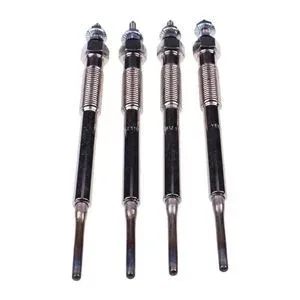
Engine Serial Variants Confirmed — Every glow plug set is verified against the specific Isuzu 4JJ1 or 4HK1 engine serial before dispatch, preventing resistance mismatches that destroy cold start reliability.
Technical Specifications
| Parameter |
Value |
| Part Number |
8-98290-755-0 |
| Product Type |
Glow Plug |
| Cross-Reference (reference only) |
8-98290755-0, 8982907550, 8-97379-296-0, 8-97379296-0, 8973792960, 97379296, 98290755 |
| Machine Fitment |
NPR, NPR-HD, NQR, NRR, FTR, FVR, W3500 Tiltmaster, W4500 Tiltmaster, W5500 Tiltmaster, W5500HD Tiltmaster, W3500 Forward, W4500 Forward, W5500 Forward, W5500HD Forward |
| Brand Compatibility |
Isuzu, Chevrolet, GMC |
| Engine Compatibility |
Isuzu 4JJ1, 4HK1, 4HK1-TCS, 4HK1-TCN |
| Condition |
New Aftermarket |
| Packaging |
4 pieces per package |
| Manufacturing Standard |
ISO-certified production facility |
| Warranty |
3–12 months against manufacturing defects |
Application Suitability
| Engine System |
Related Components |
| Cold start circuit (4JJ1 / 4HK1) |
Glow plug relay, controller module, bus bar |
| Fuel delivery and injection |
Injector nozzles, return lines, fuel filter |
| Engine management and sensors |
Coolant temperature sensor, crankshaft position sensor |
| Cylinder head and combustion |
Valve cover gasket, head bolt set, combustion chamber cleaning |
Why New Glow Plugs Burn Out Within Weeks of Installation
A replacement glow plug set will fail prematurely if the underlying system fault — relay cycling, controller malfunction, or injector leak-down — is never diagnosed.
In engine rebuild shops across Shandong's manufacturing corridor, cold start complaints rarely trace back to the plug alone. Controller faults send continuous voltage past the designed duty cycle, overheating the element until the sheath ruptures. Injector leak-down floods the pre-chamber with diesel, creating carbon deposits that insulate the tip and force the ECU to extend glow time. Each of these root causes destroys a fresh Glow Plug engine replacement for Isuzu 4JJ1 4HK1 before the first oil change interval [NEED_CITE: diesel glow plug circuit failure mode analysis].
Replacing plugs without checking the relay contact resistance, controller output waveform, and injector leak-off rate means the next set inherits the same destructive environment.

The Glow Plug Circuit as an Integrated System
The glow plug sits at the end of a chain that begins with the engine coolant temperature sensor signaling the controller. From there, the controller modulates relay duty cycle, and the relay feeds the bus bar connecting all four cylinders. When diagnosing cold start faults on a 4HK1-TCS or 4HK1-TCN, every node in this chain should be measured before new hardware goes in.
A Glow Plug engine replacement for Isuzu 4JJ1 4HK1 that arrives without a concurrent check of relay contacts and controller output timing is solving only the visible symptom. Fleet maintenance programs that schedule plug replacement alongside injector service and controller scan consistently report fewer repeat failures within the same operating season.
Engine Serial Variants and the Reach Specification Trap
Within the 4HK1 family, the 4HK1-TCS and 4HK1-TCN variants differ in combustion chamber geometry and piston crown design, which alters the required plug reach and thread engagement depth. Installing a plug with the wrong reach leaves the heating element either recessed too far from the combustion zone or protruding into the piston sweep path.
Both scenarios cause rapid failure — recessed plugs cannot achieve adequate pre-chamber temperature, while protruding plugs suffer mechanical damage from piston proximity. Verification against the engine serial plate, not just the model designation, is the only reliable method. The superseded reference number 8-97379-296-0 series transitioned to 8-98290-755-0 series across production revisions, and cross-reference tables copied between sellers frequently carry forward outdated mappings [NEED_CITE: Isuzu 4HK1 engine serial variant identification procedures].
Resistance Stability and Sheath Material Under Thermal Cycling
The glow plug element operates through rapid thermal cycling — from ambient to well above 1000°C at the tip within seconds of energization. Resistance value stability across the service life is critical because voltage fluctuation caused by drifting resistance can send irregular current draw back through the controller, eventually damaging the engine control module's driver circuit.
The sheath material must withstand repeated expansion and contraction without developing micro-cracks that allow combustion gases to penetrate and corrode the internal heating coil. Matched sets ensure uniform heat output across all four cylinders, preventing imbalanced cold start combustion where one cylinder fires late and creates torsional shock through the crankshaft. ISO-certified manufacturing controls hold resistance tolerance within specification limits verified by pre-shipment testing records.
The Hidden Cost of Skipping Root-Cause Diagnosis
An engine rebuild shop that installs new plugs without tracing the failure origin faces a predictable cycle: the replacement set burns out, the customer returns with the same complaint, and the shop absorbs warranty labor on a part that was not defective. The actual fault — a sticking relay contact, a failed controller transistor, or a leaking injector nozzle — remains unaddressed.
Across fleet operations, this pattern generates repeat downtime, erodes customer confidence, and shifts blame toward the parts supplier when the root cause was never on the bench. A Glow Plug engine replacement for Isuzu 4JJ1 4HK1 should always be accompanied by circuit-level diagnostics documented on the repair order [NEED_CITE: diesel engine cold start system diagnostic workflow standards].
Why Source This Component Through Our Engine Systems Channel
Self-produced and qualified-sourced supply lines carry identical QC protocols and warranty terms — the glow plug set ships under the same accountability regardless of production origin. Eight product categories under one account mean the relay, bus bar, and injector service components can consolidate onto the same commercial invoice with matching lead times.
Minimum order starts at one package, supporting single-vehicle emergency repairs without forced overstocking. Guangzhou warehouse stock on fast-moving references enables same-day or next-day dispatch for common Isuzu applications. Cross-reference verification covers superseded and alternate numbers, catching mapping errors before the order ships. Technical support confirms engine serial compatibility and resistance grade before commitment, reducing fitment disputes after delivery.
Documentation & Verification
- Commercial invoice listing engine serial variant and confirmed cross-reference for customs clearance
- Part compatibility sheet showing verified 8-98290-755-0 interchange references marked as reference only
- Pre-shipment resistance measurement record for each glow plug in the matched set
- Warranty terms covering manufacturing defects across the complete four-piece package
- Packing photographs showing sealed anti-corrosion packaging before carton closure
- HS code documentation supporting export classification for automotive electrical components
Installation & Rebuild Sequence
- Remove bus bar and inspect contact surfaces for arcing damage before extracting the failed glow plug set
- Clean thread bore in cylinder head using a dedicated tap to remove carbon buildup without enlarging the thread
- Apply anti-seize compound rated for high-temperature diesel combustion environments to plug threads
- Torque each plug to manufacturer specification and reinstall bus bar with clean contact faces
- Verify controller output and relay cycling with a scan tool before declaring the cold start system operational
Requesting a Compatibility-Verified Quote
Provide the engine model, engine serial number, and any previous rebuild history so we can confirm the correct reach specification and resistance grade for your application. If the nameplate is worn, a photograph of the cylinder head casting number or the old plug with its markings allows cross-reference verification before the order is placed.
Frequently Asked Questions
Q: What else in the glow plug circuit should be checked when replacing plugs?
A: The relay contacts should be tested for resistance and pitting, the controller module output waveform verified with a scope, and the bus bar inspected for corrosion or loose connections. Coolant temperature sensor readings must be accurate, as a faulty sensor can cause the controller to extend glow duration beyond safe limits, destroying the new set prematurely.
Q: My previous set burned out quickly — what system fault could cause that?
A: Common root causes include a sticking relay that keeps voltage applied continuously, a controller fault sending incorrect duty cycles, and injector leak-down flooding the pre-chamber with diesel fuel. Each creates an environment that destroys the element regardless of plug quality. Diagnose and correct the fault before installing replacements.
Q: Are 4HK1-TCS and 4HK1-TCN engines interchangeable for this plug?
A: Not automatically. The two variants may differ in combustion chamber depth and piston crown design, affecting the required plug reach. Always confirm against the engine serial number rather than relying solely on the model designation. Provide the serial plate information for verified compatibility before ordering.
Q: Should I replace all plugs as a set or only the failed ones?
A: Replacing all four as a matched set ensures uniform heat output across cylinders, preventing imbalanced cold start combustion. A single aged plug alongside three new ones creates unequal pre-chamber temperatures, causing rough idle and torsional stress on the crankshaft during cold cranking. Matched sets also simplify warranty tracking.
Q: How do I confirm my engine serial matches this cross-reference?
A: Locate the engine serial number on the identification plate mounted to the block or valve cover. Cross-reference this serial against the confirmed application list for 8-98290-755-0. If the plate is missing or illegible, a photograph of the cylinder head casting or the old plug markings enables technical verification before dispatch.