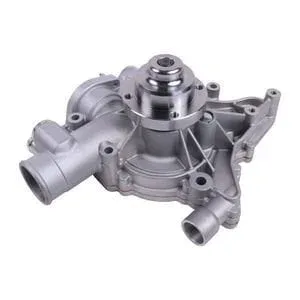
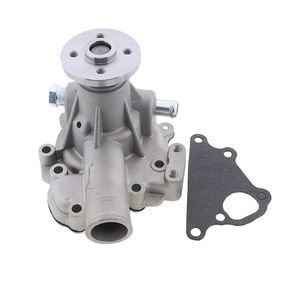
Matched Cooling Components — Every water pump we dispatch ships alongside verified gasket and thermostat references, ensuring the entire thermal management loop addresses root-cause overheating rather than swapping a single failed unit.
Technical Specifications
| Parameter |
Value |
| Part Number |
4135550 |
| Product Type |
Water Pump |
| Condition |
New Aftermarket |
| Cross-Reference (reference only) |
4132077, 4134280, 4137233, 4137490, 4138560, 4138700, 4162751, 4162741 |
| Machine Fitment |
Deutz D2.9, TD2.9, TCD2.9, TD2.9 4L, D2.9 4L, D2-9L04, TCD2-9L04, TCD2-9L4, TD2-9L04, TD2-9L4, D2-9L4, TCD 2.9L4, D2.9 L4, D2.9 L04 |
| Housing Material |
Cast Iron |
| Impeller Design |
Balanced configuration |
| Seal Composition |
High-temperature resistant materials |
| Bearing Assembly |
Low-friction design |
| Warranty |
3-12 Month |
| MOQ |
1 Piece |
| Production Standard |
ISO |
Application Suitability
| Engine System |
Related Components |
| Primary Coolant Circulation |
Thermostat, radiator hoses, hose clamps, coolant reservoir cap |
| Belt-Driven Auxiliary Drive |
Fan belt, tensioner pulley, fan clutch assembly |
| Block-to-Pump Interface |
Mounting gasket, O-ring seal, fastener torque specifications |
| Thermal Regulation & Monitoring |
Temperature sensor, coolant concentration tester, radiator core |
Diagnosing the Failure Before Installing the Water Pump Engine Replacement
Replacing a seized or leaking unit without finding out what destroyed it guarantees a second teardown.
Workshops often pull a failed pump, fit a new one, and refill with coolant, only to have the machine overheat again within days. The actual culprit is usually a stuck thermostat, a collapsed lower hose creating cavitation, or contaminated coolant eating the seal faces from the inside. [NEED_CITE: engine cooling system root cause analysis for recurring overheating] When the water pump engine replacement is treated as a system-level correction rather than a simple swap, the machine stays running.
The Cooling Loop as an Interdependent Circuit
This water pump engine replacement sits at the heart of the Deutz 2.9-liter family thermal circuit. Coolant leaves the pump housing and splits toward the block jackets and the thermostat housing. If the thermostat never opens, pressure builds against the pump seal, forcing coolant past the weep hole long before the impeller or bearing shows any wear. Checking the thermostat opening temperature and the radiator cap relief pressure takes minutes and prevents a misdiagnosis.
Superseded Numbers and Engine Serial Variants
The Deutz 2.9 family has seen multiple part number revisions over its production run. References like 4132077 were later superseded by 4135550, and subsequent revisions such as 4162751 may apply to later engine serial ranges. The port orientation, mounting bolt pattern, and pulley offset can shift between these variants. [NEED_CITE: Deutz engine serial range part number supersession documentation] Confirming the exact engine serial plate before ordering eliminates the risk of receiving a physically similar but dimensionally incorrect casting.
Interpreting the Cast Iron Housing and Balanced Impeller
The cast iron housing provides dimensional stability under the thermal cycling typical of construction equipment operating in high-ambient environments. Unlike aluminum housings that can distort under repeated heat-soak cycles, cast iron maintains the gasket surface flatness needed to prevent seepage at the block interface. The balanced impeller design reduces radial load on the bearing assembly, which directly extends the service life of the low-friction bearing and keeps the high-temperature seal faces running true without wobble.

The Cost of Skipping System Diagnostics
Fitting a new pump on an engine with a blocked radiator core or degraded coolant simply transfers the failure to the next weakest point. The new seal faces encounter the same abrasive contamination or the same cavitation from a restricted inlet, and the unit is back on the bench. [NEED_CITE: coolant contamination effects on water pump seal longevity] Shops that track comeback rates consistently find that cooling system repeat failures trace back to incomplete flushing or ignored ancillary faults, not to the replacement pump itself.
Why Source This Component Through Our Engine Systems Desk
We produce selected cooling system lines in our own facility and source the remainder from ISO-certified partners, with every unit carrying identical quality control and warranty coverage. The eight product categories we cover mean a complete cooling system refresh — pump, thermostat, gaskets, hoses, belt — consolidates into one consignment under one account. We accept orders from a single piece, so a workshop tackling one downed machine does not have to commit to bulk. Our technical team cross-references superseded numbers and confirms the correct variant against the engine serial plate before anything ships. Guangzhou warehouse stock on fast-failure cooling items supports rapid dispatch when a machine is already down.
Documentation & Verification
- Commercial invoice and packing list itemizing pump part number and matched gasket set.
- Compatibility and cross-reference sheet listing applicable engine serial ranges with reference only designations.
- Dimensional and visual quality inspection record covering housing flatness and impeller balance.
- Warranty terms specifying coverage period and system-level claim conditions.
- Pre-dispatch packing photographs showing protective packaging and included ancillary items.
- HS code classification and customs documentation support for international cooling system shipments.
Installation & Rebuild Sequence
- Clean the block mounting surface to bare metal; any residual gasket material compromises the cast iron housing seal.
- Verify the new gasket aligns with all coolant passage ports before torquing the mounting bolts to Deutz specification.
- Check the thermostat operation in heated water before reassembly; a stuck unit will destroy the new pump seal.
- Fill with the correct coolant concentration and bleed air from the system using the designated bleed point.
- Run the engine to operating temperature and verify the weep hole remains dry during the initial heat cycle.
Requesting a System-Matched Quotation
Provide the engine model, serial number from the data plate, and any previous overhaul history. If the nameplate is unreadable, send a clear photograph of the old pump casting number and the mounting face. This allows us to verify the correct variant from the superseded reference chain and confirm which gaskets, thermostat, and ancillary seals should accompany the water pump engine replacement in a single shipment.
Frequently Asked Questions
Q: What other cooling system parts should be replaced alongside this water pump?
A: We recommend replacing the thermostat, the block-to-pump gasket, and inspecting all radiator hoses for internal collapse. The fan belt and tensioner should be checked for wear since they drive the pump. If the coolant shows contamination or discoloration, a full system flush and fresh coolant fill are necessary to protect the new seal faces.
Q: My engine references a superseded part number — how do I confirm the correct current variant?
A: Send us the full engine serial number from the data plate. We cross-reference the superseded chain, including earlier numbers like 4132077 and later revisions, against your specific serial range. This confirms the correct housing port orientation and mounting pattern before dispatch, preventing fitment issues on the bench.
Q: Does the overhaul kit include every gasket needed for a complete cooling system refresh?
A: Our cooling system supply includes the pump mounting gasket and associated O-rings. The thermostat housing gasket and hose seals are separate line items. When you provide your engine serial number, we compile a complete kit checklist so nothing is missing when the teardown begins.
Q: What system fault should be diagnosed before fitting the new pump?
A: Verify the thermostat opens at the specified temperature, check the radiator cap holds rated pressure, and confirm hoses are not internally collapsed. Inspect the old coolant for oil contamination or abrasive particles. Addressing these issues prevents the new pump from failing due to the same root cause that destroyed the original unit.