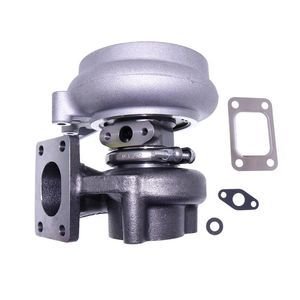
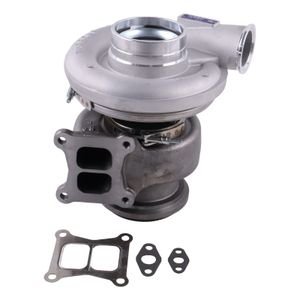
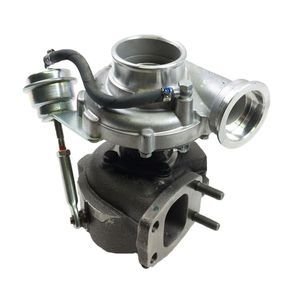
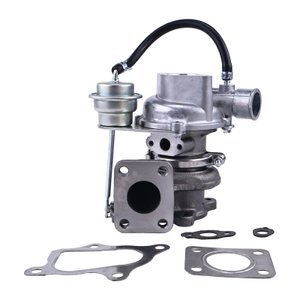
Overhaul Matched Sets — Each TD04HL turbocharger ships with verified cross-reference against engine serial variants to ensure intake and lubrication circuit compatibility during rebuild.
Technical Specifications
| Parameter |
Value |
| Product Type |
Turbocharger |
| Turbo Model |
TD04HL-13G-8.5, TD04HL-13G |
| Engine Fitment |
CAT 3044C, C3.4; Mitsubishi S4S, 4D31T A47GT |
| Condition |
New Aftermarket |
| Cross-Reference |
234-4894, 235-4964, 314-9972, 314-9898, 49189-02711, 49189-02720, 49189-02710, 49189-02721, 49189-10530 (reference only) |
| Machine Fitment |
CAT 236B, 236B2, 236B3, 242B3, 246B, 246C, 248B, 252B, 252B3, 256C, 257B3, 259B3, 262B, 262C, 262C2, 267B, 268B, 272C, 277B, 277C, 277C2, 279C, 279C2, 287B, 287C, 287C2, 289C, 289C2, 297C |
| Quality Standard |
ISO 9001 |
| Warranty |
3–12 months against manufacturing defects |
Application Suitability
| Engine System |
Related Components |
| Intake boost circuit |
Intake manifold gaskets, air filter elements, boost pressure sensor |
| Lubrication feed and drain |
Oil feed line, oil return hose, crankcase breather, oil filter |
| Exhaust discharge |
Exhaust manifold studs and nuts, exhaust gasket, flex pipe |
| Engine overhaul sequencing |
Piston ring sets, main and rod bearings, full gasket set, valve stem seals |
Why Repeat Turbo Failures Keep Engines Coming Back to the Bench
A replacement turbo that fails within weeks usually points to an unresolved system fault, not a defective unit.
In mining and earthmoving operations across Latin America, I have seen TD04HL turbocharger units pulled from CAT 3044C engines after barely accumulating runtime. The common thread is not the turbo itself but the oil return line partially blocked by carbon buildup, or an exhaust back-pressure condition caused by a collapsed flex pipe downstream. When the root cause sits outside the turbo housing, swapping the rotating assembly only resets the clock. [NEED_CITE: diesel engine turbocharger failure root cause analysis methodology]
Engine rebuild shops handling Mitsubishi S4S and CAT C3.4 platforms know that a thorough system-level diagnosis before teardown separates a lasting repair from a repeat visit. Checking oil supply pressure, verifying crankcase ventilation, and measuring exhaust restriction are not optional extras — they are the difference between a machine that returns to the site and one that returns to the bench.

The Intake and Lubrication Circuit This Turbo Lives Inside
The TD04HL turbocharger for engine rebuild applications connects to two critical engine systems simultaneously. On the intake side, it pressurizes the charge air entering the combustion chambers through the intake manifold. On the lubrication side, it relies on a pressurized oil feed from the engine's main gallery and returns oil through a gravity-fed drain line back to the crankcase. Any restriction, leak, or contamination in either circuit transfers directly to the turbo bearing and seal assembly.
Matching the Correct Variant to Your Engine Serial
The TD04HL-13G-8.5 and TD04HL-13G variants share the same basic architecture but differ in compressor trim and turbine geometry. The correct variant depends on the specific engine build — a CAT 3044C in a 262C skid steer may require a different trim than a Mitsubishi S4S in quarry loading equipment. Confirming the engine serial number and cross-referencing against build records ensures the TD04HL turbocharger you install matches the boost curve and flow characteristics the engine calibration expects. [NEED_CITE: turbocharger compressor trim selection for diesel engine applications]
Reading the Specifications That Matter During Rebuild
The turbine housing configuration on the TD04HL family is designed around the exhaust energy profile of the 3044C and S4S displacement class. Compressor trim directly affects the air mass flow available at operating boost, and a mismatch causes either sluggish response or excessive drive pressure. Oil seal specifications must align with SAE standards for the crankcase pressure environment, since crankcase pressurization from worn piston rings will push oil past even a correctly specified turbo seal. Shaft play tolerances and dynamic balance grade determine how the bearing system handles the thermal cycles typical in skid steer and earthmoving duty. The warranty coverage of 3–12 months applies when the installation follows system-level verification rather than a simple swap.
The Cost of Skipping System-Level Diagnosis
Installing a new turbo without addressing oil feed contamination or exhaust restriction leads to repeat failure, often within the first few hundred hours. The engine comes back apart, the rebuild shop absorbs the labor, and the machine owner loses revenue for a second time. Shops that diagnose the full intake-exhaust-lubrication loop before ordering the TD04HL turbocharger avoid this cycle entirely. The hidden cost is never the part — it is the second teardown. [NEED_CITE: engine rebuild labor cost impact of repeat turbocharger failure]
Why Rebuild Shops Source This Turbo Through Our Engine System Desk
Our own production lines and qualified sourced supply operate under one account with identical QC and warranty terms, so the TD04HL turbocharger you receive meets the same standard regardless of production origin. Eight product categories under one roof mean the turbo, manifold gaskets, oil feed lines, and overhaul seal kits ship in a single consignment. Minimum order is one piece — there is no MOQ blocking an emergency single-unit replacement. Cross-reference verification covers superseded and alternate numbers across machine generations. Our technical team confirms the correct variant, oil seal grade, and mating dimensions against your engine serial before dispatch. Sample supply is available for fitment confirmation before you commit to bulk quantities.
Documentation & Verification
- Commercial invoice and packing list itemizing turbo model and variant
- Cross-reference sheet mapping OEM numbers as interchange reference only
- Quality inspection record covering shaft play, dynamic balance, and boost verification
- Warranty terms specifying coverage conditions and system-level prerequisites
- Packing photographs documenting protective crating before dispatch
- HS code and customs documentation support for international engine parts shipments
Installation & Rebuild Sequence
- Clean oil feed and drain lines thoroughly before connecting the TD04HL turbocharger to prevent bearing contamination
- Verify intake manifold gasket surface flatness to ensure proper compressor housing mate
- Torque exhaust manifold studs to specification to avoid turbine housing distortion
- Pre-lube the turbo bearing with clean engine oil before first cranking
- Run the engine at idle for initial minutes to confirm oil flow and absence of leaks
- Monitor boost pressure and exhaust back-pressure during the break-in period
Share Your Engine Details for a Matched Quote
Provide the engine model, serial number, and any known rebuild history so we can confirm whether your platform requires the TD04HL-13G-8.5 or TD04HL-13G variant. If the nameplate is worn or painted over, send a photograph of the block casting marks or the old turbo data plate. We will return a confirmed cross-reference along with the associated gasket and seal kit contents matched to your specific engine configuration.
Frequently Asked Questions
Q: What gaskets and seals should be replaced together with the turbo during an engine rebuild?
A: During a rebuild involving the TD04HL turbocharger, replace the turbine inlet gasket, compressor outlet gasket, oil feed line O-rings, and oil drain flange gasket as a minimum set. If the engine is already apart, the intake manifold gasket and exhaust manifold gasket should also be renewed. We supply matched gasket sets corresponding to your specific engine serial variant.
Q: How do I confirm whether my CAT 3044C or C3.4 engine requires the TD04HL-13G-8.5 or TD04HL-13G variant?
A: The correct variant depends on engine serial number and machine application. Cross-referencing your engine serial against build records identifies whether the 13G-8.5 or 13G trim was factory-specified. Send us the serial plate data or a photograph, and we will verify the correct TD04HL turbocharger model before shipping.
Q: What system-level checks should be done before installing a new turbo to prevent repeat failure?
A: Before installing a new TD04HL turbocharger, verify oil feed pressure at the turbo inlet, confirm the oil drain line is unrestricted, check crankcase ventilation for excessive blow-by, and measure exhaust back-pressure downstream of the turbine. Addressing these system conditions prevents the same fault from destroying the replacement unit within weeks.
Q: Does the overhaul gasket kit include the turbo mounting gaskets, or do I need to order them separately?
A: Standard overhaul gasket sets typically cover internal engine seals but may omit turbo-specific gaskets depending on the kit configuration. Confirm your kit contents against your engine variant. We supply turbo inlet, outlet, and oil connection gaskets separately or bundled with the TD04HL turbocharger upon request.
Q: How do I identify the correct engine serial variant when the nameplate is worn or painted over?
A: When the nameplate is unreadable, cast markings on the engine block, the injection pump data plate, or the old turbo identification tag often carry enough information. Send clear photographs of any remaining markings, and our technical team will cross-reference against engine build records to confirm the correct turbo variant and associated components.