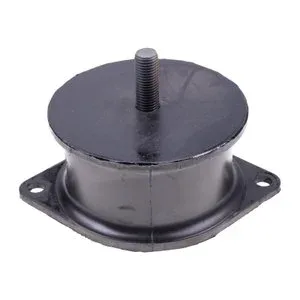
Matched Set Dispatch — Every cushion damper is verified against your engine serial variant to ensure stiffness compatibility across the full auxiliary isolation set.
Technical Specifications
| Parameter |
Value |
| Product Type |
Cushion Damper |
| Part Number |
358172, 4700358172 |
| Cross-Reference |
358172, 4700358172 (reference only) |
| Machine Fitment |
CA51, CA510, CA512, CA600, CA602, CA610, CA612, CA702, SCA512, SCA610 |
| Material |
High-damping natural rubber compound with steel mounting inserts |
| Hardness |
Shore A 65±3 |
| Dynamic Stiffness |
185 N/mm ±10% at 10 Hz |
| Operating Temperature |
-20°C to +70°C |
| Mounting Hole Tolerance |
±0.15 mm |
| Compression Set |
<8% after 72-hour static load testing |
| Steel Insert Plating |
Zinc-plated to ISO 4042 |
| Warranty |
6-month warranty against manufacturing defects |
Application Suitability
| Engine System |
Related Components |
| Engine Block Isolation |
Overhaul gasket kit, main bearing shells, cylinder head bolts |
| Vibration Control |
Auxiliary drive belt tensioner, crankshaft damper pulley |
| Thermal Management |
Fan clutch assembly, coolant pump mounting hardware |
| Emission System |
Exhaust manifold studs, turbocharger support brackets |
Addressing the Root Cause of Repeat Mount Failures
A Cushion Damper vibration mount engine rebuild project fails when the replacement unit is installed without diagnosing the underlying system imbalance.
I have reviewed dozens of warranty claims where a single failed mount was replaced, only to see the new unit tear itself apart within weeks. The root cause is rarely the rubber itself; it is the uncorrected vibration source elsewhere in the auxiliary system. When one mount shows advanced compression set or physical tearing, the adjacent mounts and the engine's rotating assembly must be evaluated as a unified system [NEED_CITE: vibration isolation diagnostic procedures for heavy compaction equipment]. Ignoring this leads to a cycle of reactive repairs rather than a definitive resolution.

The Role of the Cushion Damper in the Engine Auxiliary System
This component functions as the primary barrier between high-amplitude drum oscillation and the sensitive internal components of the powerplant. A properly specified Cushion Damper vibration mount engine rebuild kit must account for the dynamic stiffness required to isolate frequencies generated during soil compaction. If the isolation system is compromised, destructive resonance travels directly into the crankshaft bearings and the cylinder head gasket, accelerating wear on components that should last through multiple overhaul cycles.
Matching Stiffness to Engine Serial Variants
Not all compaction engines are built to the same specification, and the damper must match the specific variant installed in your machine. Ordering a standard unit for a high-output engine build can result in insufficient load support, causing the mounts to bottom out under peak torque. Conversely, using a high-stiffness variant on a standard engine will transmit excessive vibration into the chassis [NEED_CITE: engine serial variant differences in Dynapac CA series]. This mismatch is a primary reason for premature failure of adjacent auxiliary components like the fan clutch and belt tensioner.
Material Engineering for Sustained Isolation
The Shore A 65±3 hardness rating and 185 N/mm dynamic stiffness at 10 Hz are not arbitrary numbers; they are engineered to manage the specific harmonic profile of a compactor's diesel engine. The high-damping natural rubber compound must resist the thermal degradation common in enclosed engine bays, maintaining its compression set below 8% even after prolonged exposure to heat and oil mist. The zinc-plated steel inserts prevent galvanic corrosion at the bolt interface, which is a critical failure point when dissimilar metals are used in a high-vibration environment.
The Cost of Partial System Replacement
Replacing only the visibly failed mount while leaving degraded adjacent units in place creates an uneven load distribution across the engine mounting plane. This imbalance forces the remaining mounts to work beyond their design limits, leading to accelerated fatigue and eventual tearing. The result is a machine that returns to the workshop for a second teardown, doubling the labor cost and extending the total downtime [NEED_CITE: impact of uneven engine mount loading on crankshaft alignment]. A complete system refresh is the only way to ensure the overhaul provides a meaningful service life extension.
Sourcing for System-Level Balance
XUNPO maintains production and sourcing control over the full spectrum of engine auxiliary components, allowing you to procure matched sets from a single account. We provide cross-reference verification to ensure the damper stiffness aligns with your specific engine serial number, avoiding the trial-and-error of unverified aftermarket listings. Our technical team reviews the compatibility of the isolation set with your planned overhaul components, ensuring that gasket kits and bearing shells are not compromised by a misaligned engine block.
Documentation & Verification
- Commercial invoice and packing list referencing the specific engine serial variant.
- Part compatibility sheet confirming fitment for CA51 through CA702 models.
- Quality inspection record showing durometer and dynamic stiffness testing results.
- Warranty terms covering manufacturing defects for the auxiliary isolation components.
- Packing photographs of the cushion damper set prior to crate closure.
Installation & Rebuild Sequence
- Inspect the engine mounting rails for stress cracks before installing the new Cushion Damper.
- Verify the zinc-plated steel inserts are free of debris to ensure proper bolt seating.
- Tighten all mounting bolts to the manufacturer-specified torque sequence to maintain load balance.
- Check the alignment of the auxiliary drive belt and fan clutch after the engine settles onto the new mounts.
Inquiry Guidance for Engine Rebuilds
To ensure the Cushion Damper vibration mount engine rebuild components you receive are correct for your application, please provide the full engine model and serial number from the identification plate. If the machine has undergone previous overhauls, note any modifications to the block or auxiliary systems. This information allows us to verify the required stiffness grade and confirm the compatibility of the isolation set with your other ordered components.
Frequently Asked Questions
Q: Should all vibration mounts be replaced as a set during an engine rebuild?
A: Yes. Replacing them as a matched set maintains balanced load distribution across the engine mounting plane. Mixing new and degraded units forces the new mounts to carry a disproportionate load, leading to premature failure. A complete replacement ensures the auxiliary isolation system performs as engineered.
Q: How does damper stiffness relate to other auxiliary components?
A: The damper controls the harmonic energy that reaches the belt tensioner, fan clutch, and exhaust manifold. If the stiffness is incorrect, excessive vibration can cause fasteners in these adjacent systems to loosen or fatigue. The isolation system must be viewed as a single functional unit.
Q: What if the engine serial variant requires a different specification?
A: Engine builds can vary within the same machine model series. We verify the damper specification against your specific serial number to ensure the dynamic stiffness matches the engine's output and rotating mass. This prevents the issues associated with undersized or overly rigid mounting units.
Q: What other components should be inspected if one mount has failed?
A: You should inspect all engine fasteners, the crankshaft damper pulley, and the exhaust system supports. A failed mount often indicates that high-frequency vibration has been traveling through the block, potentially affecting the cylinder head gasket seal and the alignment of the turbocharger.
Q: Can this damper be included in a consolidated overhaul package?
A: It can be grouped with gasket kits, bearing sets, and piston assemblies in a single consignment. This ensures all system-matched components arrive together, preventing delays caused by split shipments and ensuring the rebuild can proceed without waiting for auxiliary parts.