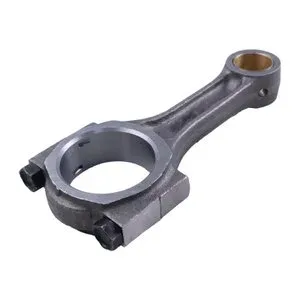
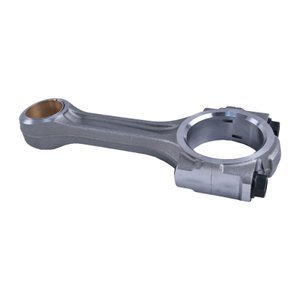
Matched Grade Sets — every connecting rod ships with dimensional records verifying big-end bore and center-to-center length against Yanmar 3TNA72 rebuild specifications.
Technical Specifications
| Parameter |
Value |
| Product Type |
Connecting Rod |
| Machine Fitment |
Yanmar YB121, YB151, FF165, FF155, F145; John Deere 430, 455, 755, 670, F925 |
| Material |
Forged 40Cr steel |
| Surface Treatment |
Anti-rust passivation |
| Pin Bore Diameter Tolerance |
±0.02 mm (reference — verify against service manual) |
| Center-to-Center Length Tolerance |
±0.03 mm (reference — verify against service manual) |
| Surface Finish |
Ra 0.8 μm on bearing journals (reference — verify against service manual) |
| Condition |
New Aftermarket |
| Warranty |
3–12 months against manufacturing defects |
| MOQ |
1 piece |
| Standard |
ISO 9001 |
Application Suitability
| Engine System |
Related Components |
| Bottom-end rebuild — full overhaul |
Con rod bearing set (STD or oversize), crankshaft journal inspection, main bearings |
| Single-cylinder rod replacement |
Matched con rod bolt set, piston pin bushing, big-end bearing insert |
| Dealer or rebuild shop stocking |
Complete rod and bearing grade sets, piston assemblies, overhaul gasket kit |
Why a New Connecting Rod Fails Before the First Oil Change
The replacement rod is only as reliable as the system condition it enters.
I have pulled connecting rods out of 3TNA72 engines where the big-end journal was already scored and tapered from a previous failure, yet a fresh rod and STD bearings were installed without measuring the crankshaft. The new bearings lasted a matter of weeks before spinning in the bore. A connecting rod for Yanmar 3TNA72 engine rebuild work is not a drop-in part — it is one component in a system where crankshaft condition, bearing grade, bolt stretch, and oil gallery cleanliness all determine whether the repair holds. Rebuild shops that skip the root-cause step end up processing warranty claims on parts that never had a chance. [NEED_CITE: diesel engine crankshaft journal inspection standards before rod bearing replacement]
The System This Rod Belongs To
The connecting rod transfers combustion force from the piston to the crankshaft journal through a thin oil film at the big-end bearing. In the Yanmar 3TNA72 series, that oil film is measured in thousandths of a millimeter, and any deviation in journal roundness, bearing grade selection, or rod bolt clamp load collapses it. This connecting rod for Yanmar 3TNA72 engine rebuild applications must be paired with the correct bearing insert grade — STD for untouched journals, oversize for reground cranks — or the clearance will be wrong from the moment the engine turns over.
Rebuild History Changes What You Need to Order
Engines that have been through a prior rebuild often carry reground crankshafts, meaning STD bearings no longer fit even though the engine nameplate has not changed. A 3TNA72E pulled from a John Deere 755 may have 0.25 mm oversize journals from a previous shop, while a 3TNA72L from a Yanmar FF165 might still be on factory STD dimensions. Ordering a connecting rod for Yanmar 3TNA72 engine rebuild work without measuring the crankshaft first is how shops end up with bearing shells that rattle loose or, worse, clamp too tight and overheat within hours. Always confirm journal diameter and required bearing grade before the rod order is placed. [NEED_CITE: crankshaft regrind oversize identification procedures for compact diesel engines]
Dimensional Tolerances and Their Real-World Consequences
Forged 40Cr steel gives the rod the tensile strength to handle repeated combustion loads without stretching, but material alone does not prevent failure. The pin bore diameter tolerance and center-to-center length tolerance govern how evenly load distributes across the bearing surface — a rod that is even slightly out of spec concentrates force on one edge of the bearing insert, accelerating wear in a pattern that mimics oil starvation. The Ra 0.8 μm surface finish on the bearing journals matters because rougher surfaces cut into the bearing shell during break-in, generating metal particles that circulate through the oil gallery and score other components downstream.

What Happens When the Root Cause Is Ignored
Replacing a failed connecting rod without investigating why it failed transfers the same destructive forces to the new part. If oil starvation caused the original bearing to seize and break the rod, the blocked gallery or failed pump still sits in the engine waiting to repeat the damage. If a previous rebuild used the wrong bearing grade and the resulting clearance destroyed the journal surface, a new rod with new bearings will follow the same path. Shops that treat the rod as the problem rather than the symptom process repeat failures on engines that never left the bay. [NEED_CITE: connecting rod failure root cause analysis procedures for three-cylinder diesel engines]
Why Source This Rod Through Our Engine Systems Desk
Our own production lines and qualified sourcing partners operate under the same QC protocol and warranty terms, so whether a rod comes from our facility or a partner plant, the dimensional inspection standard is identical. The eight product categories we cover — engine, hydraulic, electrical, undercarriage, cabin, seals, tools, and general spares — mean the matched bearing set, piston pin bushing, rod bolt set, and overhaul gasket kit all ship under one account with one warranty reference. Orders start at one piece, which matters when a single cylinder needs attention and the rest of the bottom end is sound. Our technical team verifies bearing grade and engine serial variant before the order is confirmed, catching mismatches that a catalog lookup alone would miss. Guangzhou warehouse stock on common 3TNA72 components supports fast dispatch when a machine is already down and waiting.
Documentation & Verification
- Commercial invoice listing each rod with engine variant and bearing grade noted
- Cross-reference sheet mapping 3TNA72 sub-models to rod dimensions (reference only)
- Dimensional inspection record covering big-end bore, pin bore, and center length
- Warranty terms covering manufacturing defects for 3–12 months from dispatch
- Packing photographs showing anti-rust coating and individual protective wrapping
- HS code and customs documentation support for international engine parts shipments
Installation & Rebuild Sequence
- Measure crankshaft journal diameter and out-of-round before selecting bearing grade for the new connecting rod
- Inspect piston pin bushing for wear — a sloppy pin transfers impact loads directly into the fresh rod small end
- Follow factory torque sequence and angle specifications for rod bolts; never reuse stretched fasteners on a 3TNA72 rebuild
- Verify oil gallery cleanliness with compressed air and flush before assembling the bottom end around the new rod
- Confirm bearing insert crush height and side clearance after torquing each rod cap to specification
- Run a low-load break-in cycle and recheck rod bolt torque after the first heat cycle to catch early relaxation
What We Need to Quote This Correctly
Send the engine serial number and any suffix designation from the nameplate — variants like 3TNA72E-NC and 3TNA72L-UMS can carry different internal configurations. If the crankshaft has been reground, include the measured journal diameter or the oversize grade marked by the previous machine shop. Photographs of the old rod and bearing inserts help us confirm the correct match before anything ships.
Frequently Asked Questions
Q: What else should I replace when installing a new connecting rod?
A: At minimum, replace the con rod bearing insert pair and the rod bolt set. Check the piston pin bushing for wear and replace if clearance exceeds the service manual limit. If one rod failed from oil starvation, inspect the remaining rods and main bearings for secondary damage before reassembly. A full overhaul gasket set is standard whenever the sump and side covers are opened.
Q: How do I know if I need STD or oversize bearings with this rod?
A: Measure the crankshaft journal diameter with a micrometer and compare against the factory STD specification for the 3TNA72 series. If the journal has been reground, the machine shop should have marked the oversize grade on the crankshaft or provided a measurement sheet. The rod itself accepts different bearing shell thicknesses to match the journal condition.
Q: My engine model has a suffix like 3TNA72E-S — does that change which rod I need?
A: Suffix designations can indicate differences in aspiration, emission configuration, or industrial versus agricultural tuning that affect internal component specifications. Always provide the full engine serial number and suffix so we can cross-reference the correct rod variant. Assuming all 3TNA72 suffixes share the same rod risks a dimensional mismatch.
Q: Can I order a matched overhaul kit including rods, bearings, pistons, and gaskets together?
A: Yes. We supply complete bottom-end kits matched to your crankshaft journal grade and engine serial variant. Consolidating rods, bearing sets, piston assemblies, and gasket kits into one shipment avoids the situation where the rod arrives but the correct bearing insert is on backorder from a different supplier.