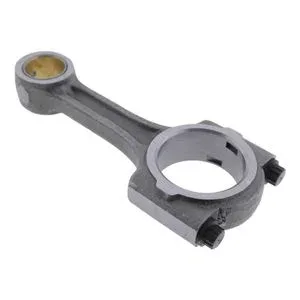
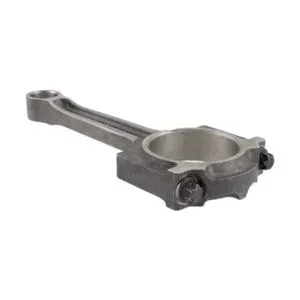
Matched Set Dispatch — Connecting rod 4943977 ships with verified clearance grades aligned to your QSB6.7 crankshaft machining history, preventing assembly seizure on first startup.
Technical Specifications
| Parameter |
Value |
| Part Number |
4943977 |
| Product Type |
Connecting Rod |
| Cross-Reference |
4943977 (reference only) |
| Machine Fitment |
Cummins QSB6.7 (excavators, generator sets, agricultural machinery, marine auxiliary power units) |
| Material |
Forged 4340 alloy steel |
| Surface Treatment |
Shot-peened |
| Center-to-Center Length |
190.5 mm |
| Big-End Bore Tolerance |
±0.005 mm |
| Bore Roundness |
≤0.008 mm |
| Assembly State |
New Aftermarket |
| Warranty |
6 months against manufacturing defects |
| MOQ |
1 piece |
| Production Standard |
ISO 9001 |
Application Suitability
| Engine System |
Related Components |
| Crankshaft-piston assembly |
Main bearings, rod bearings, piston pins, crankshaft journals |
| Lubrication circuit |
Oil pump, oil filter, oil cooler, gallery plugs |
| Cylinder block internals |
Cylinder liners, piston assemblies, wrist pin bushings |
| Overhaul package |
Full gasket set, seal kits, thrust washers, core plugs |
Why the Connecting Rod Fails Before the Bearing Does
The rod survives until the oil film disappears, then it fails within minutes.
When a QSB6.7 comes in with a spun bearing or a fractured connecting rod 4943977 for Cummins QSB6.7 engines, the instinct is to condemn the rod and replace it. But I have seen enough teardowns in Shandong workshops to know the rod is almost always the victim, not the cause. Oil contamination, a clogged gallery plug, or a main bearing already operating beyond its clearance limit starves the big-end journal of hydrodynamic support. The rod then absorbs loads it was never designed to carry [NEED_CITE: diesel engine lubrication failure root cause analysis methods]. Replacing only the rod without diagnosing the upstream fault sets up the next failure before the engine even warms through.

Crankshaft-Piston Assembly: Where This Rod Sits in the System
The connecting rod 4943977 sits at the center of a tolerance stack that includes the crankshaft journal diameter, the bearing shell grade, the piston-to-pin clearance, and the cylinder bore condition. Every one of these interfaces must agree. A rod installed against a reground crankshaft without matching the bearing shells to the new journal size will either run too tight and seize or too loose and hammer. In our experience, rebuild shops that treat the connecting rod 4943977 for Cummins QSB6.7 as a standalone swap rather than a system-level component end up with comeback jobs before the first oil change.
Oversize Grades and the Hidden History Inside Your Block
Most QSB6.7 engines reaching rebuild stage have already been opened at least once. That means the crankshaft journals may have been machined to an undersize, the cylinder bores may be at a non-standard diameter, and the original piston-to-rod weight balance may have shifted if pistons were previously swapped. Before we ship a connecting rod 4943977 for Cummins QSB6.7 engines, we ask for the crankshaft machining record and the bearing grade currently installed. This is not paperwork for its own sake — it determines whether STD, 0.25, or 0.50 undersize bearings pair correctly with the new rod's big-end bore. Sending a standard-grade shell against a reground journal is the single most common mismatch we catch [NEED_CITE: crankshaft regrind bearing clearance matching procedures].
Reading the Spec Sheet: What the Tolerances Actually Mean
The center-to-center length of 190.5 mm governs the piston's position at top dead center, which directly affects compression ratio and valve-to-piston clearance. Even minor deviation here changes combustion geometry across the entire firing order. The big-end bore tolerance of ±0.005 mm ensures the bearing shell crush height generates the correct oil wedge thickness at operating RPM — too tight and the shell distorts, too wide and it migrates under load. Shot-peening on 4340 alloy steel introduces compressive residual stress across the rod surface, resisting the cyclic tensile loads that initiate fatigue cracks at the bolt hole and parting line. Bore roundness held within 0.008 mm prevents localized bearing contact that creates hot spots and accelerates shell wear. These are not catalog numbers; they are the margins between a rebuild that holds and one that comes back on a flatbed.
The Cost Nobody Quotes Until It Happens
A grade mismatch between the connecting rod big-end bore and the bearing shell does not announce itself on the bench. The engine starts, runs, and may even pass a no-load test. But under working load the oil film collapses at the mis-matched interface, and the bearing spins — often taking the rod, the journal, and sometimes the block web with it. I watched a QSB6.7 go through exactly this sequence after a rebuild where the shop ordered standard shells against a crankshaft that had been ground to the first undersize during a prior overhaul. The connecting rod 4943977 for Cummins QSB6.7 was blamed. The real cost was the second teardown, a replacement crankshaft, and a machine that sat idle across two separate repair cycles [NEED_CITE: diesel engine rebuild clearance verification best practices].
What We Bring to This Rebuild
Our own production lines and qualified sourced supply operate under a single warranty, so whether the connecting rod 4943977 for Cummins QSB6.7 engines comes from our facility or a partner plant, the QC terms are identical. Eight product categories sit under one account, meaning the rod, bearings, piston assemblies, and overhaul gasket kit ship as a single consignment rather than staggered deliveries from different vendors. Minimum order is one piece — no forced bulk when you are replacing a single failed rod. The Guangzhou warehouse holds stock on high-turnover internal components for fast dispatch. Part identification works from the number, the machine model, a photograph, or a nameplate image, and our cross-reference verification covers superseded and alternate numbers. A sample can ship ahead for fitment confirmation before you commit to a full engine set.
Documentation & Verification
- Commercial invoice and packing list referencing connecting rod part number and engine application
- Cross-reference sheet marking 4943977 as interchange reference only, with compatible engine serial ranges
- Dimensional inspection record covering bore tolerance, roundness, and center-to-center length
- Warranty terms covering material defects and dimensional non-conformance for six months
- Packing photographs showing rod protection and matched-set grouping before crate closure
- HS code classification and customs documentation support for engine internal parts
Installation & Rebuild Sequence
- Clean all oil galleries and verify gallery plug seating before installing the connecting rod into the block
- Confirm bearing shell grade matches crankshaft journal diameter after any previous regrind
- Check piston-to-rod weight balance across the full cylinder set to prevent secondary vibration
- Torque big-end fasteners in the specified sequence and verify bearing clearance with plastigauge
- Prime the lubrication system and confirm oil pressure at the rod journal before first loaded run
Before You Request a Quote
Send us the QSB6.7 engine serial number, any crankshaft machining history, and the bearing grades currently in the block. If the nameplate is unreadable, a photograph of the data tag or the existing rod stamping is enough to start the identification process. We will confirm clearance grade compatibility and return a matched-component list for the full rebuild.
Frequently Asked Questions
Q: What else should be replaced when installing a new connecting rod in a QSB6.7?
A: The rod bearings must match the crankshaft journal condition, and the piston pin bushing should be checked for wear. We recommend replacing the rod bolt and nut as a set since they are torque-to-yield fasteners. A matched piston-rod-bearing set eliminates tolerance guessing and ensures balanced reciprocating mass across the engine.
Q: How do I determine the correct bearing clearance grade after a previous crankshaft regrind?
A: Measure the crankshaft journal diameter with a micrometer and compare it to the bearing shell chart for the QSB6.7. The connecting rod big-end bore is held to ±0.005 mm, so the bearing shell grade must bridge the gap between the reground journal and the rod bore. Provide us the machining record and we will confirm the grade.
Q: Are internal parts the same across all QSB6.7 engine serial variants?
A: No. Serial variants differ in piston crown profile, compression ratio, and sometimes connecting rod length depending on the application tier. Always supply the engine serial number so we can confirm whether the standard connecting rod 4943977 applies or a variant-specific internal clearance is required.
Q: What system-level fault could have caused the original rod to fail?
A: Most rod failures trace back to lubrication breakdown — contaminated oil, a blocked gallery, or a worn main bearing starving the rod journal of oil film. Replacing the rod without addressing the upstream cause leads to repeat failure. We recommend checking the oil pump output and filter bypass condition during teardown.
Q: Can I order a matched piston-rod-bearing set for this engine?
A: Yes. We supply the connecting rod together with matched piston assemblies, rod bearings in the correct grade, and piston pins as a balanced set. Provide the engine serial number and crankshaft machining history so we can align every component to the actual dimensions inside your block.