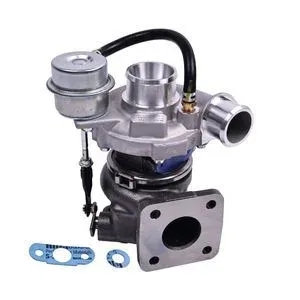
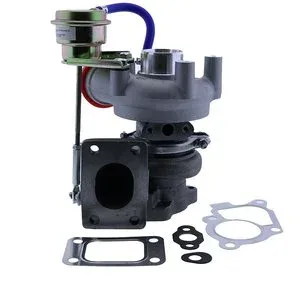
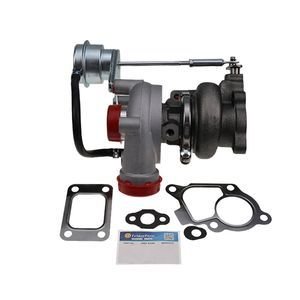
Matched Overhaul Supply — This TD04L Turbocharger engine rebuild part ships with verified cross-reference data to confirm fitment on Deutz BF4L2011 and BF4M2011 blocks before teardown.
Technical Specifications
| Parameter |
Value |
| Part Number |
187154 04272325 |
| Product Type |
Turbocharger |
| Cross-Reference |
187154, 04272325, 04272325KZ, 04272325EY0138, 4272325EY0138, 04272325EY0138-43, 4272325, 49377-07700, 4937707700, 04272458, 04281466 (reference only) |
| Machine Fitment |
Gehl 5640, Gehl 6640 |
| Brand Compatibility |
Deutz, Gehl |
| Part Name |
TD04L Turbocharger |
| Condition |
New Aftermarket |
| Warranty |
3–12 months against manufacturing defects |
| Turbine Housing Material |
Ni-Resist D5S alloy |
| Compressor Wheel Material |
718 Inconel |
| Journal Bearing Material |
Phosphor-bronze bushings |
| Bearing Radial Clearance |
0.025–0.045 mm |
| Surface Roughness (Sealing Surfaces) |
Ra ≤ 0.8 μm (ISO 4287) |
| Shaft Runout |
≤ 0.01 mm TIR |
| Max Operating Speed |
145,000 RPM |
| Boost Pressure Spec |
1.4 ± 0.05 bar at 2,200 rpm |
| Intake Air Purity Compliance |
ISO 8573-1 Class 2 |
| MOQ |
1 piece |
| Standards |
ISO 9001, ISO 4287, ISO 8573-1 Class 2 |
Application Suitability
| Engine System |
Related Components |
| Emission & Exhaust |
Exhaust manifold gaskets, oil feed and drain lines, wastegate actuator |
| Intake Air Delivery |
Air filter element, intercooler piping, intake hose clamps |
| Lubrication Supply |
Oil feed restrictor, oil return hose, crankcase breather valve |
| Fuel Calibration |
Injector nozzles, fuel lift pump, injection timing gear |
| Engine Block Interface |
Turbo mounting studs, heat shield, oil drain flange gasket |
When the Turbo Fails Again Within Weeks of Rebuild
Root-cause diagnosis before installation prevents the replacement TD04L Turbocharger engine rebuild part from inheriting the same failure mode.
In rebuild shops, it is common to see a fresh turbo installed on a Deutz BF4M2011 without inspecting the oil feed restrictor or confirming whether a prior overhaul changed the journal bearing clearance specification. The contaminated oil path that destroyed the first unit remains active, and the second unit accumulates shaft play within a few hundred operating hours. [NEED_CITE: turbocharger failure root-cause analysis in diesel engine overhaul practice] A turbo swap that ignores the intake air system and crankcase ventilation simply transfers the problem downstream, turning what should be a reliable repair into a warranty claim.

The Exhaust System Context for Turbo Longevity
This TD04L Turbocharger engine rebuild part sits at the junction of the Deutz BF4L2011 exhaust and intake systems, where turbine inlet temperature, oil film stability, and boost target converge. Every adjacent component — from the exhaust manifold gasket to the crankcase breather — influences whether the journal bearings maintain their specified 0.025–0.045 mm radial clearance under load. An engine rebuild that addresses the turbo in isolation, without verifying the condition of oil supply lines and air filtration, leaves the new unit exposed to the same contaminants or pressure fluctuations that caused the original failure.
Engine Serial Variants and Bearing Clearance Implications
The BF4L2011 and BF4M2011 share a common block architecture, but differences in cooling arrangement and accessory drive layout affect turbo port orientation and oil drain routing. A previous rebuild may have installed oversized bearings or altered the oil gallery restrictor diameter, meaning the replacement turbo must match the current engine build grade rather than the factory-original specification. Confirming the exact engine serial number and reviewing any prior overhaul records ensures the phosphor-bronze journal bushings operate within the correct clearance band. [NEED_CITE: Deutz BF4M2011 and BF4L2011 engine serial variant differences in turbo configuration]
Specification Details That Shape Real-World Durability
The Ni-Resist D5S turbine housing withstands sustained exhaust gas temperatures encountered in quarry and construction applications where load spikes are frequent. The 718 Inconel compressor wheel resists fatigue cracking at the maximum 145,000 RPM operating speed, maintaining blade geometry that directly governs the 1.4 ± 0.05 bar boost target at 2,200 rpm. Surface roughness on sealing faces held to Ra ≤ 0.8 μm per ISO 4287 prevents oil weeping at the flange interfaces, while shaft runout limited to 0.01 mm TIR keeps the compressor wheel centered in its housing to avoid contact with the shroud at high rotational speeds. The boost pressure specification must align with injector calibration; an over-fueled engine raises exhaust gas temperature beyond the turbine housing design envelope, accelerating wastegate and bearing wear.
The Hidden Cost of Skipping System-Level Verification
Installing a turbocharger without confirming oil feed line integrity or air filter sealing invites premature shaft wear and compressor wheel erosion. Shops that treat the turbo as a standalone replacement rather than a system component often see the unit return with identical bearing scoring. The machine goes back down, the customer loses confidence, and the rebuild shop absorbs the labor and warranty cost of a second teardown. [NEED_CITE: repeated turbocharger failure due to unresolved oil contamination in diesel rebuild]
Why Rebuild Shops Source This Turbo Through Our Engine System Desk
Our production lines and qualified sourced supply operate under one warranty, so whether the TD04L Turbocharger engine rebuild part comes from our own facility or a certified partner, the quality inspection standard is identical. Eight component categories mean the turbo ships alongside overhaul gasket sets, oil feed hoses, and injector seals under a single account and one consignment. Minimum order from one piece supports emergency rebuilds without forcing a bulk commitment. Our technical team verifies cross-reference numbers including superseded references like 04272458 and 04281466 against the engine serial you provide, and sample supply is available for fitment confirmation before you commit to fleet quantities.
Documentation & Verification
- Commercial invoice listing TD04L turbo and matched gasket set by engine serial
- Cross-reference sheet covering 187154, 04272325, and superseded numbers (reference only)
- Dynamic balance grade and hot-gas bench test record included per unit
- Warranty terms stating coverage period and manufacturing defect scope
- Packing photographs showing turbo protective caps and flange covers before crate closure
- HS code and export documentation support for destination customs clearance
Installation & Rebuild Sequence
- Verify oil feed restrictor diameter matches current engine build grade before turbo mounting
- Inspect oil drain line for carbon buildup that could cause back-pressure on journal bearings
- Torque turbo mounting studs to specification using new gaskets on both manifold and drain flange
- Prime oil feed line and confirm flow at the turbo inlet before first engine start
- Run engine at idle and monitor boost pressure against the 1.4 bar target during initial break-in
- Recheck shaft radial play after the first operating cycle to confirm bearing seating
Confirming the Right Unit for Your Overhaul
Provide your Deutz engine model, serial number, and any prior rebuild history so we can verify turbo port orientation, wastegate calibration, and bearing clearance grade. If you have the existing unit on the bench, send photographs of the data plate and oil port positions for cross-reference confirmation against 187154, 04272325, or superseded numbers.
Frequently Asked Questions
Q: What other engine components should be inspected when installing a new turbo?
A: The oil feed restrictor, oil drain hose, air filter housing seal, crankcase breather, and exhaust manifold gasket all influence turbo service life. Contamination from any of these sources transfers directly to the journal bearings. We recommend replacing the oil feed line and verifying the air intake path is sealed before mounting the replacement unit.
Q: How does a previous engine rebuild affect turbo bearing clearance?
A: A prior overhaul may have changed bearing grades or oil gallery dimensions, meaning the factory-original turbo specification no longer matches the current engine build. Providing the engine serial and any rebuild records lets us confirm whether the standard 0.025–0.045 mm radial clearance applies or whether an adjusted grade is required.
Q: Are BF4L2011 and BF4M2011 turbos interchangeable?
A: These engines share block architecture but differ in cooling layout and accessory drive arrangement, which can affect oil port orientation and drain routing. Interchanging turbos without verifying port alignment and wastegate calibration risks oil leaks and incorrect boost pressure. Always confirm fitment against the specific engine serial number.
Q: What oil feed and drain line checks prevent repeat turbo failure?
A: Inspect the feed line for internal delamination or carbon deposits that restrict flow, and confirm the drain line has no kinks or blockages causing back-pressure. Low oil volume starves the journal bearings, while restricted drainage floods the turbine seal. Both conditions cause failure within the first operating cycle.
Q: How do I confirm the correct turbo from my engine serial alone?
A: Send the engine serial number and, if possible, a photograph of the existing turbo data plate. We cross-reference OEM numbers including superseded variants and verify port orientation, wastegate setting, and bearing specification against the engine build record to confirm the exact unit required.