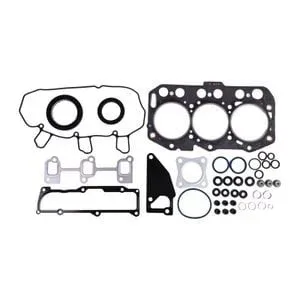
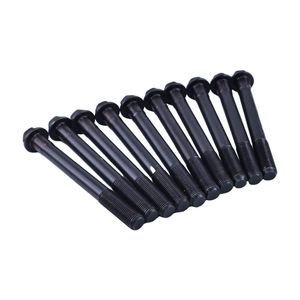
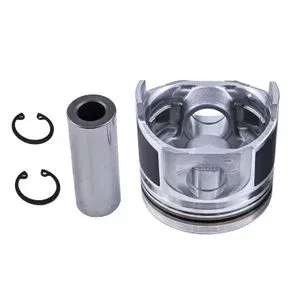
System-matched cylinder assembly — Liner grade confirmed against piston diameter and prior rebore history before dispatch.
Technical Specifications
| Parameter |
Value |
| Part Number |
3904166 |
| Cross-Reference |
3904166 (reference only), DS-3904166 (reference only), DS-3904166OS (reference only) |
| Product Type |
Cylinder Liner |
| Machine Fitment |
4B3.9, 6B5.9, B3.3, ISB, ISBE, QSB3.9, QSB4.5, QSB5.9, QSB6.7 series |
| Condition |
New Aftermarket |
| Certification |
ISO-Certified |
| Warranty |
3-12 months against manufacturing defects |
| MOQ |
1 piece |
Application Suitability
| Engine System |
Related Components |
| Cylinder Block Assembly |
Piston, piston rings, connecting rod bearings |
| Cooling & Lubrication |
Cylinder head gasket, oil control rings, coolant seals |
| Emission & Exhaust |
Valve stem seals, injector sleeve (where applicable) |
Addressing the Root Cause Before Installing a New Cylinder Liner
A scored liner is a symptom, not the failure itself.
Rebuilders frequently encounter premature cylinder liner wear that traces back to cooling passages blocked by casting sand, oil galleries restricted by sludge, or incorrect piston-to-liner clearance from a prior oversize job. Installing a replacement without tracing the origin of the failure typically results in the same damage pattern appearing within the first few hundred hours [NEED_CITE: engine failure analysis standards for diesel rebuilds]. This cylinder liner engine rebuild parts for Cummins 4B3.9 6B5.9 ISB QSB applications demands a system-level review of the block condition, cooling circuit integrity, and prior machining history before assembly begins.
Matching Liner Grade to Prior Rebuild History
The Cummins B-series and ISB/QSB platforms have been in service long enough that many blocks now carry the marks of previous overhauls. A block bored to accept an oversize piston requires a correspondingly graded liner to maintain the specified interference fit and piston clearance. Sending a standard-grade liner to a shop that has already machined the block results in either a loose fit that promotes cavitation erosion or a press fit so tight the liner distorts upon installation. Our technical team verifies the applicable grade — standard or oversize — against the engine serial number and any documented rebore history before confirming the order.
Verifying Overhaul Kit Completeness
A liner does not operate in isolation. The piston ring set must match the liner bore and surface finish, the bearing shells must correspond to the crankshaft journal condition, and the gasket set must include every seal specific to the engine variant on the bench. Missing items in an incomplete kit force the shop to halt the build and source components separately, extending downtime and risking compatibility mismatches [NEED_CITE: Cummins B-series overhaul kit content variations across engine serials]. We cross-check the liner order against the corresponding piston, ring, and gasket components to ensure the entire cylinder assembly ships as a matched set.

Dimensional Integrity and Surface Finish Under Thermal Load
The honed inner surface of this cylinder liner is finished to retain a controlled oil film while maintaining dimensional roundness under the thermal cycling typical of heavy-duty diesel operation. Bore geometry — including taper, out-of-round, and surface roughness — directly governs ring seating behavior and oil consumption over the engine's service life. The liner material is selected to resist cavitation pitting on the outer wall, a failure mode accelerated by inadequate coolant conditioning or incorrect liner protrusion. Pre-shipment dimensional inspection verifies these parameters against tolerance limits before the liner is cleared for dispatch.
The Cost of Grade Mismatch and Missed Root Causes
When a standard liner is pressed into a block previously bored for oversize components, the resulting interference fit falls below specification. The liner shifts under combustion loads, accelerating wear on the piston skirt and rings. Conversely, failing to identify a blocked oil gallery or degraded coolant concentration means the new liner inherits the same hostile environment that destroyed its predecessor [NEED_CITE: cylinder liner cavitation and lubrication failure mechanisms in diesel engines]. Both scenarios add a complete teardown and a second set of components to a job that should have concluded with a single rebuild cycle.
Sourcing from a Supplier That Understands the Build Sequence
We produce selected component lines in our own facility and source the remainder from qualified ISO-certified manufacturing partners, with both carrying the same quality control standards and warranty terms. Eight product categories — including engine internals, gasket sets, and seal kits — allow a complete overhaul list to ship under one account. Minimum order starts at one piece, supporting single-cylinder repairs without forcing bulk commitments. Cross-reference verification covers superseded numbers and variant-specific part differences. Sample supply is available for fitment confirmation before a shop commits to a full production order, and our technical team is available to confirm compatibility and applicable oversize grade.
Documentation & Verification
- Commercial invoice and packing list itemizing liner grade and quantity per engine serial.
- Compatibility and cross-reference sheet noting 3904166 as reference only.
- Dimensional inspection record covering bore geometry and surface finish parameters.
- Warranty terms covering manufacturing defects for 3 to 12 months.
- Packing photographs showing liner protection and crate condition before dispatch.
- HS code and customs documentation support for international engine parts shipments.
Installation & Rebuild Sequence
- Clean block bores thoroughly and verify liner seat depth before pressing in the new cylinder liner.
- Confirm liner protrusion with a dial indicator against the specification for the specific engine variant.
- Match piston rings to the honed bore finish and install with correct ring gap orientation.
- Torque connecting rod bolts in sequence and verify bearing crush and oil clearance.
- Prime the lubrication system before initial cranking to prevent dry startup scoring.
- Follow a structured break-in procedure varying load and RPM to seat rings against the new liner surface.
Requesting a Fitment-Confirmed Quotation
Provide the engine model, serial number, and any documented rebore or machining history so we can confirm the correct liner grade and identify the matching piston and ring components. Photographs of the existing liner flange markings or the block casting number help resolve variant differences that part numbers alone may not capture.
Frequently Asked Questions
Q: What oversize grade do I need if the block has been bored previously?
A: The applicable grade depends on the current bore diameter and the piston size already in use. Provide the engine serial number and any machining records from prior overhauls. We cross-reference the block specification against available standard and oversize liner options to confirm the correct interference fit and piston clearance before shipping.
Q: Does the overhaul kit include all seals for my specific engine serial?
A: Gasket and seal kit contents vary across Cummins engine variants, even within the same model family. We verify the kit contents against your specific engine serial number to confirm that all cylinder head, block, and accessory seals are included, preventing mid-build shortages that stall the reassembly sequence.
Q: My engine shows a CM850 variant — is the liner the same as CM550?
A: Liner dimensions may be shared across variants, but associated components such as piston crown profile, ring pack, and cooling gallery configuration can differ. Supply the full engine serial and variant designation so we can confirm not only liner compatibility but also the correct matching piston and ring set for your specific build.
Q: What other components should be replaced alongside the cylinder liner?
A: A complete cylinder assembly rebuild typically includes piston rings, connecting rod bearings, cylinder head gasket, and valve stem seals. We recommend replacing all wear-interface components simultaneously to avoid contamination from reused parts and to ensure matched tolerances across the entire cylinder assembly.
Q: How do I confirm the correct liner when the old part number is worn off?
A: Provide a photograph of the liner flange, the block casting number, or the engine dataplate. Our technical team uses the engine serial number and block casting to identify the correct liner specification, cross-referencing superseded numbers and variant-specific differences to confirm fitment before dispatch.