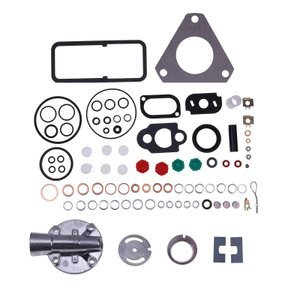
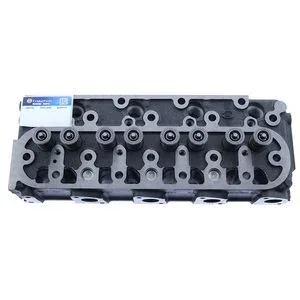
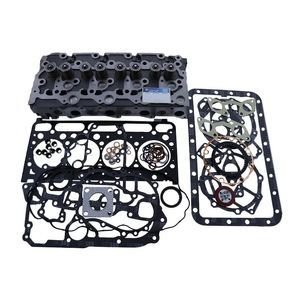
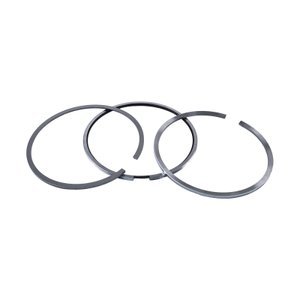
Engine Serial Variants Confirmed — cylinder head 179-1854 (cross-reference only) is matched against CAT 3044C and C3.4 build records to ensure valve train and gasket compatibility before dispatch.
Technical Specifications
| Parameter |
Value |
| Part Number |
179-1854 |
| Product Type |
Cylinder Head |
| Cross-Reference |
179-1854 (reference only), 1791854 (reference only), CA1791854 (reference only), 233-5500 (reference only), 2335500 (reference only), CA2335500 (reference only) |
| Machine Fitment |
236B, 236B3, 242B3, 246B, 246C, 248B, 252B, 252B3, 256C, 257B3, 259B3, 262B, 262C, 262C2, 267B, 268B, 272C, 277B, 277C, 277C2, 279C2, 287B, 287C, 287C2, 289C2, 297C, 906, 906H, 907H, 908, 908H |
| Brand Compatibility |
CAT |
| Assembly State |
Complete cylinder head with valves and springs |
| Material |
High-tensile strength cast iron |
| Valve Features |
CNC-machined valve seats and guides, pre-assembled valves with calibrated springs |
| Quality Standard |
ISO 9001 |
Application Suitability
| Engine System |
Related Components |
| Cylinder Head & Valvetrain |
Head gasket set, valve stem seals, intake and exhaust manifold gaskets |
| Cooling & Emission |
Coolant passage seals, thermostat housing gasket, exhaust manifold studs |
| Timing & Camshaft |
Camshaft bearings, timing chain tensioner, rocker arm assembly |
| Bottom End Interface |
Head bolt set, dowel pins, piston-to-valve clearance verification |
Why the Same Part Number Ships in Multiple Variants
A cylinder head must match the exact engine build, not just the machine model.
In engine overhaul practice, a single machine model like the 236B or 906H may house a CAT 3044C or C3.4 engine with different internal configurations depending on production date and serial range. Valve guide diameters, spring pressures, and combustion chamber volumes can shift between builds. I once handled a warranty return where a cylinder head for this engine family arrived, was installed, and then showed abnormal valve clearance during adjustment. The teardown revealed a variant difference in the valve stem diameter that was never checked against the engine serial number [NEED_CITE: engine serial variant identification for diesel cylinder head replacement]. That machine sat disassembled for days while the correct assembly was sourced. These mismatches are not rare; they represent a recurring pattern in rebuild shops that order by machine model alone.

The Valvetrain System Behind This Cylinder Head
This complete cylinder head with valves belongs to the upper valvetrain system of the CAT 3044C / C3.4 engine, where every interface — from valve seat concentricity to spring preload — affects combustion sealing and thermal management. During an engine overhaul rebuild, the cylinder head does not operate in isolation. It depends on correct head gasket compression, proper valve stem seal seating, and matched intake and exhaust port geometry. Supplying the head as a complete assembly with pre-installed valves and calibrated springs eliminates the risk of mismatched components that can occur when parts are sourced separately from different vendors.
Rebuild History and Dimensional Grade Verification
Before replacing this cylinder head, the previous rebuild history of the engine must be established. If the block was previously honed or if oversize valve guides were installed during an earlier overhaul, a standard assembly may not achieve correct interference fits or sealing. Engine serial numbers alone sometimes do not capture field modifications made during prior rebuilds. I have seen cases where a cylinder head was installed over guides that had been reamed to a non-standard size during a previous shop visit, leading to oil consumption issues within the first few hundred hours [NEED_CITE: valve guide oversize practices in diesel engine rebuild]. Verifying the actual dimensional state of the mating block and valvetrain components before ordering prevents costly teardowns after installation.
Material and Thermal Load Considerations
The high-tensile strength cast iron construction of this cylinder head is selected to withstand the cyclic thermal loading typical of the CAT 3044C / C3.4 combustion environment. Cast iron provides dimensional stability under repeated heat cycles, maintaining valve seat geometry and gasket clamping force over extended service intervals. The CNC-machined valve seats and guides ensure concentricity within tolerances that support consistent valve sealing, which directly influences compression retention and coolant passage integrity. When a cylinder head fails from thermal fatigue — cracking between valve seats or warping along the deck surface — the root cause is often traceable to cooling system deficiencies or sustained overload operation rather than the casting itself [NEED_CITE: thermal fatigue failure modes in cast iron diesel cylinder heads].
The Hidden Cost of Skipping Root Cause Analysis
Replacing a failed cylinder head without diagnosing why the original unit failed invites repeat failure. Common root causes in this engine family include coolant passage restriction causing localized overheating, detonation from injector malfunction eroding valve faces, and head gasket breach allowing combustion gas intrusion into the cooling circuit. If the underlying fault is not corrected during the engine overhaul rebuild, the new cylinder head will be subjected to the same destructive conditions. Shops that treat the cylinder head as a simple swap part rather than a system component often see comeback failures within months, each one consuming additional labor and machine downtime.
Why Source This Cylinder Head Here
Our selected production lines and qualified sourcing partners operate under a single warranty framework, so this cylinder head carries the same quality terms regardless of which facility produced it. The eight-category product range means the head gasket set, valve stem seals, manifold gaskets, and head bolt set can ship in the same consignment, eliminating split deliveries that delay a rebuild. Orders start from a single piece, supporting emergency single-engine repairs without minimum quantity barriers. Part identification is confirmed from the engine serial number, a photograph of the existing nameplate, or the machine model when the plate is unreadable. Cross-reference verification covers superseded numbers such as 233-5500 (reference only) alongside the primary 179-1854 (reference only), catching interchange errors before the part ships. A sample unit can be supplied for fitment confirmation before any bulk commitment is made.
Documentation & Verification
- Commercial invoice listing cylinder head part number and matched gasket set contents
- Cross-reference sheet confirming 179-1854 interchange numbers marked reference only
- Dimensional inspection record covering deck flatness and valve seat concentricity
- Warranty terms covering manufacturing defects for the stated coverage period
- Packing photographs showing crate condition and assembly protection before dispatch
- HS code and customs documentation for international engine parts shipment
Installation & Rebuild Sequence
- Verify deck surface flatness on the block before placing the cylinder head to ensure gasket sealing
- Install new head bolts and follow the specified multi-step torque and angle sequence
- Confirm valve-to-piston clearance after timing assembly is set and before final closure
- Replace valve stem seals and manifold gaskets as part of the same rebuild sequence
- Perform a compression test and coolant pressure check during initial run-in
Inquiry Guidance for Engine Rebuild Planning
Provide the engine model, full serial number, and any known rebuild history including prior oversize work or guide replacement. If the existing nameplate is damaged or painted over, send a photograph of the block casting numbers and any legible stamps. This information allows the technical team to confirm the correct cylinder head variant and matched gasket set for your specific engine build, avoiding the fitment mismatches that cause rebuild delays.
Frequently Asked Questions
Q: What gaskets and seals should be replaced together with this cylinder head?
A: The head gasket, valve stem seals, intake manifold gasket, exhaust manifold gasket, and thermostat housing seal should all be replaced during the same engine overhaul rebuild. Shipping these as a matched set ensures material compatibility and eliminates the risk of a single aged seal causing a comeback failure after the new cylinder head is installed.
Q: Does my engine serial number affect which cylinder head variant I need?
A: Yes. Within the CAT 3044C and C3.4 engine family, production changes across serial ranges can alter valve guide diameter, spring specification, and port geometry. Providing the full engine serial number allows verification that the cylinder head assembly matches your specific build, preventing installation issues discovered only after teardown.
Q: How do I confirm whether a previous rebuild changed valve or guide sizes?
A: Measure the existing valve stem diameter and guide bore before ordering. If a prior overhaul installed oversize guides or reamed seats to a non-standard dimension, a standard cylinder head assembly will not achieve correct fits. Physical measurement of the block-side components is the most reliable confirmation method.
Q: What typically causes the original cylinder head to fail?
A: Common root causes include localized overheating from coolant passage blockage, valve face erosion from injector malfunction, and deck surface warping from sustained thermal overload. Identifying and correcting the underlying fault during the engine overhaul rebuild prevents the replacement cylinder head from experiencing the same failure mode.
Q: Can I receive a sample to verify fitment before placing a larger order?
A: Yes. A single cylinder head can be supplied as a sample unit for fitment verification on your engine block. This allows your rebuild shop to confirm port alignment, bolt pattern match, and valve train geometry before committing to additional units for fleet-wide overhauls.