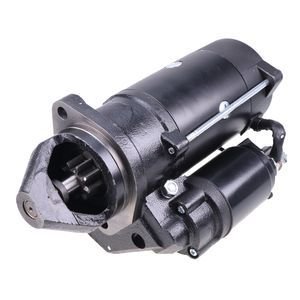
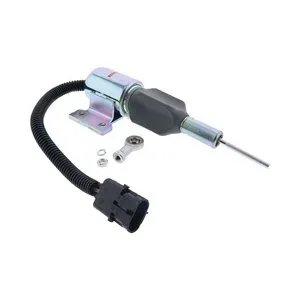
Matched Ignition Set Shipped Together — Verified fitment across Cummins B5.9 and ISB5.9G gas engine serial variants, with wire length and terminal geometry confirmed before dispatch.
Technical Specifications
| Parameter |
Value |
| Part Number |
3966404 |
| Product Type |
Spark Plug Wire |
| Cross-Reference |
3966404 (for identification purposes only) |
| Machine Fitment |
B5.9 GAS PLUS CM556, B5.9 LPG PLUS CM556, ISB5.9G CM2180 |
| Insulation Material |
Silicone rubber rated to 200°C continuous service |
| Conductor Core |
Low-resistance copper |
| Overall Length |
300 mm |
| Dimensional Tolerance |
±0.3 mm |
| Terminal Design |
Crimped terminal conforming to Cummins connector geometry |
| Dielectric Withstand |
30 kV |
| Thermal Shock Resistance |
Validated per IEC 60068-2-13 |
| Condition |
New Aftermarket |
| Warranty |
3–12 months against manufacturing defects |
| MOQ |
1 piece |
| Standards |
ISO 9001, IEC 60068-2-13 |
Application Suitability
| Engine System |
Related Components |
| Gas engine ignition system |
Spark plugs, ignition coils, coil packs |
| Scheduled ignition service |
Complete wire set, plug gap tools, dielectric grease |
| Engine overhaul |
Head gasket set, valve cover gasket, rocker cover seals |
| Emission system protection |
Oxygen sensors, catalytic converter monitoring |
Why One Failed Spark Plug Wire Means the Full Set Is Already at Risk
Replacing a single wire without root-cause inspection invites repeat misfires within weeks.
When one spark plug wire breaks down from heat degradation or terminal corrosion, the adjacent wires in the same harness have endured identical thermal cycles and vibration exposure. I have seen gas engines back on the teardown bench after only a partial ignition service, because the underlying cause — exhaust manifold heat migration, deteriorated coil output, or connector oxidation — was never addressed. [NEED_CITE: gas engine ignition system failure pattern analysis for industrial applications] A spark plug wire engine rebuild replacement must be planned as a system-level intervention, not a reactive swap of the visibly failed component.
Where the Spark Plug Wire Sits in the Ignition System
The spark plug wire carries high-voltage energy from the ignition coil to the spark plug electrode across the cylinder head. In Cummins B5.9 GAS PLUS and ISB5.9G platforms, this path runs through a high-temperature zone near exhaust components, where standard EPDM-insulated wires degrade rapidly above 130°C. This aftermarket spark plug wire uses silicone rubber insulation rated to 200°C continuous, maintaining dielectric integrity throughout the thermal envelope of gas engine bays. A proper spark plug wire engine rebuild replacement addresses the full ignition chain rather than the symptom alone.
Serial Variants and Terminal Fitment Verification
Cummins ISB5.9G engines have been produced across multiple control module generations — CM556 and CM2180 among them — and the ignition wire routing, terminal crimp style, and connector geometry can differ between these builds. A wire that physically plugs in but uses the wrong terminal retention method risks arcing at the coil pack interface, leading to electromagnetic interference and premature coil failure. [NEED_CITE: Cummins gas engine serial variant ignition harness differences] Before ordering a full engine set for a spark plug wire engine rebuild replacement, confirming the exact engine serial prefix ensures the 300 mm length and crimped terminal match the specific build variant.
Dielectric Strength and Thermal Shock Resistance Explained
The 30 kV dielectric withstand rating ensures the spark plug wire insulation prevents voltage leakage even under peak cylinder pressure conditions where gap resistance increases significantly. The IEC 60068-2-13 thermal shock validation means each wire has been cycled through rapid temperature transitions, simulating the thermal fatigue that gas engine compartments impose — cold startup to full-load operating temperature in repeated cycles. The ±0.3 mm dimensional tolerance on the 300 mm length ensures consistent routing tension without stretching the conductor or compressing the terminal connection. Low-resistance copper core material preserves spark energy delivery across the full wire length, preventing weak spark events that contribute to incomplete combustion and oxygen sensor damage. [NEED_CITE: IEC 60068-2-13 thermal shock testing protocol for automotive ignition wiring]

The Hidden Cost of Ignoring Root-Cause Diagnosis
A spark plug wire that fails from coil pack overvoltage will fail again if the coil is not inspected — the new wire inherits the same excessive voltage spike. Similarly, exhaust manifold heat shields that have corroded away expose wires to temperatures beyond their rating, causing repeated breakdown regardless of wire quality. Shops that perform a spark plug wire engine rebuild replacement without checking adjacent ignition components and thermal shielding typically see comeback rates that erode customer confidence. [NEED_CITE: ignition system root cause diagnostics for natural gas and LPG engines]
Why Sourcing Through This Channel
Self-produced lines and qualified sourced supply carry identical QC and warranty terms under a single account. Eight product categories mean spark plugs, ignition coils, and gasket sets ship in the same consignment as this spark plug wire. One-piece minimum order supports emergency single-cylinder repairs without forcing a full set purchase. Cross-reference verification covers superseded and alternate numbers for older B5.9 variants. Technical team confirmation of terminal geometry and serial variant compatibility prevents misfit shipments. Sample units available for physical fitment check before committing to bulk quantities.
Documentation & Verification
- Commercial invoice listing spark plug wire batch traceability and engine serial compatibility notes
- Cross-reference sheet (reference only) mapping alternate ignition wire numbers across B5.9 and ISB5.9G variants
- Dimensional and dielectric test records for the shipped batch
- Warranty terms covering manufacturing defects with replacement protocol
- Packing photographs showing anti-static sleeve protection and labeled carton identification
- HS code classification and customs documentation for cross-border ignition component shipments
Installation & Rebuild Sequence
- Route each spark plug wire away from exhaust manifold surfaces to maintain the 200°C silicone rating margin
- Verify crimped terminal seating at both coil pack and spark plug ends before engine startup
- Inspect ignition coils and spark plug electrodes as a matched set during the spark plug wire engine rebuild replacement
- Apply dielectric grease at terminal interfaces to prevent moisture ingress and corrosion in humid or marine environments
- Perform misfire count monitoring during first operating cycle to validate consistent spark energy delivery
Requesting a Fitment-Confirmed Quote
Provide the engine data plate photograph showing model designation, serial number, and control module identifier (CM556 or CM2180). If the existing wire is still installed, a photograph of the terminal connector at both ends allows geometry verification. For fleet-level ignition service planning, share the engine count and model mix across the fleet to consolidate a matched spark plug wire engine rebuild replacement order.
Frequently Asked Questions
Q: Should I replace all ignition wires as a set or just the failed one during a gas engine service?
A: Replacing the full set is standard practice because all wires share identical thermal and vibration exposure. A single failed spark plug wire signals that adjacent wires are near breakdown threshold. Ordering a complete matched set for the spark plug wire engine rebuild replacement avoids staggered failures and repeated teardowns within the same service window.
Q: What other ignition system components should be inspected when servicing spark plug wires?
A: Ignition coils should be tested for output voltage consistency, and spark plugs checked for electrode wear and gap specification. Exhaust heat shielding condition directly affects wire insulation life. Addressing these elements together during a spark plug wire engine rebuild replacement prevents root-cause issues from destroying the new wires within weeks.
Q: How do engine serial variants within ISB5.9G affect wire length and terminal fitment?
A: Different control module generations use distinct connector geometries and routing paths across the cylinder head. The 300 mm wire length and crimped terminal design must match the specific engine build. Providing the engine serial prefix allows verification that the spark plug wire matches the exact ISB5.9G variant before shipment.
Q: Can I order a sample unit for fitment verification before committing to a full engine set?
A: Sample supply is available for physical installation checks on your specific engine build. This allows terminal seating, routing tension, and connector engagement to be confirmed before the full spark plug wire engine rebuild replacement order ships, eliminating the risk of receiving mismatched components.