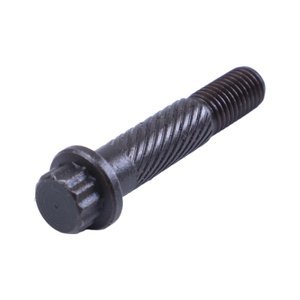
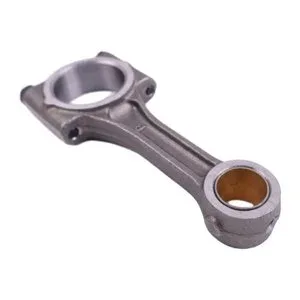
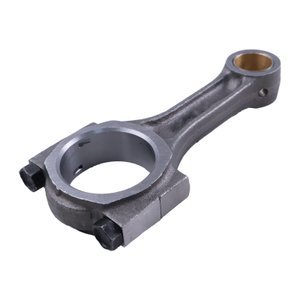
Matched Set Dispatch — Connecting rod and bearing shells verified against crankshaft journal grades before leaving the Guangzhou warehouse.
Technical Specifications
| Parameter |
Value |
| Product Type |
Connecting Rod |
| Compatible Engine Models |
3TNA72, 3TNA72UJ, 3TNA72L, 3TNA72E, 3TNA72E-G2, 3TNA72E-GB2, 3TNA72E-HP, 3TNA72E-NC, 3TNA72E-S, 3TNA72E-UAS, 3TNA72E-UNS, 3TNA72E-YL, 3TNA72L-UDW, 3TNA72L-UDW2, 3TNA72L-UKS, 3TNA72L-UMCD, 3TNA72L-UMS, 3TNA72L-UTBZ, 3TNA72L-UWD |
| Machine Fitment |
YB121, YB151, FF165, FF155, F145, 430, 455, 755, 670, F925 |
| Brand Compatibility |
Compatible with Yanmar and John Deere equipment platforms |
| Condition |
New Aftermarket |
| Manufacturing Standard |
ISO-certified production facility |
| Warranty |
3–12 months against manufacturing defects |
| Minimum Order |
1 piece |
Application Suitability
| Engine System |
Related Components |
| Cylinder block reciprocating assembly |
Piston, piston pin, wrist pin bushing, connecting rod bearing shells |
| Crankshaft journal interface |
Main bearings, thrust washers, crankshaft oil seals |
| Lubrication circuit feeding rod journal |
Oil pump, oil filter, gallery plugs, rod journal oil feed holes |
| Complete overhaul kit scope |
Gasket set, cylinder liner if applicable, valve train components, seal kit |
Why Rebuild Kits Arrive with the Wrong Connecting Rod Grade
The crankshaft was ground oversize in a previous rebuild, but the replacement rod and bearing shells are still standard dimension.
This mismatch surfaces constantly in 3TNA72 series overhauls. The engine block came in for a fresh rebuild, the overhaul kit was ordered by engine model alone, and nobody checked whether the crankshaft journals had already been machined to an undersize during the last service event. The result is excessive oil clearance at the big-end bearing, a low-oil-pressure knock within the first hours of operation, and a complete teardown to start again. I have handled warranty claims in the Guangzhou warehouse where the returned connecting rod showed no defect — the failure sat entirely in the unverified assumption that STD bearings still matched a previously ground crankshaft [NEED_CITE: crankshaft journal undersize grading standards for diesel engine rebuilds].
A Yanmar 3TNA72 connecting rod engine rebuild requires confirming the crankshaft journal diameter before the new rod and shells are selected. When the journal has been reground, both the bearing shells and the rod big-end bore must align with the new dimension. Ordering by engine model without referencing the serial number and prior machine shop records is how these mismatches reach the workshop floor.
Bearing Clearance Alignment Across the Reciprocating Assembly
The connecting rod does not function in isolation. Its big-end bore must accept bearing shells that produce the correct oil film thickness against the crankshaft journal, and its small-end bushing must match the piston pin diameter within the specified clearance band. When replacing a Yanmar 3TNA72 connecting rod during an engine rebuild, the adjacent main bearings should be measured simultaneously because uneven wear across main and rod journals indicates a crankshaft alignment issue that a single rod replacement will not resolve. Matched weight grading across all cylinders also matters — installing one new rod alongside two older units with different reciprocating mass creates vibration that accelerates bearing wear throughout the block [NEED_CITE: reciprocating mass balance requirements in multi-cylinder diesel engines].

Serial Variant Differences Across the 3TNA72 Family
The 3TNA72 platform spans over eighteen listed variants — from the base 3TNA72 through the 3TNA72L-UWD and 3TNA72E-YL. Internal dimensions, rod bolt specifications, and big-end bore diameters can diverge between early-production and late-production builds, particularly where the engine was updated for emissions compliance or adapted for a specific equipment manufacturer. A rod that physically fits the crankshaft journal of a 3TNA72E-HP may not share the same pin offset or bolt stretch specification as one destined for a 3TNA72L-UMCD. Confirming the exact engine serial number and cross-referencing it against the variant list prevents installing a dimensionally close but functionally incorrect rod. This verification step is where most trial-fitment problems originate when the engine nameplate is worn or painted over and the buyer has only a machine model to start from [NEED_CITE: engine serial variant identification for Yanmar 3TN series platforms].
Dimensional Grades and the Previous Rebuild Record
Every crankshaft journal carries a size history. A fresh-from-factory crankshaft runs STD bearings. Once that crankshaft has been through a machine shop for journal regrinding, the diameter shifts to an undersize — commonly 0.25 mm or 0.50 mm under standard. The connecting rod big-end bore itself may have been resized or fitted with oversize-shell bearings during a prior overhaul. If the replacement rod arrives configured for STD shells and the crankshaft is already 0.25 undersize, the oil clearance opens beyond specification and the bearing collapses under load. Requesting the crankshaft measurement record from the previous rebuild is not optional — it determines which bearing grade the new connecting rod must be paired with. I have seen engines returned to the teardown bench within a single shift because the rod was correct but the bearing grade was assumed rather than verified.
How Specifying the Wrong Grade Ends in a Second Teardown
The cost of a grade mismatch is never limited to the part itself. When a connecting rod bearing fails from excessive clearance, the resulting metal debris circulates through the lubrication system, scoring main bearings, contaminating the oil cooler, and lodging in the oil pump gear faces. What began as a single-cylinder rod replacement escalates into a full block strip-down, oil system flush, and replacement of every bearing surface the contaminated oil touched. The machine sits disassembled for a second time, the labor cost doubles, and the operator confidence in the rebuild erodes. In my experience handling aftermarket claims from repair centers, roughly half the rod-related returns trace back to unverified crankshaft grades rather than manufacturing defects in the rod itself [NEED_CITE: root cause analysis patterns in aftermarket connecting rod warranty claims].
Why Procurement Through a Single Engine-System Account Matters
Our Guangzhou facility handles both self-produced and sourced engine components under one warranty and one account, which matters when a Yanmar 3TNA72 connecting rod engine rebuild also demands pistons, bearing shells, gasket sets, and seal kits in matching grades. Cross-reference verification covers superseded numbers across the 3TNA72 variant list, catching the cases where a base part number was updated between production runs. The technical team confirms bearing grade compatibility against your crankshaft measurement record before the order ships, not after it arrives wrong. Sample supply is available for fitment confirmation when the rebuild shop needs to verify pin offset or bolt pattern before committing to a full set. Minimum order starts at one piece for emergency single-cylinder repairs, and the eight product categories mean a complete overhaul list moves as one consignment rather than staggered deliveries from separate suppliers.
Documentation & Verification
- Commercial invoice listing each connecting rod by confirmed engine serial variant
- Cross-reference sheet mapping the rod to compatible 3TNA72 sub-models (reference only)
- Dimensional inspection record covering big-end bore diameter and small-end bushing size
- Warranty terms document specifying coverage period and manufacturing-defect conditions
- Packing photographs showing rod protection and bearing shell separation before dispatch
- HS code classification and customs documentation support for international engine parts shipment
Installation & Rebuild Sequence
- Verify crankshaft journal diameter with a micrometer before selecting bearing shells for the new connecting rod
- Inspect rod bolt stretch or torque-to-yield specification and replace fasteners if prior reuse is suspected
- Confirm piston pin clearance in the small-end bushing and ream or replace the bushing if out of tolerance
- Assemble rod cap with matched halves — never swap caps between rods during the rebuild sequence
- Perform plastigauge check on each big-end bearing after torquing to confirm oil clearance falls within specification
- Prime the lubrication system and verify oil pressure at the gallery before loading the engine after reassembly
Requesting a Compatibility Confirmation
Provide the engine model, full serial number, and any available crankshaft measurement record from the previous rebuild. If the nameplate is unreadable, a photograph of the existing connecting rod — including any stamping on the beam or cap — allows the technical team to identify the correct variant and bearing grade before the order is placed.
Frequently Asked Questions
Q: What other components should be replaced alongside the connecting rod during a 3TNA72 overhaul?
A: Bearing shells matched to the verified crankshaft journal grade, piston pin bushing, rod bolts, and the associated cylinder gasket set should ship together. Main bearings and oil pump inspection are recommended since contaminated oil from a rod bearing failure circulates through the entire lubrication circuit. Consolidating these into one order prevents split deliveries.
Q: How do I determine whether STD or oversize bearings are needed?
A: Measure the crankshaft rod journal with a micrometer and compare the reading to the factory standard diameter. Any reading below standard indicates a previous regrind, and the bearing shell grade must match that undersize. The machine shop record from the last rebuild usually documents this dimension if available.
Q: Are connecting rods interchangeable across all 3TNA72 serial variants?
A: Not universally. The 3TNA72 family includes variants with different bolt patterns, pin offsets, and big-end bore specifications. Confirmation against the exact engine serial number and cross-reference sheet is required before ordering, particularly when sourcing for less common variants like the 3TNA72L-UTBZ or 3TNA72E-GB2.
Q: What typically causes the original connecting rod to fail?
A: Oil starvation from a blocked journal feed hole, over-torque during a prior assembly, bearing shell collapse from grade mismatch, or prolonged operation with degraded oil are the common root causes. Identifying which failure mode occurred determines whether adjacent components in the lubrication and reciprocating assembly also need replacement.
Q: How can I confirm the correct engine model when the nameplate is missing?
A: A photograph of the existing connecting rod showing any casting numbers or stamping marks, combined with the machine model it was removed from, allows cross-referencing against the 3TNA72 variant list. The equipment model alone — such as a YB151 or FF165 — narrows the range but the rod stamping provides the definitive match.