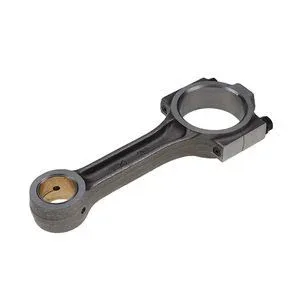
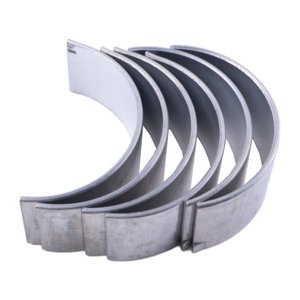
Matched Sets Shipped — Every connecting rod is verified against its specific 4JG1/4JG2 engine serial variant before dispatch, ensuring big end bore and bolt specification align with the crankshaft in your block.
Technical Specifications
| Parameter |
Value |
| Part Number |
8980139624 |
| Product Type |
Connecting Rod |
| Cross-Reference (reference only) |
8-98013-962-4, 8972892630, 8972892631, 8980139620, 8980139621, 8980139623, IZ-8972892630, IZ-8972892631, IZ-8980139620, IZ-8980139621, IZ-8980139623, 8-97289263-0, 8-97289263-1, 8-98013962-0, 8-98013962-1, 8-98013962-3 |
| Machine Fitment |
John Deere 75C Excavator, 80C Excavator |
| Engine Compatibility |
Isuzu 4JG1, 4JG2 |
| Material |
Forged steel |
| Hardness |
HB 220-250 (source value — verify against manufacturer catalog) |
| Dimensional Tolerance |
±0.02mm on critical surfaces (source value — verify against manufacturer catalog) |
| Construction |
Forged steel with precision-machined big end bore |
| Testing |
Magnaflux testing |
| Warranty |
3-12 months against manufacturing defects |
| MOQ |
1 piece |
| Assembly State |
Individually packaged with anti-corrosion coating |
| Standard |
ISO 9001 |
Application Suitability
| Engine System |
Related Components |
| Reciprocating assembly — Isuzu 4JG1 |
Con rod bearings, piston assemblies, piston pins, crankshaft |
| Reciprocating assembly — Isuzu 4JG2 |
Con rod bearings, piston assemblies, piston pins, crankshaft |
| Overhaul supply — single cylinder repair |
Matched rod and bearing set, cylinder gasket set |
| Full engine rebuild |
Complete overhaul gasket kit, main bearings, thrust washers |
Why the Same Connecting Rod Number Ships in Several Variants
Confirm the exact engine serial and crankshaft regrind history before ordering any connecting rod engine rebuild replacement.
A machine model alone does not tell you which variant of the 4JG1 or 4JG2 sits in the block. I once supplied a set of connecting rods to a mining site based on machine model, only to discover the previous rebuild had left the crankshaft at an undersize grade that the standard-dimension rods and bearings could not match [NEED_CITE: engine rebuild tolerances after crankshaft regrind]. The machine went back down within a shift. These serial-level differences affect big end bore diameter, bolt thread specification, and the bearing shell grade required — details that generic cross-reference tables routinely overlook.

The Reciprocating Assembly as a Matched System
A connecting rod engine rebuild replacement does not function in isolation. It pairs directly with con rod bearings, piston pins, and the piston assembly above, while sitting on a crankshaft journal whose condition dictates the entire build. When one cylinder shows rod damage, the adjacent cylinders typically carry related wear that a single-piece order will not resolve. Rebuild shops quoting a full overhaul need the complete internal set — rods, bearings, pistons, and pins — matched to the same tolerance grade so the block returns to service with consistent clearances across all cylinders.
Oversize Grades and the Rebuild History That Changes Everything
The crankshaft journal condition is the variable most often missed when ordering internal components. If a previous rebuild reground the journals to 0.25 or 0.50 undersize, standard connecting rod bearings will not achieve the required oil film clearance, leading to rapid bearing failure and potential rod damage. Before selecting any connecting rod engine rebuild replacement, measure the crankshaft journals or review the last rebuild record to determine the correct bearing shell grade. Engine serial variants within the 4JG1 and 4JG2 families also shift big end bore dimensions and bolt specifications, meaning the same base part number can require different hardware depending on production date [NEED_CITE: Isuzu 4JG engine serial variant differences in internal dimensions].
Reading the Specifications That Matter at Rebuild Time
Forged steel construction provides the tensile strength needed to handle combustion loads in a four-cylinder diesel operating under continuous mining or quarrying duty. The precision-machined big end bore must hold tight dimensional tolerance so the bearing shell seats evenly and maintains the designed oil clearance around the crankshaft journal. Magnaflux testing reveals subsurface cracks in the rod body or cap that visual inspection cannot detect — a rod with a hidden stress fracture will fail under load regardless of how carefully the rest of the build is assembled. The anti-corrosion coating applied during packaging protects machined surfaces during storage, which matters when rebuild shops hold stock for fleet overhaul scheduling rather than immediate use.
The Cost of a Grade Mismatch Discovered After Assembly
When the wrong bearing grade goes in with a standard connecting rod on a reground crankshaft, the failure is not gradual. Oil starvation at the big end produces rapid heat buildup, the bearing shell welds to the journal, and the rod either bends or breaks through the block wall. The machine is then facing a block replacement rather than a planned rebuild [NEED_CITE: connecting rod bearing failure progression in diesel engines]. Even when the damage stays contained to one cylinder, the teardown, inspection, and reassembly cost far exceeds what a correct pre-order verification would have required. Root-cause identification matters here: if the original rod failed from oil starvation, the oil pump and gallery condition need checking before the new rod goes in, otherwise the replacement will follow the same path.
What This Supply Channel Brings to a Rebuild Bench
Both self-produced and sourced connecting rod lines carry the same quality control and warranty terms under one account, so a complete overhaul order ships with consistent documentation. Eight product categories mean the overhaul gasket kit, bearing sets, piston assemblies, and seal kits travel in one consignment rather than arriving from separate suppliers on mismatched timelines. Orders start from one piece for single-cylinder repairs, scaling to full matched sets for engine rebuild shops. Part identification works from the part number, machine model, or a photograph of the nameplate when the stamped number on the old rod is worn or painted over. Cross-reference verification covers superseded and alternate numbers so discontinued references are resolved before the order is placed. A technical team confirms compatibility and bearing grade against the specific engine serial, reducing the chance of a mismatch reaching the bench.
Documentation & Verification
- Commercial invoice and packing list itemizing each connecting rod by part number and matched set grouping
- Cross-reference sheet listing verified alternate and superseded numbers, marked reference only
- Dimensional inspection record covering big end bore and bolt specification checks
- Magnaflux test report confirming absence of subsurface cracks in rod body and cap
- Warranty terms covering manufacturing defects for 3 to 12 months
- Packing photographs showing anti-corrosion coating and individual wrapping before crate closure
Installation & Rebuild Sequence
- Clean the block bore and rod cap mating surfaces to remove any carbon or debris before fitting the connecting rod engine rebuild replacement
- Verify crankshaft journal condition and measure diameter to confirm the correct bearing shell grade matches the rod
- Check rod bolt thread specification against the engine serial variant — do not assume interchangeability across 4JG1 and 4JG2 production runs
- Torque rod bolts to the specification for the confirmed engine variant in the prescribed multi-step sequence
- Confirm big end bearing clearance with plastigauge before final assembly and rotate the crankshaft to check for binding
- Run the engine through a controlled break-in period with monitored oil pressure to seat bearings properly
Requesting the Right Match for Your Rebuild
Send the engine model, serial number, and any available rebuild history so the correct variant and bearing grade can be confirmed before the order is processed. If the old connecting rod is available, a photograph of the stamped number and the big end bore helps resolve cross-reference questions. For fleet overhaul planning, provide the full list of engines scheduled for rebuild so matched internal sets can be prepared together.
Frequently Asked Questions
Q: What oversize grade bearings do I need if my crankshaft has been reground?
A: Measure the crankshaft journal diameter or review the last rebuild record. Journals reground to 0.25 or 0.50 undersize require matching oversize bearing shells to maintain correct oil film clearance. The connecting rod itself remains standard dimension — it is the bearing shell grade that changes. We confirm the right combination once the journal measurement and engine serial are provided.
Q: Does the overhaul kit include the specific gaskets my 4JG2 variant requires?
A: Gasket contents vary across 4JG2 production variants, and generic kits sometimes omit seals specific to later serial ranges. We verify the overhaul kit contents against your exact engine serial number before dispatch, so the kit arriving on the bench contains every gasket and seal the build requires without last-minute sourcing gaps.
Q: Can I reuse the original connecting rod bolts or must they be replaced?
A: Connecting rod bolts are torque-to-yield fasteners in most Isuzu four-cylinder diesel applications, meaning they stretch during installation and should not be reused. Reusing stretched bolts risks uneven clamping force on the big end cap, leading to bearing movement and premature failure. Replacement bolts matched to your engine serial variant are available with the rod order.
Q: How do I confirm the correct connecting rod if my engine serial differs from the machine model listing?
A: Provide the engine serial number stamped on the block rather than relying on the machine model alone. Serial variants within the 4JG1 and 4JG2 families can differ in big end bore diameter and bolt specification. We cross-reference the serial against the production record to confirm the exact rod variant that fits your crankshaft and block configuration.
Q: What other internal components should be replaced together with the connecting rod during a rebuild?
A: A connecting rod replacement typically requires matched con rod bearings, piston pin, piston assembly, and the associated cylinder gasket set. For a full overhaul, main bearings, thrust washers, and a complete gasket kit should be included. We supply these as a consolidated matched set so all internal components arrive together, graded consistently for the same engine build.