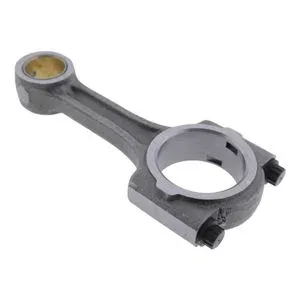
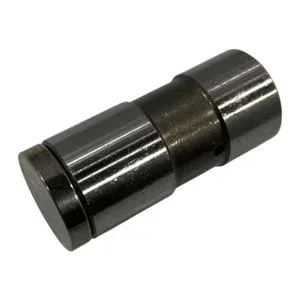
System-Level Overhaul Match — every connecting rod leaves our Guangzhou facility paired to its exact bearing grade and piston oversize, verified against the engine's rebuild history before dispatch.
Technical Specifications
| Parameter |
Value |
| Part Number |
16851-22010 16851-22012 16851-22015 16851-22017 |
| Product Type |
Connecting Rod |
| Cross-Reference |
16851-22010, 16851-22012, 16851-22015, 16851-22017, K168512201, 1685122015, 1685122010, 1685122017, 1685122012, 16851-2201-0, 16851-2201-5, 16851-2201-7 (reference only) |
| Machine Fitment |
K008, K008-3, K008-5, KX018-4, KX41-3, KX36-3, KX016-4, U10-5, U10-3, U17, B7300HSD, B7400HSD, BX1800D, BX1850D, BX1860, BX1860D, BX1870, BX1870-1, BX1880, BX1880-1, BX2360, BX2370, BX2370-1, BX2380, BX2380-1, BX23S, BX23S-1, BX25, BX25DLB, BX25DLB-1, G1900, G1900S, TG1860-48, TG1860-54, TG1860A48, TG1860AB54, TG1860B54, G2160, G2160-DS, G2160AU, GR2110, GR2120, GR2120-2, GR2120B, GR2120B-2, GF1800, GF1800E, ZD18, ZD18F, ZD1011, ZD1011-3, ZD1021, ZD1021-3, ZD221, ZD321, ZD321N, ZD323, ZG332LP, ZG332P, ZP330LP, ZP330P, RTV900XTG, RTV900XTR, RTV900XTS, RTV900XTT, RTV900XTW, RTV-X900G, RTV-X900R, RTV-X900W |
| Material |
High-carbon alloy steel (SAE 1045 equivalent) |
| Surface Treatment |
Phosphate coating |
| Heat Treatment Hardness |
HRC 28–32 |
| Cross-Section |
I-beam |
| Condition |
New Aftermarket |
| Warranty |
3–12 months against manufacturing defects |
| MOQ |
1 piece |
| Standards |
ISO 9001 |
Application Suitability
| Engine System |
Related Components |
| Kubota Z482 / D722 / D782 bottom-end |
Connecting rod bearings (STD, 0.25, 0.50 oversize), main bearings, crankshaft thrust washers |
| Piston and cylinder assembly |
Piston, piston pin, circlips, cylinder liner, piston rings matched to bore grade |
| Lubrication circuit feeding the rod journal |
Oil pump, oil filter, oil pressure relief valve, gallery plugs |
| Overhaul sealing system |
Full engine gasket kit, rod bolt nuts or stretch bolts, rear main seal |
Why Matching the Connecting Rod to Rebuild History Prevents Repeat Failure
A replacement connecting rod for Kubota engine rebuild only succeeds when its bearing shells match the crankpin journal condition left by the last machinist.
In overhaul bays across Central Asia, I have opened Kubota Z482 and D722 blocks to find crankshafts ground to 0.25 mm undersize, yet the new parts on the bench still carried standard-size bearing shells. The rod was correct; the clearance was not. That mismatch produces metal-to-metal contact within the first cold starts, scoring the journal and destroying the new component before the engine reaches operating temperature. A connecting rod for Kubota engine rebuild must therefore be quoted as part of a measured system, not a standalone line item. [NEED_CITE: engine bearing clearance standards for small-bore diesel rebuilds]
The System This Rod Belongs To
The connecting rod transfers combustion force from the piston to the crankshaft journal, relying on a hydrodynamic oil film only a few microns thick. That film depends on three matching conditions: the rod bore concentricity, the bearing shell grade, and the crankpin diameter after any previous regrind. Supplying the rod without confirming all three invites the same failure mode that destroyed the original assembly. This connecting rod for Kubota engine rebuild sits at the center of the bottom-end system, adjacent to main bearings, thrust washers, and piston cooling jets that all share the same oil supply and thermal cycle.
Reading the Rebuild History Before Ordering
Every crankshaft that has been through a previous regrind carries undersize journals, typically in 0.25 mm increments. If the engine serial plate shows a Z482-B or D782-EB variant, internal dimensions may differ from the base designation even though the external part numbers appear identical on aftermarket cross-reference tables. Verifying the exact engine serial variant and previous machining history determines which bearing shell grade the new connecting rod must receive. Skipping this step is the most common reason a freshly assembled Kubota block loses oil pressure within the first hundred hours. [NEED_CITE: Kubota engine serial variant differences affecting internal clearances]

What the Specification Sheet Actually Controls
The high-carbon alloy steel body, equivalent to SAE 1045, provides the fatigue strength needed for repeated tensile and compressive loading in small-bore diesel cycles. The I-beam cross-section balances rigidity against weight, keeping reciprocating mass low so main bearings are not overloaded at high RPM. Phosphate coating on the bearing surface retains oil during the critical first seconds of startup before full hydrodynamic pressure builds. Heat treatment bringing the rod to HRC 28–32 ensures the big-end bore resists distortion under peak cylinder pressure while remaining ductile enough to absorb shock loads from hydraulic hammer attachments or sudden directional changes in utility vehicles. The ±0.005 mm bearing surface tolerance keeps oil film thickness within the design window specified for Kubota Z482, D722, and D902 series engines.
The Cost of Ignoring Root Cause
Replacing a failed rod without investigating why it failed guarantees the next one will follow the same path. Oil starvation from a clogged pickup screen, chronic overloading from an incorrectly sized hydraulic pump, or bolt fatigue from a previous assembler who reused torque-to-yield fasteners — each of these system faults will destroy a new connecting rod just as quickly as it destroyed the old one. The repair invoice doubles because the engine must come apart again, and the machine owner loses confidence in the workshop. Addressing the root cause before closing the block is the only way a new connecting rod for Kubota engine rebuild delivers its full service life. [NEED_CITE: root cause analysis methodology for reciprocating engine component failures]
Why Rebuild Shops Source This Rod Through Our System
We produce selected bottom-end components in our own facility and source the remainder from ISO 9001-certified partners, so every connecting rod in a Kubota overhaul kit carries the same QC protocol and warranty terms. Eight product categories — from engine internals to seal kits and diagnostic tools — mean a complete overhaul list ships under one account and one consignment. Our technical team verifies bearing grade and oversize against your engine's documented rebuild history before confirming the order, so you never open a box to find standard shells for a reground crank. Sample supply is available for fitment confirmation before you commit to bulk quantities, and cross-reference verification covers superseded and alternate numbers that other sellers copy without checking.
Documentation & Verification
- Commercial invoice listing each connecting rod by engine serial variant and bearing grade
- Cross-reference sheet mapping OEM numbers (reference only) to internal build configurations
- Dimensional inspection record covering big-end bore concentricity and bolt-hole thread integrity
- Warranty terms specifying coverage period against manufacturing defects
- Packing photographs showing rod cap alignment marks and protective coating condition
- HS code and customs documentation prepared for international engine parts shipments
Installation & Rebuild Sequence
- Verify bearing shell grade against measured crankpin diameter before pressing shells into the rod
- Clean all oil galleries and confirm oil jet nozzle alignment with the piston cooling target
- Torque rod bolts to specification using new fasteners if the original design requires replacement
- Check side clearance between adjacent connecting rods with a feeler gauge after assembly
- Prime the lubrication system and confirm oil pressure at idle before applying any load
Send Your Engine Details for a Matched Overhaul Quote
Provide the full engine designation, serial number, and any documented regrind history from previous overhauls. Our team will confirm the correct connecting rod variant, matching bearing shells, and associated overhaul kit contents so the entire bottom-end assembly arrives ready to install.
Frequently Asked Questions
Q: What other components should be replaced at the same time as a new connecting rod?
A: The rod bearings, piston pin, circlips, and rod bolts are wear-matched to the rod and should be renewed together. Main bearings and thrust washers share the same oil film and load path, so replacing them during the same teardown avoids a second disassembly. A full gasket kit is mandatory because sealing surfaces are disturbed.
Q: How do I select the right bearing grade after a crankshaft regrind?
A: Measure the crankpin journal diameter with a micrometer and compare it to the engine manufacturer's undersize chart. If the journal has been ground 0.25 mm undersize, you need 0.25 mm oversize bearing shells. Ordering standard shells for a reground crank will produce excessive clearance and immediate oil pressure loss.
Q: Are connecting rods interchangeable across different serial variants of the same Kubota engine?
A: Not always. Designations like Z482-B or D782-EB may use different rod bolt sizes, big-end bore diameters, or piston pin offsets even though the external casting looks identical. Confirming the exact serial variant prevents receiving a rod that physically fits but operates outside design clearance.
Q: What system-level fault should I diagnose before installing the replacement rod?
A: Investigate oil starvation from a blocked pickup screen, chronic overloading from an oversized attachment, or cooling system degradation that raised operating temperatures. Any of these faults will destroy a new rod as quickly as the original. Correcting the root cause is essential before closing the engine block.