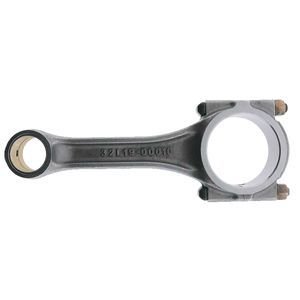
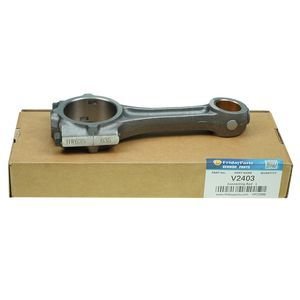
Matched Overhaul Sets — Every connecting rod ships with verified big-end bore tolerance matched to your crankshaft journal grade after rebuild.
Technical Specifications
| Parameter |
Value |
| Product Type |
Connecting Rod |
| Part Number |
04287602 |
| Cross-Reference |
0428 7602, 0417 4410, 04174410, 4287602, 4174410 (reference only) |
| Machine Fitment |
Deutz F4M2011, F4L2011, BF4M1011, BFL1011 |
| Material |
Forged 42CrMo alloy steel |
| Surface Treatment |
Shot-peened |
| Bore Tolerance (Big-end & Small-end) |
±0.005 mm |
| Surface Hardness |
35–40 HRC |
| Tensile Strength |
1,200 MPa |
| Condition |
New Aftermarket |
| Warranty |
3–12 months against manufacturing defects |
| MOQ |
1 piece |
| Certification |
ISO 9001 |
Application Suitability
| Engine System |
Related Components |
| Crankshaft assembly (F4M2011 / F4L2011 full overhaul) |
Main bearings, connecting rod bearings, piston pins, piston bushings |
| Single-cylinder repair after rod or bearing failure |
Rod bolts, undersize bearings matched to reground crankshaft journals |
| Dealer stock for Deutz BF4M1011 / BFL1011 rebuild programs |
Matched piston sets, cylinder liners, full gasket kits |
Why a Connecting Rod engine rebuild Fails Before the First Oil Change
Mismatched oversize grades between the crankshaft journal and the bearing shell cause early seizure, not the rod itself.
I have stood next a Deutz F4M2011 in a Chilean copper mine that had just come back from a full overhaul. The connecting rod bearings seized within the first shift because the crankshaft had been ground to 0.50 undersize during the previous rebuild, yet standard-grade shells were installed. The rod was blamed, pulled out, and replaced — but the real failure sat in the clearance gap nobody measured. This pattern repeats across BF4M1011 units in heavy-cycle service [NEED_CITE: engine bearing clearance standards for reground crankshafts].
The Crankshaft Assembly Is One Tolerance Stack, Not a Parts List
When you plan a connecting rod engine rebuild for an F4L2011 or BFL1011, the rod does not work alone. It sits inside a tolerance chain that runs from the main bearing saddle through the crankshaft journal, the bearing shell, the big-end bore, the small-end bushing, and the piston pin. Every one of those interfaces must agree on the same dimensional grade. If the crankshaft was ground during a prior overhaul, the rod big-end bore and the bearing shells must match that undersize — STD, 0.25, or 0.50 — or the oil film collapses under load.
Rebuild History Changes the Numbers on the Drawing
An engine that has been through one regrind already no longer accepts standard-size components. The connecting rod big-end bore itself may have been resized or may need resizing, and the new shells must account for both the crankshaft undersize and the rod bore condition. For Deutz BF4M1011 engines in quarry compressor or underground loader service, thermal cycling and load reversals accelerate bearing wear at the parting line [NEED_CITE: bearing edge wear patterns in high-cycle diesel engines]. Ordering a rod without confirming the journal diameter and the rod bore measurement means you are guessing at the grade.

Reading the Specifications That Actually Matter in the Field
The 42CrMo forged steel body provides the fatigue strength to handle the tensile and compressive reversal loads at the rod's transition radius — the zone where most fatigue cracks initiate after prolonged overheating or lubrication starvation. Shot-peening introduces compressive residual stress at the surface, delaying crack propagation under the cyclic loading typical of F4M2011 engines driving hydraulic pumps on excavators. The ±0.005 mm bore tolerance on both ends ensures the bearing shell crush height and the piston pin fit stay within the oil-film design envelope. If the small-end bushing is worn beyond this window, the piston pin knocks and accelerates liner wear on the thrust side — a fault that often gets misdiagnosed as a ring or liner problem.
The Cost Nobody Adds to the Repair Invoice
Installing a connecting rod without verifying the crankshaft journal grade means you risk a second teardown before the engine leaves the workshop. The labor to pull the sump, remove the rod cap, and replace the shells again often exceeds the cost of measuring the journals before ordering. In remote mining or port-site conditions, the machine sits idle while the correct oversize bearings are sourced, and the secondary damage from a seized bearing can score the crankshaft journal beyond the next regrind limit [NEED_CITE: crankshaft journal scoring thresholds after bearing seizure].
Why Rebuild Shops Source the Full System Here
We produce selected connecting rod lines in our own facility and source the remainder from qualified ISO 9001 manufacturing partners — both carry identical warranty terms. Our eight-category catalog means the rod, matched bearings, piston set, gasket kit, and rod bolts ship under one account on one consignment. We confirm fitment from your engine serial number and rebuild history, not just the base model designation. Guangzhou warehouse stock on common Deutz items allows fast dispatch, and we provide sample supply for bore verification before you commit to a full engine set. Our technical team checks the cross-reference including superseded numbers like 04174410 to confirm the variant your specific engine build requires.
Documentation & Verification
- Commercial invoice listing each rod with its matched bearing grade
- Cross-reference sheet for 04287602 and superseded numbers (reference only)
- Dimensional inspection record showing big-end and small-end bore measurements
- Warranty terms covering manufacturing defects for 3–12 months
- Packing photographs taken before crate closure
- HS code and customs documentation for international engine parts shipments
Installation & Rebuild Sequence
- Clean all oil passages in the rod and verify nozzle spray pattern before assembly
- Measure crankshaft journal diameter and select bearing grade to match the recorded undersize
- Check rod bolt stretch or torque-to-angle per Deutz specification for the F4M2011 variant
- Verify big-end side clearance with feeler gauge after cap installation
- Run initial break-in at reduced load to seat bearing shells and confirm oil pressure stability
What to Send Before You Place the Order
Provide your Deutz engine model, serial number, and any known regrind history so we can confirm the correct dimensional grade and variant for your connecting rod engine rebuild. If the nameplate is worn, a photograph of the block casting number or the existing rod stamping lets us verify the match.
Frequently Asked Questions
Q: Does a standard overhaul kit include the connecting rod?
A: Most Deutz F4M2011 overhaul kits contain bearings, pistons, rings, liners, and gaskets but not the rod itself. The connecting rod 04287602 is typically ordered separately. We can bundle it into a consolidated kit list so bearings, bolts, and bushings match your engine's specific rebuild grade.
Q: My crankshaft was ground at the last rebuild — what grade rod and bearings do I need?
A: You need to confirm the current journal diameter, not the original specification. If the crankshaft was ground to 0.25 or 0.50 undersize, the bearing shells must match that grade. Provide the crankshaft measurement and we will match the correct shells and verify the rod big-end bore.
Q: Do all BF4M1011 engines use the same connecting rod dimensions?
A: No. Engine serial number variants within the BF4M1011 and BFL1011 range can differ in rod length, big-end width, and bolt specification. Cross-reference numbers like 04174410 (reference only) apply to specific build variants. Share your serial number for confirmed compatibility.
Q: What other system components should I inspect when replacing a connecting rod?
A: Check the piston pin and small-end bushing for wear, inspect the main bearings for matching wear patterns, and verify the oil pump output pressure. A rod failure often traces back to lubrication starvation from a blocked oil gallery or a worn pump, not the rod itself.
Q: How do I confirm my exact Deutz engine model and serial number?
A: The serial number is stamped on the engine block, typically near the oil filter housing or on the bell housing flange. If the nameplate is painted over or corroded, send a photograph of the block casting marks and we will cross-check against the Deutz build records.