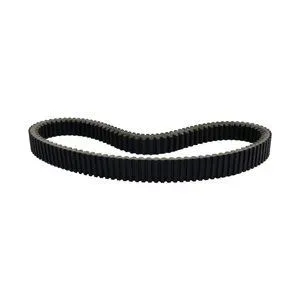
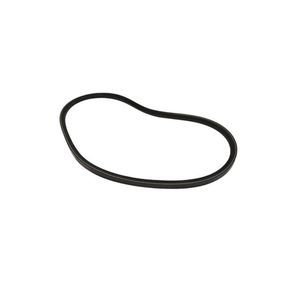
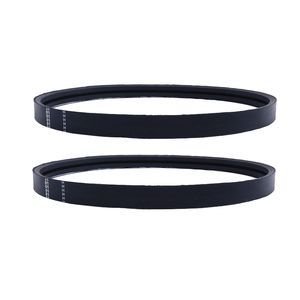
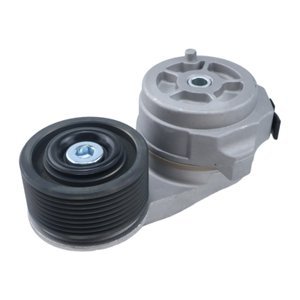
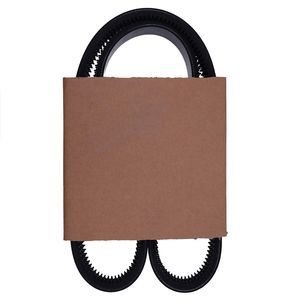
Matched Set Dispatch — Drive belt 422280651 and 422280652 ship with verified cross-reference for Can-Am Maverick X3 and Defender HD8/HD10 engine rebuild planning, ensuring adjacent tensioners and pulleys are confirmed before overhaul.
Technical Specifications
| Parameter |
Value |
| Product Type |
Belt |
| Cross-Reference |
422280651 (for identification purposes), 422280652 (reference only) |
| Machine Fitment |
Maverick X3 900, Turbo, Turbo R, Turbo RR, MAX series; Defender HD8, HD10 (2016-2021) |
| Condition |
New Aftermarket |
| Warranty |
3-12 months against manufacturing defects |
| Minimum Order Quantity |
1 piece |
| Manufacturing Standard |
ISO-certified production |
Application Suitability
| Engine System |
Related Components |
| Belt Drive Systems (Maverick X3 Turbo RR) |
Primary & secondary pulleys, tensioner bearings, crankshaft seals |
| Belt Drive Systems (Defender HD10) |
Drive clutch assembly, idler pulley, alignment shims |
| Accessory Drive (Maverick MAX X DS) |
Sheave faces, spider rollers, belt guide brackets |
Why the Drive Belt Fails Again Within Weeks
A replacement belt alone does not correct pulley misalignment or worn tensioner bearings that caused the original failure.
In the Yangtze River Delta construction and utility fleet circuit, I regularly saw crews swap a shredded drive belt on a Maverick X3, only to have the new one snap within days. The root cause was almost always excessive axial play in the tensioner bearing or heat-warped sheave faces — issues a new belt cannot absorb. Addressing the failed component without diagnosing the system fault guarantees a repeat teardown [NEED_CITE: common root causes of premature UTV drive belt failure in high-load utility applications].

The Belt's Role Inside the Belt Drive System
This drive belt engine rebuild replacement sits at the center of the power transmission path, transferring crankshaft output through the primary clutch to the secondary sheave and final drive. When planning an engine-side overhaul on a Defender HD10 or Maverick Turbo R, the belt condition often dictates whether adjacent seals, bearings, and pulley faces need attention. Sourcing the belt in isolation leaves compatibility gaps; verifying it as part of a matched system refresh ensures dimensional tolerance across every mating surface.
System-Level Failure Patterns and Rebuild History
Engines that have undergone previous rebuilds may have non-standard pulley spacing or aftermarket tensioner brackets that alter belt tracking. A Defender HD8 that ran hot for extended periods might show glazing on the sheave faces, accelerating wear on any new belt installed without resurfacing. Checking the engine serial variant and rebuild history prevents ordering a belt that physically fits but operates outside its designed deflection range [NEED_CITE: belt drive system tolerance stack-up after engine rebuilds].
Material Compound and Dimensional Accuracy Explained
The reinforced cord construction maintains structural integrity under the high RPM and thermal load typical of off-road UTV operation. Precision-molded rubber compound resists heat degradation — a frequent failure mode when belts operate near exhaust manifolds or in poorly ventilated engine bays. Strict dimensional accuracy on the belt width and tooth profile ensures proper engagement with the clutch sheaves, preventing the slippage that generates excess heat and accelerates wear on the driven assembly.
The Cost of Skipping the Root Cause Check
Installing a new belt without measuring tensioner deflection or checking pulley runout leads to rapid edge wear and cord separation. The machine returns to the bench within weeks, this time with damaged sheave faces that require full clutch replacement rather than a simple belt swap. Fleet operators tracking maintenance costs see compounding losses from repeat labor and secondary component damage [NEED_CITE: cost impact of repeat UTV belt failures on fleet maintenance budgets].
Why Source This Belt Drive Component Here
Our facility produces selected belt drive lines in-house and sources the remainder from qualified ISO-certified partners, meaning both carry identical QC and warranty terms. Eight product categories allow a complete overhaul list — belts, tensioners, seals, gaskets — to ship as one consignment under a single account. Minimum order from one piece supports emergency single-unit repairs or sample fitment before committing to fleet-volume stock. Guangzhou warehouse inventory enables fast dispatch on common Maverick and Defender applications. Part identification works from the OEM reference number, machine model, photograph of the worn belt, or nameplate image. Technical support confirms compatibility across superseded numbers and engine serial variants before dispatch.
Documentation & Verification
- Commercial invoice and packing list matching belt part numbers and machine fitment declarations.
- Cross-reference sheet mapping 422280651 and 422280652 to specific Maverick and Defender variants (reference only).
- Quality inspection record covering belt width, tooth profile, and cord tension testing.
- Warranty terms document specifying coverage for manufacturing defects over 3-12 months.
- Packing photographs showing belt coiling and protective wrapping before dispatch.
- HS code and customs documentation support for international belt shipments.
Installation & Rebuild Sequence
- Verify primary and secondary clutch sheave faces for scoring or glazing before installing the new belt.
- Measure tensioner bearing axial play and replace if deflection exceeds service manual limits.
- Confirm belt routing matches the engine-specific diagram for Maverick X3 Turbo or Defender HD10 variants.
- Check belt deflection at midpoint between clutches and adjust tensioner position if necessary.
- Run engine at idle for initial warm-up cycle, then inspect belt tracking and edge wear.
- Re-check tension after the first hour of operation as the belt seats into the sheave grooves.
Request a System-Matched Quote
Provide your engine model, serial number, and any previous rebuild history so we can confirm whether the standard belt or a variant-specific part number applies. If you are planning a full belt drive system overhaul, share the complete component list for a consolidated shipment quote.
Frequently Asked Questions
Q: What else in the belt drive system should I replace when changing this belt?
A: Inspect the primary and secondary clutch sheave faces for glazing, measure tensioner bearing play, and check crankshaft seals for leaks that could contaminate the new belt. Replacing worn tensioners and idler pulleys alongside the belt prevents premature failure caused by misalignment or insufficient tension.
Q: Do both part numbers 422280651 and 422280652 fit the same machine?
A: These numbers serve as interchange references for overlapping but distinct model year ranges across Maverick X3 and Defender HD8/HD10 variants. Confirm your specific machine year and engine serial to ensure the correct belt profile and length, as sheave spacing differs between generations.
Q: How do I confirm the correct belt for my Can-Am engine serial?
A: Provide the engine serial number and model year, or send a photograph of the existing belt's part number and the machine nameplate. Our technical team cross-references superseded numbers and verifies fitment against production date ranges to avoid variant mismatches.
Q: What causes premature drive belt failure beyond normal wear?
A: Common root causes include worn tensioner bearings allowing belt flutter, glazed sheave faces causing slippage and heat buildup, and misaligned clutch assemblies from previous improper installation. Addressing these system faults during belt replacement prevents repeat failures within weeks.
Q: Can I order a matched set including pulleys and tensioners?
A: Yes, we consolidate belt drive system components — belts, tensioners, pulleys, seals — into a single shipment. Provide your machine model and the full service list for a matched quote, ensuring all components arrive together and compatibility is verified before dispatch.