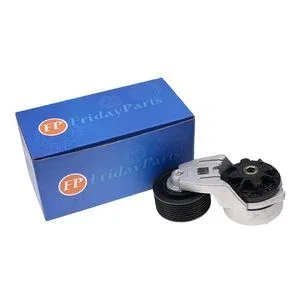
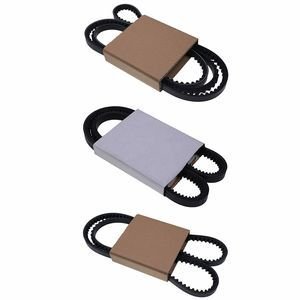
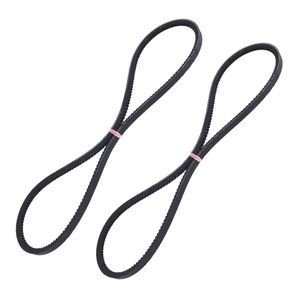
Matched Set Dispatch — Belt tensioner, pulley, spring, and mounting hardware ship together with verified cross-reference for Bobcat engine variants.
Technical Specifications
| Parameter |
Value |
| Part Number |
7167165 7274780 7273503 |
| Product Type |
Belt Tensioner |
| Cross-Reference |
7167165, 7274780, 7273503, 7196910, 7201887, 7145358, 6564692, 7152658, 53DM12, 3GM12110, 59CM835, 7CM12140, 7273604 (reference only) |
| Machine Fitment |
S510, S530, S550, S570, S590, S595, S630, S650, S740, S750, S770, S850, T550, T590, T595, T630, T650, T740, T750, T770, T870 |
| Brand Compatibility |
Bobcat (replacement for) |
| Assembly State |
Complete assembly with pulley, rocker arm, spring, and mounting hardware |
| Condition |
New Aftermarket |
| Pulley Material |
Hardened steel bearing |
| Rocker Arm Material |
Precision-cast high-strength alloy |
| Mounting Hardware Included |
Bolts and nuts (interchange reference 3GM12110, 59CM835, 53DM12) |
| Warranty |
3-12 months against manufacturing defects |
| Quality Standard |
ISO 9001 |
Application Suitability
| Engine System |
Related Components |
| Accessory belt drive |
Serpentine belt, idler pulleys, alternator pulley |
| Hydraulic pump drive |
Pump mounting flange, pump shaft coupling |
| Cooling system drive |
Fan clutch, fan belt, water pump pulley |
| Charging system |
Alternator, voltage regulator, charging wire harness |
Why the Accessory Drive Fails Again After a Belt Swap
A Belt Tensioner engine replacement Bobcat loader rebuild succeeds only when the entire accessory drive system is evaluated as one unit.
Too often, a machine comes back to the shop within weeks of a belt change. The belt squeal returns, the hydraulic pump whines under load, or the alternator light flickers at idle. The root cause is rarely the belt itself. When a worn tensioner assembly remains in service, the new belt runs at incorrect tension, accelerating wear on every driven component in the loop. [NEED_CITE: accessory drive system belt tension and component wear correlation]
I have seen Bobcat S-series loaders return to the bay after a belt-only repair, with the tensioner pulley bearing already showing axial play. The rocker arm spring had fatigued to the point where it could not maintain adequate force across the RPM range. Replacing the Belt Tensioner Assembly alongside the belt, and verifying the idler pulleys and driven accessories, prevents the second teardown that no customer wants to pay for.

Accessory Drive System Context
The Belt Tensioner Assembly sits at the center of the engine accessory drive, where it controls belt tension across the hydraulic pump, alternator, and cooling fan circuits. Proper tension ensures each driven component receives consistent rotational force without slip or excessive bearing load. A Belt Tensioner engine replacement Bobcat loader rebuild that ignores system interaction will see cascading failures move from one component to the next.
Superseded Numbers and Engine Serial Variants
Bobcat loaders spanning the S510 through S850 and T550 through T870 range use tensioner assemblies that share base geometry but differ in spring rate and pulley offset across engine generations. Cross-reference numbers including 7167165, 7274780, and 7273503 appear in multiple parts catalogs, yet not every number applies to every serial range. Confirming the engine serial number against the specific assembly variant prevents a fitment issue that only surfaces once the old unit is already removed. [NEED_CITE: Bobcat engine serial number variant identification for accessory drive components]
Pulley Bearing and Spring Force Specifications
The hardened steel bearing in the tensioner pulley must maintain minimal axial and radial play to keep the belt tracking true across the accessory pulleys. The precision-cast rocker arm works with a calibrated spring to apply consistent force regardless of thermal expansion or RPM fluctuation. When either the bearing clearance or spring force falls outside specification, the belt deflects under load, producing the chirp that signals imminent failure. The complete assembly includes matched hardware — bolts and nuts referenced as 3GM12110, 59CM835, and 53DM12 for cross-reference — so fastener grade matches the engine block thread requirement and prevents loosening under sustained vibration.
The Cost of Ignoring Adjacent Components
Replacing a tensioner without inspecting the idler pulleys, belt condition, and driven accessory bearings often leads to another failure within the same service season. The new tensioner compensates for a worn idler, then fails prematurely itself. The repair cost compounds: a second teardown, a second set of gaskets and seals, and additional machine downtime that delays the contractor's project. [NEED_CITE: compound failure patterns in mobile equipment accessory drive systems]
Sourcing Rationale for Rebuild Shops
Our own production lines and qualified sourced supply carry the same warranty terms under one account, so a tensioner assembly and its companion idler pulleys arrive on the same invoice. Eight product categories mean the belt, tensioner, seal kit, and mounting hardware ship as one consignment from the Guangzhou warehouse. Minimum order is one piece, which matters when a single machine is down and waiting. Part identification works from the part number, machine model, a photograph of the worn nameplate, or an image of the removed assembly. Cross-reference verification covers superseded and alternate numbers to resolve catalog discrepancies before the order ships. A sample unit can be dispatched for fitment confirmation before a fleet maintenance team commits to a bulk order.
Documentation & Verification
- Commercial invoice listing all accessory drive components in one line-item set
- Cross-reference sheet mapping 7167165, 7274780, 7273503 to your specific engine serial (reference only)
- Quality inspection record covering pulley bearing play measurement and spring force test
- Warranty terms stating coverage period and manufacturing defect replacement policy
- Packing photographs showing assembly condition and hardware inclusion before crate closure
- HS code and customs documentation prepared for international freight clearance
Installation & Rebuild Sequence
- Clean the engine block mounting surface and verify thread condition before positioning the tensioner assembly
- Torque mounting bolts to engine block specification to prevent fatigue cracking under vibration
- Route the new belt per the accessory drive diagram, confirming pulley alignment at each driven component
- Verify spring preload by checking belt deflection at the longest unsupported span
- Run the engine at idle for initial warm-up, then re-check belt tracking and tensioner arm position
- Inspect pulley bearing for axial play after the first operating cycle to confirm proper seating
Requesting a Fitment Confirmation
Provide the engine model, serial number, and any previous rebuild history so the correct tensioner assembly variant is matched to your machine. If the nameplate is unreadable, send a photograph of the removed assembly and the mounting bracket for visual cross-reference. Include the full list of components planned for the rebuild so the accessory drive package ships complete.
Frequently Asked Questions
Q: What other components should be replaced together with the tensioner assembly?
A: The serpentine belt and idler pulleys should always be evaluated and typically replaced as a set. Inspect the alternator pulley and fan clutch for bearing play. Replacing the complete accessory drive loop prevents a single worn component from accelerating failure across the newly installed parts.
Q: How do I confirm which cross-reference number applies to my specific engine serial?
A: Provide your engine serial number and machine model for verification against our cross-reference database. Numbers like 7167165, 7274780, and 7273503 span multiple engine generations with variant differences in spring rate and pulley offset that affect fitment.
Q: Does the assembly include all mounting hardware, or are bolts ordered separately?
A: The complete assembly includes the pulley, rocker arm, spring, and mounting bolts and nuts. Hardware cross-reference numbers 3GM12110, 59CM835, and 53DM12 are listed for identification. No separate fastener order is required for standard installation.
Q: What system-level symptoms indicate a tensioner failure versus a belt or pulley issue?
A: Belt squeal that returns shortly after replacement, hydraulic pump whine at low RPM, or alternator undercharging all point to insufficient belt tension. A failing tensioner spring or worn pulley bearing allows deflection that a new belt alone cannot correct.
Q: Can I request a sample to verify fitment before committing to a bulk order?
A: Yes. We supply a single sample unit for physical fitment check on your machine before a fleet or workshop commits to volume purchasing. This confirms cross-reference accuracy and assembly compatibility with your specific engine variant.